
Pharmaceutical Industry Feeling Force of Tax Inversion Legislation

The recent termination of AbbVie’s deal to acquire Shire makes this pharmaceuticals’ first major casualty of new US tax inversion legislation, and has jolted the industry out of its reverie, according to an analyst with research and consulting firm GlobalData.
Aparna Krishnan, MS, GlobalData’s Analyst covering Healthcare Industry Dynamics, states that the decision by AbbVie’s board of directors to terminate the Shire merger and acquisition (M&A) deal is due to the realisation that its value would be too much of a financial risk without the tax incentive component.
Krishnan comments: “By acquiring UK-based Shire, AbbVie’s effective tax rate would have dropped by 7%, enhancing its earnings by $350 million on a pro forma basis in 2013. In effect, the tax savings would have contributed anywhere between $15–18 billion in savings over the next 15 years, creating significant cash flow for the expanded AbbVie.
“As these tax savings were inherent in the value of the deal, it is no longer viable. Furthermore, new tax inversion laws are potentially corrosive to the industry earnings of others, meaning that the market may cool down on M&A deals in the near term.”
The analyst notes that while Shire will receive a $1.6 billion termination fee from AbbVie, its share price has unsurprisingly been hit hard.
Krishnan continues: “Notwithstanding this near-term impact, Shire will push ahead with premerger plans to expand its orphan drugs portfolio through acquisitions.
“Meanwhile, AbbVie will have to take stock and reassess its M&A strategy with its next move to diversify its portfolio. This will counter the risks associated with the company’s dependency on its highest revenue contributor, Humira, which could face biosimilar competition from as early as December 2016 in the US and April 2018 in other markets.”
Related News
-

News Pharmaceutical Supply Chain People Moves
The latest appointments, promotions, and structural changes across the pharmaceutical supply chain.
-

News Merck KGaA to buy US biotech SpringWorks for US$3.9 billion
The German multinational pharmaceutical company Merck KGaA have signed a deal to buy US biotech company SpringWorks Therapeutics at an equity value of US$3.9 billion in a move to add rare cancer therapeutics to their pipelines.
-

News Cassava Sciences halts Alzheimer's drug trial after limited progress
Cassava Sciences have drawn a close to their investigations and development of the drug simufilam, which they intended to be used for the treatment of Alzheimer’s disease.
-
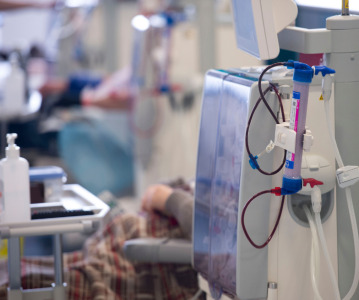
News US FDA adds haemodialysis bloodlines to devices shortage list
On March 14, 2025, the US FDA published an open letter to healthcare providers citing continuing supply disruptions of haemodialysis bloodlines, an essential component of dialysis machines.
-
News Vertex Pharmaceuticals stock jumps as FDA approves non-opioid painkiller
UK-based Vertex Pharmaceuticals saw their stock shares soar as the US FDA signed off on the non-opioid painkiller Journavx, also known as suzetrigine, for patients with moderate to severe acute pain, caused by surgery, accidents, or injuries.
-

News Lessons from CPHI Milan 2024: Sunny Intervals for Pharma Manufacturing?
As the 2024 CPHI conference wrapped up in Milan, we caught up with L.E.K. Consulting – a global strategy consulting firm with deep expertise in pharma manufacturing – to discuss evolving market perspectives and business outlook. -
News US BIOSECURE Act passed by US House of Representatives
The controversial act, which has already impacted several foreign companies operating in the US, was passed by the House of Representatives on September 9, 2024. It is now headed for the US Senate before it can be signed into law by President Joe Biden... -

News Drug prices agreed upon as part of the US Inflation Reduction Act
The Inflation Reduction Act brought into constitution by the Biden administation in 2022, which proposed a drug price negotiation between the government and pharmaceutical companies, has reached it's first agreement.