
Post-Brexit medicines - stuck in the UK?

The EMA needs to provide more action and guidance to help UK pharmaceutical manufacturers, says Thomas Beck, senior vice president, quality management, Recipharm.
Following its latest survey, which questioned pharmaceutical companies on their preparedness for Brexit, the EMA has warned that the supply of more than 100 medicines manufactured solely in the UK is at risk of disruption post-Brexit because the necessary work to ensure they can be licensed and released for sale in mainland Europe has not been carried out.
"As a CDMO with a presence in both the UK and mainland Europe, we are well positioned to support our customers through the Brexit transition and have a taskforce dedicated to meeting the challenge head-on. We also expect to see a greater demand for outsourced manufacturing services from UK Marketing Authorization Holders wishing to supply to Europe, which is further supported by the EMA’s latest survey results, which revealed a lack of readiness for Brexit.
"Of course, ensuring the reliable supply of medicines post-Brexit is paramount and should be one of the main focuses of the industry over the coming months. We would like to see more action and guidance from the EMA to help pharmaceutical manufacturers understand the implications and make the required preparations.
"The best outcome is that a mutual recognition agreement is maintained between the EU and UK, meaning UK manufacturers will be able to continue to follow the EMA regulatory guidelines. The worst-case scenario, where no agreement is reached, may result in medicine shortages, which is extremely concerning.
"Treating the UK as a ‘third country’ post-Brexit also has the potential to create additional layers of complexity that manufacturers will have to adapt to if they are not already familiar with third-party importation practices.
"On the 17th July 2018, MPs backed an amendment to the government’s suggested Trade Bill on the regulation of medicines after Brexit. MPs voted for the UK to take “all necessary steps” to participate in the regulatory network operated by the EMA after it leaves the EU, which is certainly a positive step in favour of ensuring the smooth flow of medicines to British patients.
"The Brexit challenge needs to be faced in a pragmatic way and details need to be confirmed and communicated as a matter of priority or, as the EMA survey has found, patients across the UK and EU could suffer."

Related News
-

News Pharmaceutical Supply Chain People Moves
The latest appointments, promotions, and structural changes across the pharmaceutical supply chain.
-

News Merck KGaA to buy US biotech SpringWorks for US$3.9 billion
The German multinational pharmaceutical company Merck KGaA have signed a deal to buy US biotech company SpringWorks Therapeutics at an equity value of US$3.9 billion in a move to add rare cancer therapeutics to their pipelines.
-

News Cassava Sciences halts Alzheimer's drug trial after limited progress
Cassava Sciences have drawn a close to their investigations and development of the drug simufilam, which they intended to be used for the treatment of Alzheimer’s disease.
-

News US FDA adds haemodialysis bloodlines to devices shortage list
On March 14, 2025, the US FDA published an open letter to healthcare providers citing continuing supply disruptions of haemodialysis bloodlines, an essential component of dialysis machines.
-

News Vertex Pharmaceuticals stock jumps as FDA approves non-opioid painkiller
UK-based Vertex Pharmaceuticals saw their stock shares soar as the US FDA signed off on the non-opioid painkiller Journavx, also known as suzetrigine, for patients with moderate to severe acute pain, caused by surgery, accidents, or injuries.
-

News Lessons from CPHI Milan 2024: Sunny Intervals for Pharma Manufacturing?
As the 2024 CPHI conference wrapped up in Milan, we caught up with L.E.K. Consulting – a global strategy consulting firm with deep expertise in pharma manufacturing – to discuss evolving market perspectives and business outlook. -

News US BIOSECURE Act passed by US House of Representatives
The controversial act, which has already impacted several foreign companies operating in the US, was passed by the House of Representatives on September 9, 2024. It is now headed for the US Senate before it can be signed into law by President Joe Biden... -
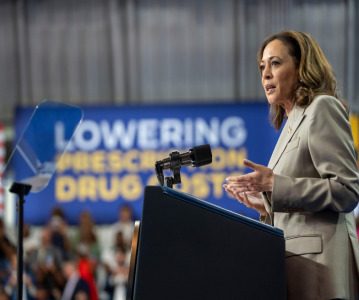
News Drug prices agreed upon as part of the US Inflation Reduction Act
The Inflation Reduction Act brought into constitution by the Biden administation in 2022, which proposed a drug price negotiation between the government and pharmaceutical companies, has reached it's first agreement.