
Regeneron and Sanofi strongly disagree with US jury verdict in ongoing patent litigation regarding Praluent Injection
Companies say they plan to appeal the judgement.
Regeneron Pharmaceuticals and Sanofi have announced that the companies strongly disagree with a US District Court jury verdict that the asserted claims of two Amgen patents for antibodies targeting PCSK9 (proprotein convertase subtilisin/kexin type 9) are valid. Sanofi and Regeneron believe these Amgen patent claims are invalid in the ongoing US patent infringement lawsuit and plan to appeal the judgement. This decision is the first step in this ongoing litigation and does not impact Praluent (alirocumab) Injection or the companies' ability to deliver it to physicians and patients at this time.
"It has always been and remains our position that Amgen's asserted patent claims in this matter are invalid," said Karen Linehan, Executive Vice President and General Counsel, Sanofi.
Next steps on damages are to be determined. The judge will hold a hearing to consider a permanent injunction in the near future.
"This is a complex area of law and science, and we believe the facts and controlling law support our position. We look forward to taking our case to the Federal Circuit Court of Appeals, the US appellate court that hears all biopharmaceutical patent appeals," said Joseph LaRosa, Senior Vice President, General Counsel and Secretary, Regeneron. "Praluent was developed with Regeneron's proprietary science and technology and represents an important medical advance for patients."
In July 2015, Praluent was the first PCSK9 inhibitor to be approved for use in the US. It is indicated for use as adjunct to diet and maximally-tolerated statin therapy for the treatment of adults with heterozygous familial hypercholesterolemia or clinical atherosclerotic cardiovascular disease, who require additional lowering of "bad" (LDL) cholesterol. Praluent is the only PCSK9 inhibitor available in two starting doses that allow physicians to adjust the dose based on a patient's LDL cholesterol lowering needs. The effect of Praluent on cardiovascular morbidity and mortality has not yet been determined.
Related News
-

News Pharmaceutical Supply Chain People Moves
The latest appointments, promotions, and structural changes across the pharmaceutical supply chain.
-

News Merck KGaA to buy US biotech SpringWorks for US$3.9 billion
The German multinational pharmaceutical company Merck KGaA have signed a deal to buy US biotech company SpringWorks Therapeutics at an equity value of US$3.9 billion in a move to add rare cancer therapeutics to their pipelines.
-

News Cassava Sciences halts Alzheimer's drug trial after limited progress
Cassava Sciences have drawn a close to their investigations and development of the drug simufilam, which they intended to be used for the treatment of Alzheimer’s disease.
-

News US FDA adds haemodialysis bloodlines to devices shortage list
On March 14, 2025, the US FDA published an open letter to healthcare providers citing continuing supply disruptions of haemodialysis bloodlines, an essential component of dialysis machines.
-

News Vertex Pharmaceuticals stock jumps as FDA approves non-opioid painkiller
UK-based Vertex Pharmaceuticals saw their stock shares soar as the US FDA signed off on the non-opioid painkiller Journavx, also known as suzetrigine, for patients with moderate to severe acute pain, caused by surgery, accidents, or injuries.
-

News Lessons from CPHI Milan 2024: Sunny Intervals for Pharma Manufacturing?
As the 2024 CPHI conference wrapped up in Milan, we caught up with L.E.K. Consulting – a global strategy consulting firm with deep expertise in pharma manufacturing – to discuss evolving market perspectives and business outlook. -

News US BIOSECURE Act passed by US House of Representatives
The controversial act, which has already impacted several foreign companies operating in the US, was passed by the House of Representatives on September 9, 2024. It is now headed for the US Senate before it can be signed into law by President Joe Biden... -
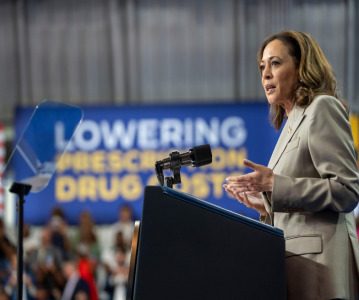
News Drug prices agreed upon as part of the US Inflation Reduction Act
The Inflation Reduction Act brought into constitution by the Biden administation in 2022, which proposed a drug price negotiation between the government and pharmaceutical companies, has reached it's first agreement.