
Regeneron announces agreement with BARDA for the development of new antibody treatment for Ebola
HHS will provide initial funding of approximately $17 million to support preclinical development and antibody manufacturing. This initial funding is designed to support an Investigational New Drug application with the FDA.
Regeneron Pharmaceuticals has announced an agreement with the Biomedical Advanced Research and Development Authority (BARDA) of the US Department of Health and Human Services (HHS) to develop, test and manufacture a monoclonal antibody therapy for the treatment of Ebola virus infection.
HHS will provide initial funding of approximately $17 million to support preclinical development and antibody manufacturing. This initial funding is designed to support an Investigational New Drug application with the FDA. Options in the agreement provide for an additional $21 million for a Phase I study in healthy volunteers, which is planned for January 2016, and further manufacturing and development studies.
Regeneron utilized its proprietary VelociGene and VelocImmune technologies, which enable the rapid identification and preclinical validation of fully human monoclonal antibodies, to develop a novel antibody therapy ‘cocktail’, which includes a mixture of three antibodies. These technologies enabled the rapid identification and scale-up of the investigational antibody therapy. To date, Regeneron has conducted pre-clinical studies in animal models of Ebola virus infection. These antibodies have been discovered and developed pursuant to Regeneron's 2009 antibody discovery and development agreement with Sanofi and are subject to Sanofi's opt-in rights for development and commercialization.
"We're proud to work with BARDA to apply our unique rapid response capabilities to Ebola, one of the most critical global health crises of recent times," said Neil Stahl, Executive Vice President of R&D at Regeneron. "Regeneron's mission is to use science and technology to transform outcomes for people living with serious diseases. In the midst of an emerging outbreak, every day counts for people who are infected or at risk. Regeneron's technologies create manufacturing-ready cell lines of validated fully human antibodies in just months, offering the distinct promise of better treatments in shorter timeframes."
Related News
-

News Pharmaceutical Supply Chain People Moves
The latest appointments, promotions, and structural changes across the pharmaceutical supply chain.
-

News Merck KGaA to buy US biotech SpringWorks for US$3.9 billion
The German multinational pharmaceutical company Merck KGaA have signed a deal to buy US biotech company SpringWorks Therapeutics at an equity value of US$3.9 billion in a move to add rare cancer therapeutics to their pipelines.
-

News Cassava Sciences halts Alzheimer's drug trial after limited progress
Cassava Sciences have drawn a close to their investigations and development of the drug simufilam, which they intended to be used for the treatment of Alzheimer’s disease.
-
News US FDA adds haemodialysis bloodlines to devices shortage list
On March 14, 2025, the US FDA published an open letter to healthcare providers citing continuing supply disruptions of haemodialysis bloodlines, an essential component of dialysis machines.
-

News Vertex Pharmaceuticals stock jumps as FDA approves non-opioid painkiller
UK-based Vertex Pharmaceuticals saw their stock shares soar as the US FDA signed off on the non-opioid painkiller Journavx, also known as suzetrigine, for patients with moderate to severe acute pain, caused by surgery, accidents, or injuries.
-
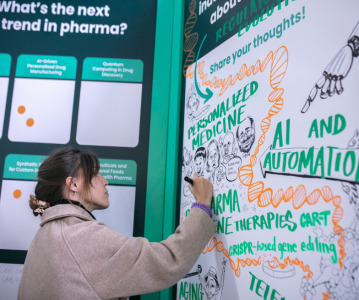
News Lessons from CPHI Milan 2024: Sunny Intervals for Pharma Manufacturing?
As the 2024 CPHI conference wrapped up in Milan, we caught up with L.E.K. Consulting – a global strategy consulting firm with deep expertise in pharma manufacturing – to discuss evolving market perspectives and business outlook. -

News US BIOSECURE Act passed by US House of Representatives
The controversial act, which has already impacted several foreign companies operating in the US, was passed by the House of Representatives on September 9, 2024. It is now headed for the US Senate before it can be signed into law by President Joe Biden... -
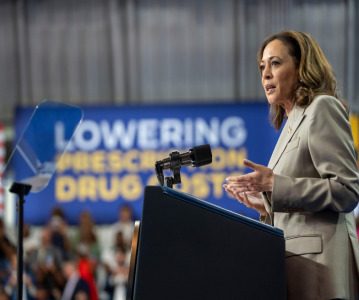
News Drug prices agreed upon as part of the US Inflation Reduction Act
The Inflation Reduction Act brought into constitution by the Biden administation in 2022, which proposed a drug price negotiation between the government and pharmaceutical companies, has reached it's first agreement.