
Revolutionary medical innovations being unleashed in Canada MaRS discovery district

Health investors are paying attention to Canada, particularly to Toronto’s hot market.
This week, leading Canadian health startups will be the ones to watch during J.P. Morgan’s healthcare conference in San Francisco. More than two dozen health firms in MaRS’ network, from fields including artificial intelligence (AI), digital health and robotics, will be in Silicon Valley for the week of conferences and events.
Health investors are paying attention to Canada, particularly to Toronto’s hot market. According to Thomson Reuters, venture capitalists (VCs) invested over $1.1 billion in Canadian life-science companies in 2016, the most on record in a single year and double the amount of VC funding in 2015. There were also a record number of deals in 2017, particularly in AI and healthcare.
“Investors are beginning to take note of Toronto as an under-tapped market for health startups,” says Salim Teja, president of MaRS Ventures Services. “VCs and large health corporates globally are drawn to our capacities in science and healthcare delivery. We have a strong network of hospitals and research institutes in a highly concentrated area. Toronto is on par with leading health clusters and innovation hubs globally.”
MaRS is the world’s largest urban innovation hub, with 1.5 million sq ft dedicated to supporting multidisciplinary discoveries in the heart of Canada’s biggest city, next to the University of Toronto and dozens of research hospitals.
“VCs look to invest in transformative innovations that can significantly improve the diagnosis, treatment and prevention of disease,” says Brad Bolzon, managing director and chairman of the investment team at Versant Ventures. “In Canada, we’ve seen world-class science translated into startups that hold the promise of developing truly differentiated products for patients.”
Each year, hundreds of investors from around the world are drawn to Toronto for MaRS’ annual health startup showcase. This year’s Toronto Health Innovation Week, running 9-13 April, is expected to be the largest health investor gathering in Canada.
Here are some of the Canadian health companies descending on San Francisco during J.P. Morgan’s annual health conference.
Artificial intelligence in healthcareToronto-based health ventures are leveraging big data to transform medicine with new tools for doctors, patients and consumers. Diverse talent, leading research hospitals and innovation platforms like MaRS and the Vector Institute for Artificial Intelligence, along with vast troves of health data, are supporting Toronto’s emergence as a world-leading market for AI and health innovation. The following companies are combining machine learning and life science to develop new therapies, diagnostics and preventative treatments.
“2017 was a breakout year for Toronto, cementing its reputation as a global epicenter for AI innovation, particularly in life sciences,” says Naheed Kurji, president and CEO of Cyclica. “The field of artificial intelligence was pioneered by Toronto-based researchers, and their efforts have spurred much of the remarkable innovation we are seeing in the city today. The international venture capital ecosystem is taking note—2018 will be an exciting year.”
Therapeutics, devices and roboticsFrom the foundations of artificial intelligence and machine learning to the discovery of insulin and stemcells, Toronto has a history of medical and scientific breakthroughs. Today, sixteen of the world’s top 25 medical device makers call Toronto home. This includes Johnson & Johnson, Medtronic and GE Healthcare , as well as more than half of Canada’s estimated 1,100 medical device companies. The following innovators are developing products and therapies that will make a difference around the world.
Toronto is also a leading hub for digital health with innovators using technologies such as digital sensors and mobile medicine to empower patients and healthcare professionals. Here are a few of the companies with digital solutions that connect medical professionals, patients, records and research.
Related News
-

News Pharmaceutical Supply Chain People Moves
The latest appointments, promotions, and structural changes across the pharmaceutical supply chain.
-

News Merck KGaA to buy US biotech SpringWorks for US$3.9 billion
The German multinational pharmaceutical company Merck KGaA have signed a deal to buy US biotech company SpringWorks Therapeutics at an equity value of US$3.9 billion in a move to add rare cancer therapeutics to their pipelines.
-

News Cassava Sciences halts Alzheimer's drug trial after limited progress
Cassava Sciences have drawn a close to their investigations and development of the drug simufilam, which they intended to be used for the treatment of Alzheimer’s disease.
-
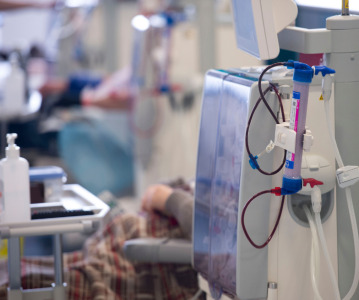
News US FDA adds haemodialysis bloodlines to devices shortage list
On March 14, 2025, the US FDA published an open letter to healthcare providers citing continuing supply disruptions of haemodialysis bloodlines, an essential component of dialysis machines.
-

News Vertex Pharmaceuticals stock jumps as FDA approves non-opioid painkiller
UK-based Vertex Pharmaceuticals saw their stock shares soar as the US FDA signed off on the non-opioid painkiller Journavx, also known as suzetrigine, for patients with moderate to severe acute pain, caused by surgery, accidents, or injuries.
-

News Lessons from CPHI Milan 2024: Sunny Intervals for Pharma Manufacturing?
As the 2024 CPHI conference wrapped up in Milan, we caught up with L.E.K. Consulting – a global strategy consulting firm with deep expertise in pharma manufacturing – to discuss evolving market perspectives and business outlook. -

News US BIOSECURE Act passed by US House of Representatives
The controversial act, which has already impacted several foreign companies operating in the US, was passed by the House of Representatives on September 9, 2024. It is now headed for the US Senate before it can be signed into law by President Joe Biden... -
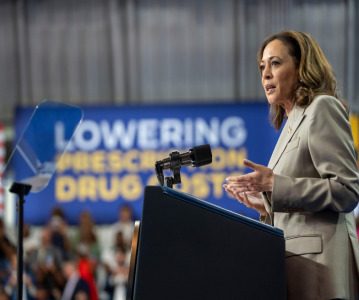
News Drug prices agreed upon as part of the US Inflation Reduction Act
The Inflation Reduction Act brought into constitution by the Biden administation in 2022, which proposed a drug price negotiation between the government and pharmaceutical companies, has reached it's first agreement.