
Roche to restructure its manufacturing network for small molecules

Exiting four sites to optimise capacity utilisation will affect approximately 1,200 positions.
Roche has announced plans to restructure its manufacturing network for small molecules to address current underutilisation as a result of its evolving portfolio. A new generation of specialised medicines based on small molecules requires novel manufacturing technologies and will be produced in lower volumes than traditional medicines.
As a result, Roche plans to exit four manufacturing sites in Clarecastle, Ireland; Leganes, Spain; Segrate, Italy; and Florence, US. In an effort to minimise job reductions, the company is actively looking into divestment opportunities for these facilities.
To manufacture a new generation of specialised medicines based on small molecules, Roche will further invest 300 million Swiss francs into a dedicated facility in Kaiseraugst, Switzerland to support future technology requirements. This investment will strengthen the company’s development and launch capabilities.
“With these changes we are responding to the evolution of our small molecule portfolio towards specialised medicines produced in lower volumes,” says Daniel O’Day, Chief Operating Officer, Pharmaceuticals Division of Roche. “We are aware of the impact this decision has on our colleagues, and we will do our utmost to support them during this transition.”
Roche will immediately begin discussions with employee representatives in the respective countries, and will conduct the consultation process in an open and socially responsible manner. Transition will begin in 2016 and is planned to end by 2021. Affected employees will be notified as soon as possible and will receive appropriate support during the transition.
It is expected that site exits will result in non-core restructuring costs of CHF 1.6 billion until 2021, of which up to CHF 600 million will be in cash. This also includes additional efficiency efforts undertaken in the manufacturing network and organisation. Estimated non-core costs in 2015 are up to CHF 800 million, with only a minor cash flow impact in 2015.
Roche continuously assesses and adapts its manufacturing capacities and technologies. To address the growing demand and rich pipeline of medicines across several therapeutic areas, the company has announced investments of over CHF 2 billion in its biologics manufacturing capacity over the past 2 years.
Related News
-

News Pharmaceutical Supply Chain People Moves
The latest appointments, promotions, and structural changes across the pharmaceutical supply chain.
-

News Merck KGaA to buy US biotech SpringWorks for US$3.9 billion
The German multinational pharmaceutical company Merck KGaA have signed a deal to buy US biotech company SpringWorks Therapeutics at an equity value of US$3.9 billion in a move to add rare cancer therapeutics to their pipelines.
-

News Cassava Sciences halts Alzheimer's drug trial after limited progress
Cassava Sciences have drawn a close to their investigations and development of the drug simufilam, which they intended to be used for the treatment of Alzheimer’s disease.
-
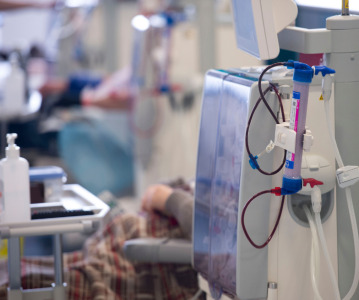
News US FDA adds haemodialysis bloodlines to devices shortage list
On March 14, 2025, the US FDA published an open letter to healthcare providers citing continuing supply disruptions of haemodialysis bloodlines, an essential component of dialysis machines.
-

News Vertex Pharmaceuticals stock jumps as FDA approves non-opioid painkiller
UK-based Vertex Pharmaceuticals saw their stock shares soar as the US FDA signed off on the non-opioid painkiller Journavx, also known as suzetrigine, for patients with moderate to severe acute pain, caused by surgery, accidents, or injuries.
-

News Lessons from CPHI Milan 2024: Sunny Intervals for Pharma Manufacturing?
As the 2024 CPHI conference wrapped up in Milan, we caught up with L.E.K. Consulting – a global strategy consulting firm with deep expertise in pharma manufacturing – to discuss evolving market perspectives and business outlook. -

News US BIOSECURE Act passed by US House of Representatives
The controversial act, which has already impacted several foreign companies operating in the US, was passed by the House of Representatives on September 9, 2024. It is now headed for the US Senate before it can be signed into law by President Joe Biden... -
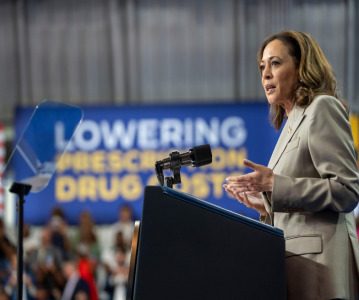
News Drug prices agreed upon as part of the US Inflation Reduction Act
The Inflation Reduction Act brought into constitution by the Biden administation in 2022, which proposed a drug price negotiation between the government and pharmaceutical companies, has reached it's first agreement.