
Size doesn’t matter: How smaller deals are shaping healthcare M&A

Several mega-deals have made a splash in the pharma and life sciences industries over recent years – from AstraZeneca’s acquisition of Alexion for $39 billion to Gilead Sciences’ $21 billion purchase of Immunomedics. With ample capital available in the sector, it comes as no surprise that PwC forecasts M&A deals will reach $400 billion this year.
However, focus has increasingly been shifting from blockbuster deals and turning instead towards smaller collaborations and partnership agreements.
Mergers and acquisitions can offer benefits like access to new technology, diversification of product lines and improved economies of scale. When these deals take place between small and mid-sized companies, these benefits can be accessed more quickly and without the antitrust issues larger firms often face.
To get a sense of how smaller deals are shaping the M&A market, CPHI spoke to Dr Fintan Walton, CEO and Founder of PharmaVentures, the premier transaction advisory firm and a leading international company in partnering, M&A deals and strategic alliances. Fintan will also lead a panel discussion on the subject as part of the CPHI Webinar Series – Register here.


Do you expect to see the number of M&As in the life sciences industry continue to rise in 2022 and beyond?
At this stage, we are unsure of the trend due to the current geo-political situation. However, our industry is significantly transformative due to its innovative nature and so we believe that it will certainly endure as it has done in previous economic crises.
What are the key drivers of M&A amongst small to mid-sized life sciences companies?
The key drivers are the need to build critical mass, improve efficiencies and to gain access to the latest commercially significant innovations and technologies to dominate within a particular technological sector.
What are the advantages of M&A amongst small to mid-sized companies?
The advantage of M&A amongst these companies is simply their size. They tend not to come up against issues related to the various monopoly commissions. They tend to be easier to execute. They form the base for Private Equity firms in their buy and build strategies.
They tend to be driven by and led by the leading edge of technology and often the most significant in that respect.
How does strategy differ when an M&A is done with a small/mid-size company compared to a mega-deal?
Larger deals tend to have a higher visibility and so the strategy deployed tends to be riskier and therefore must be more carefully thought through. Larger M&As have higher profiles and tend to draw the attention of national governments and unions.
How is integration and talent retention approached by a small/mid-size company compared to a large company? Are there any challenges or benefits?
Integration is one of the biggest challenges and often underestimated, making it the riskiest part of a transaction. The larger the deal, the more complicated the integration task. It can often take years to complete for larger deals and can involve the disposal of products and subsidiaries for both economic and regulatory reasons. Retention of talent is a big challenge and can be expensive. With smaller deals, the C-suite and founders can be retained through earn outs, stock options and other inducements.
Has the drive towards digitisation impacted the M&A landscape with regards to small and medium-sized companies?
Digitisation has changed how due diligence is conducted by allowing remote access to Virtual Data Rooms. Information requests can be executed rapidly allowing the due diligence phase of a transaction to take place rapidly. This has been especially true for smaller M&A deals.
How has the COVID-19 pandemic impacted the M&A landscape?
The pandemic had little effect on the M&A landscape other than slowing some deals down. I think everyone in the industry was surprised by how unaffected it was.
How will increased regulation impact M&As involving small to medium-sized life sciences companies? (e.g., National Security and Investment Act in the UK and European Commission’s change to merger controls on cross-border M&A activity)
Increased regulation will have the biggest impact on larger M&A deals. This is why smaller M&A transactions are more likely to remain dominant and most transformative.
Related News
-

News Pharmaceutical Supply Chain People Moves
The latest appointments, promotions, and structural changes across the pharmaceutical supply chain.
-

News Merck KGaA to buy US biotech SpringWorks for US$3.9 billion
The German multinational pharmaceutical company Merck KGaA have signed a deal to buy US biotech company SpringWorks Therapeutics at an equity value of US$3.9 billion in a move to add rare cancer therapeutics to their pipelines.
-

News Cassava Sciences halts Alzheimer's drug trial after limited progress
Cassava Sciences have drawn a close to their investigations and development of the drug simufilam, which they intended to be used for the treatment of Alzheimer’s disease.
-

News US FDA adds haemodialysis bloodlines to devices shortage list
On March 14, 2025, the US FDA published an open letter to healthcare providers citing continuing supply disruptions of haemodialysis bloodlines, an essential component of dialysis machines.
-

News Vertex Pharmaceuticals stock jumps as FDA approves non-opioid painkiller
UK-based Vertex Pharmaceuticals saw their stock shares soar as the US FDA signed off on the non-opioid painkiller Journavx, also known as suzetrigine, for patients with moderate to severe acute pain, caused by surgery, accidents, or injuries.
-

News Lessons from CPHI Milan 2024: Sunny Intervals for Pharma Manufacturing?
As the 2024 CPHI conference wrapped up in Milan, we caught up with L.E.K. Consulting – a global strategy consulting firm with deep expertise in pharma manufacturing – to discuss evolving market perspectives and business outlook. -

News US BIOSECURE Act passed by US House of Representatives
The controversial act, which has already impacted several foreign companies operating in the US, was passed by the House of Representatives on September 9, 2024. It is now headed for the US Senate before it can be signed into law by President Joe Biden... -
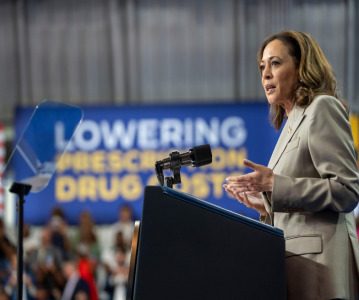
News Drug prices agreed upon as part of the US Inflation Reduction Act
The Inflation Reduction Act brought into constitution by the Biden administation in 2022, which proposed a drug price negotiation between the government and pharmaceutical companies, has reached it's first agreement.