
Specialty pharmaceuticals: to compare cost with value, more productivity research is key

A new commentary published in The American Journal of Pharmacy Benefits argues that the value of specialty pharmaceuticals — to patients, employers and society at large — has been left out of the discussion.
Specialty pharmaceuticals often represent the most effective — and sometimes the only — option for treating or curing life-threatening diseases such as HIV/AIDS, cancer and hepatitis C. Despite their therapeutic value, specialty pharmaceuticals have recently garnered attention for their high costs — in excess of $100,000 per year, in some cases.
A new commentary published by the Integrated Benefits Institute (IBI) in The American Journal of Pharmacy Benefits argues that the value of specialty pharmaceuticals — to patients, employers and society at large — has been left out of the discussion.
IBI's Research Director, Brian Gifford, argues that the combination of high-cost medications and insurance plans with high out-of-pocket costs may prompt some patients to forego necessary and beneficial care for serious medical conditions. Costs due to lost productivity could be high if worsening illness leads to more sick days, disability leaves or exits from the labour force. Yet few studies have looked seriously at the impact of specialty pharmaceuticals and productivity.
"The prices of these drugs are high, but the cost of denying people access to them is likely higher," said Gifford. "Decisions are being made about the cost-effectiveness of specialty pharmaceuticals without fully understanding their benefits — including whether they help keep people functioning and on the job."
Fully understanding the costs and benefits of specialty pharmaceuticals requires research that can close the following evidence gaps:
IBI's commentary describes a feasible research agenda on the overall costs and benefits of specialty pharmaceuticals. Cumulatively, the findings could provide stakeholders such as employers, policymakers and patients' groups with empirical evidence on which to formulate specialty pharmaceutical policies.
Related News
-

News Pharmaceutical Supply Chain People Moves
The latest appointments, promotions, and structural changes across the pharmaceutical supply chain.
-

News Merck KGaA to buy US biotech SpringWorks for US$3.9 billion
The German multinational pharmaceutical company Merck KGaA have signed a deal to buy US biotech company SpringWorks Therapeutics at an equity value of US$3.9 billion in a move to add rare cancer therapeutics to their pipelines.
-

News Cassava Sciences halts Alzheimer's drug trial after limited progress
Cassava Sciences have drawn a close to their investigations and development of the drug simufilam, which they intended to be used for the treatment of Alzheimer’s disease.
-

News US FDA adds haemodialysis bloodlines to devices shortage list
On March 14, 2025, the US FDA published an open letter to healthcare providers citing continuing supply disruptions of haemodialysis bloodlines, an essential component of dialysis machines.
-

News Vertex Pharmaceuticals stock jumps as FDA approves non-opioid painkiller
UK-based Vertex Pharmaceuticals saw their stock shares soar as the US FDA signed off on the non-opioid painkiller Journavx, also known as suzetrigine, for patients with moderate to severe acute pain, caused by surgery, accidents, or injuries.
-

News Lessons from CPHI Milan 2024: Sunny Intervals for Pharma Manufacturing?
As the 2024 CPHI conference wrapped up in Milan, we caught up with L.E.K. Consulting – a global strategy consulting firm with deep expertise in pharma manufacturing – to discuss evolving market perspectives and business outlook. -

News US BIOSECURE Act passed by US House of Representatives
The controversial act, which has already impacted several foreign companies operating in the US, was passed by the House of Representatives on September 9, 2024. It is now headed for the US Senate before it can be signed into law by President Joe Biden... -
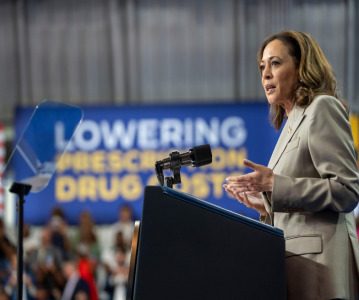
News Drug prices agreed upon as part of the US Inflation Reduction Act
The Inflation Reduction Act brought into constitution by the Biden administation in 2022, which proposed a drug price negotiation between the government and pharmaceutical companies, has reached it's first agreement.