
Spermidine Trihydrochloride Bulk Storage & Formulation Stability Guide
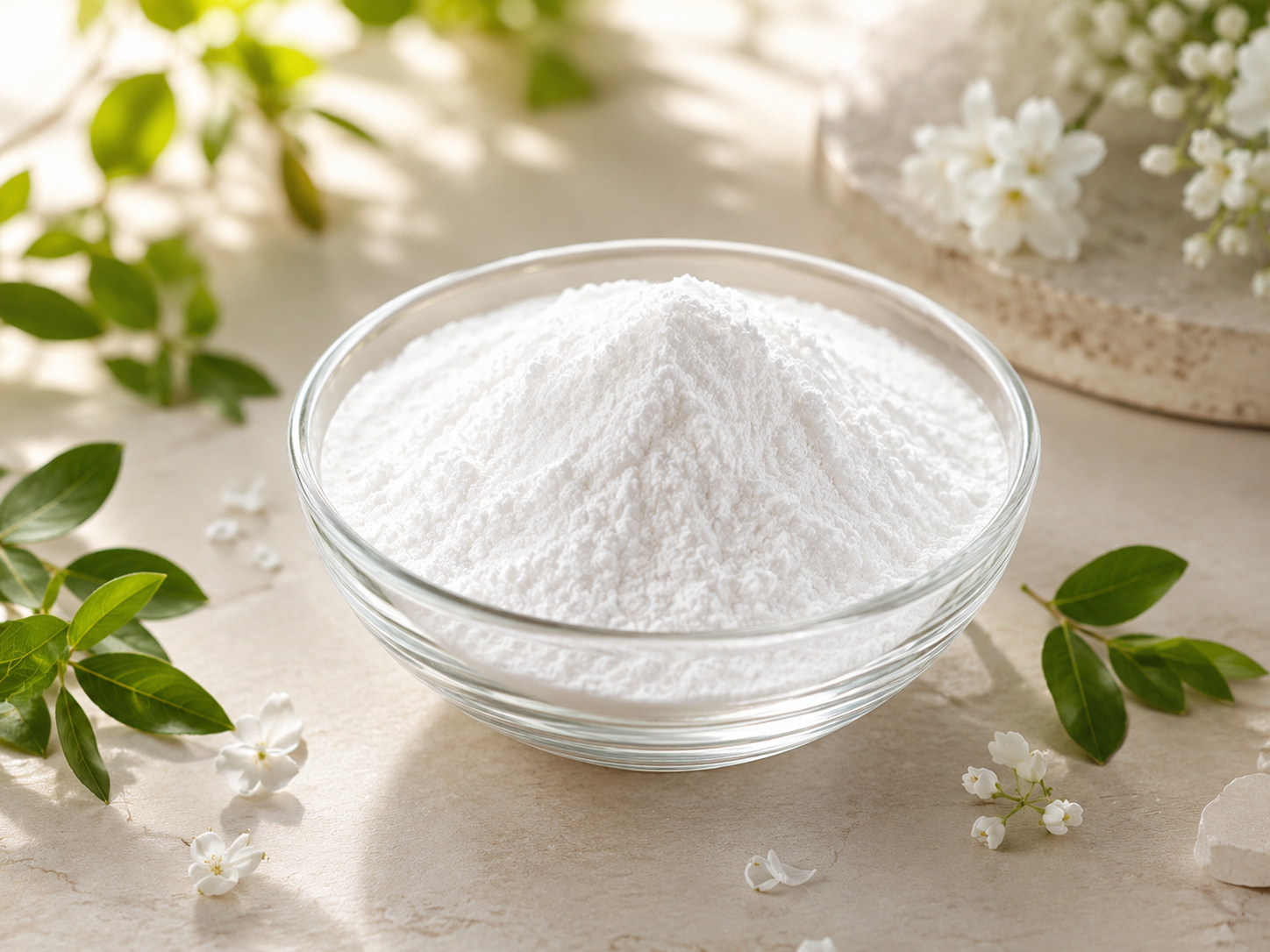
High-purity white crystalline Spermidine Trihydrochloride powder (CAS: 334-50-9).
A technical guide on Spermidine Trihydrochloride (CAS 334-50-9) bulk storage, moisture-proof cleanroom handling SOPs, and formulation stability for dietary supplement manufacturers and B2B buyers.
Spermidine Trihydrochloride (CAS: 334-50-9) is widely recognized as a benchmark active ingredient in cellular autophagy, mitochondrial health, and healthy-aging formulations. While converting spermidine into its trihydrochloride salt form significantly enhances chemical stability compared to the volatile free base, the raw material remains inherently hygroscopic and sensitive to ambient environmental conditions.
For B2B buyers, formulation scientists, and contract manufacturers, maintaining potency across storage and processing requires strict atmospheric controls and validated packaging integrity.
1. CHEMICAL PROFILE & DEGRADATION PATHWAYS
Understanding the physical behavior of bulk Spermidine Trihydrochloride is essential for mitigating formulation loss:
• Hygroscopicity & Deliquescence: Spermidine 3HCl possesses three protonated aliphatic amine groups, giving the crystal lattice high moisture affinity. When exposed to relative humidity (RH) above 45%–50%, the crystalline powder rapidly absorbs ambient moisture, leading to powder agglomeration, hopper bridging, and assay dilution during blending.• Oxidative Sensitivity: Prolonged exposure to atmospheric oxygen, UV radiation, and heat can induce trace oxidative deamination, resulting in a slight yellowish discoloration.• Thermal Stress: Although its melting point with decomposition is high (~256°C–258°C), prolonged storage in warm ambient conditions (> 25°C / 77°F) accelerates degradation kinetics, particularly in the presence of trace moisture.
2. INDUSTRIAL STORAGE & BARRIER PACKAGING STANDARDS
To preserve high purity (HPLC ≥ 98.0% / ≥ 99.0%) over a standard 2-year shelf life, warehouses should maintain:
• Temperature Control: Controlled cool storage at ≤ 25°C (77°F). For long-term reserves, cold storage at 2°C–8°C is recommended.• Humidity Control: Storage area relative humidity strictly maintained at ≤ 45%–50% RH.• Light Protection: Protect from direct sunlight and UV radiation in dark storage zones.• Multi-Tier Packaging: Seal in double food/pharma-grade inner polyethylene bags, enclosed within an evacuated, nitrogen-purged (N2) aluminum foil barrier bag, and packed in tamper-evident fiber drums.
3. CLEANROOM HANDLING & DISPENSING SOPS
A significant proportion of stability failures occurs during cleanroom sampling and weighing:
1. Thermal Equilibration (Anti-Condensation): When retrieving drums from cold storage (2°C–8°C), never open containers immediately. Allow unopened drums to stand in the staging area for 4–6 hours until reaching ambient cleanroom temperature, preventing surface moisture condensation.2. Exposure Limits: Conduct dispensing in cleanrooms controlled at RH ≤ 40%. Limit open-container exposure to under 30 minutes.3. Resealing Protocol: Expel excess headspace air from the inner liner, insert a fresh pharmaceutical-grade desiccant between the liners, heat-reseal the aluminum foil barrier, and secure the drum lid immediately.
4. DOSAGE FORM DESIGN & STABILITY
• Capsule Shell Selection: Prioritize Hypromellose (HPMC) vegetarian capsules (3%–6% native moisture) over gelatin shells (13%–16% moisture), which readily release water into the hygroscopic blend.• Excipient Compatibility: Utilize low-moisture grades of Microcrystalline Cellulose (MCC). Incorporating 0.5%–1.0% hydrophobic colloidal silicon dioxide preserves powder flowability and reduces clumping.• Co-Formulation: When compounding synergistic longevity formulas with beta-NMN, PQQ Disodium Salt, or L-Glutathione, ensure all co-ingredients adhere to strict low-moisture thresholds.
5. QUALITY ASSURANCE & THIRD-PARTY VERIFICATION
Reliable procurement requires validated analytical parameters:
• Assay Verification: HPLC testing on an anhydrous basis (standard ≥ 98.0%, ultra-pure ≥ 99.0%).• Moisture Limit: Karl Fischer titration controlling Loss on Drying at ≤ 1.0%.• Independent Third-Party Testing: Commercial batches should be supported by blind-sample testing from internationally accredited laboratories, including Eurofins, Intertek, and CTI, verifying heavy metals and microbial limits.• Technical Dossiers: Technical Data Sheets (TDS), Safety Data Sheets (MSDS), and Accelerated Stability Reports available for qualified buyers.
About Hygieia BiotechHygieia Biotech is a specialized biosynthetic manufacturer supplying ultra-pure active longevity ingredients to global nutraceutical brands. Leveraging green synthetic biology, Hygieia provides commercial-scale Spermidine Trihydrochloride (CAS: 334-50-9) engineered for high powder uniformity, excellent flowability, and long-term batch stability.