
Stimwave’s drug-free wireless pain relief neurostimulator changing the lives of people suffering from chronic pain
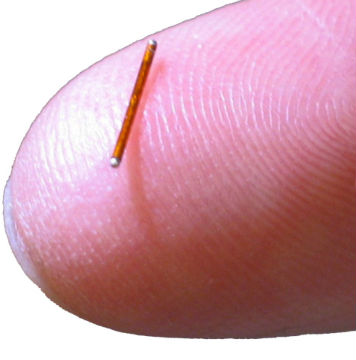
Stimwave Technologies' Wireless Pain Relief technology.
World’s first wireless, miniature implantable device hailed by doctors and patients as a long-term therapy breakthrough.
Stimwave LLC, a medical device manufacturer and independent research institute headquartered in South Florida, has achieved long-term success for hundreds of pain patients during the early adaptor rollout of the world’s first miniature wireless pain relief system. Embraced by pain specialists seeking non-opioid treatments, the drug-free, breakthrough remedy offers new hope to the more than 400 million people worldwide who suffer from chronic pain.
“Every day in the US an average of 120 people die as a result of drug overdose, more than from motor vehicle crashes, and another 6,700-plus are treated in emergency departments for the misuse or abuse of prescription pain medication,” said Stimwave Chairman and CEO Laura Tyler Perryman. “We believe that Stimwave’s Wireless Pain Relief technology is not only a viable option to help millions of people who suffer from chronic pain, but a potential life-saver as the US faces an epidemic of opioid addiction that in many cases is an unavoidable side effect of long-term use of addictive pain medication.”
Stimwave’s Wireless Pain Relief devices are 95% smaller than any other neuromodulation device on the market, so small, with a diameter of less than 1.5 mm, that they are simply implanted through a standard needle during an outpatient procedure and a minimally invasive receiver placement technique. Because they are wireless, with the power source discreetly worn outside the body, there is no need for the invasive “open surgery” required of earlier neuromodulation devices, reducing the risk of infection, pain at the site of a large battery, and other long-term complications of battery units and connectors that account for 85% of adverse events, according to registries. Further, this miniature wireless device is powered by a wearable antenna, easily integrated into clothing and requiring no sticky gels that could irritate the skin, and there are no “wires” protruding from the body.
"This is great news for pain specialists and chronic pain patients who previously did not have a minimally invasive implant option available for pain,” said Dr Sanjay Gupta, president of the American Pain Association and principal clinician at Atlantic Pain and Wellness Institute. “Our country is facing a horrible epidemic of drug overdose deaths. These wireless products provide an alternative to opioids, which is much needed in the armamentarium for effective pain control.”
Stimwave launched it’s FDA-cleared devices for the relief of chronic back and leg pain to a limited number of patients throughout 2015, and in March 2016 was granted FDA 510(k) for the relief of peripheral nervous system (PNS) pain, becoming the only neuromodulation device manufacturer cleared by the FDA to help reduce chronic neuropathic pain at most locations throughout the body, from back and leg pain addressed by spinal cord stimulation to PNS treatment for shoulder pain, wrist and elbow pain, knee pain, hip pain and more.
“The major issue with peripheral nerve stimulators in the past has always been the bulk and length of cables, connectors and pulse generators,” said Dr. Richard North, consultant and retired Professor of Neurosurgery at John Hopkins University School of Medicine. “A miniature wireless peripheral nerve stimulator will minimize the need for surgery in patients who already are suffering from pain. It has long been needed and now is finally a reality.”
Stimwave’s wireless device delivers small pulses of energy to specific nerves, triggering a reaction that enables the brain to remap pain pathways, thus providing pain relief. The Stimwave device contains no internal batteries or other toxic materials. The device is fixed in place by an anchor, so it stays “in line” with the body’s nerves, allowing a freedom of motion that is impossible with bulkier implanted devices.
The Stimwave portfolio also includes the only neuromodulation system approved for “full body” MRI examinations, meaning the device does not have to be removed for 3-Tesla MRI exams. This is a significant diagnostic breakthrough as it allows patients with pain to benefit from neuromodulation without restricting their access to MRI-assisted diagnoses, for current or future medical issues.
Related News
-

News Pharmaceutical Supply Chain People Moves
The latest appointments, promotions, and structural changes across the pharmaceutical supply chain.
-

News Merck KGaA to buy US biotech SpringWorks for US$3.9 billion
The German multinational pharmaceutical company Merck KGaA have signed a deal to buy US biotech company SpringWorks Therapeutics at an equity value of US$3.9 billion in a move to add rare cancer therapeutics to their pipelines.
-

News Cassava Sciences halts Alzheimer's drug trial after limited progress
Cassava Sciences have drawn a close to their investigations and development of the drug simufilam, which they intended to be used for the treatment of Alzheimer’s disease.
-
News US FDA adds haemodialysis bloodlines to devices shortage list
On March 14, 2025, the US FDA published an open letter to healthcare providers citing continuing supply disruptions of haemodialysis bloodlines, an essential component of dialysis machines.
-

News Vertex Pharmaceuticals stock jumps as FDA approves non-opioid painkiller
UK-based Vertex Pharmaceuticals saw their stock shares soar as the US FDA signed off on the non-opioid painkiller Journavx, also known as suzetrigine, for patients with moderate to severe acute pain, caused by surgery, accidents, or injuries.
-

News Lessons from CPHI Milan 2024: Sunny Intervals for Pharma Manufacturing?
As the 2024 CPHI conference wrapped up in Milan, we caught up with L.E.K. Consulting – a global strategy consulting firm with deep expertise in pharma manufacturing – to discuss evolving market perspectives and business outlook. -

News US BIOSECURE Act passed by US House of Representatives
The controversial act, which has already impacted several foreign companies operating in the US, was passed by the House of Representatives on September 9, 2024. It is now headed for the US Senate before it can be signed into law by President Joe Biden... -

News Drug prices agreed upon as part of the US Inflation Reduction Act
The Inflation Reduction Act brought into constitution by the Biden administation in 2022, which proposed a drug price negotiation between the government and pharmaceutical companies, has reached it's first agreement.