
Survey Reveals Life Sciences Quality Assurance Discipline Set to See Extensive Recruitment Activity

The Quality Assurance (QA) discipline within the life sciences sector is set to see extensive employment changes as salary dissatisfaction drives career moves, according to new research by life sciences recruiter, Clinical Professionals.
In its comprehensive salary survey of the life sciences sector, Clinical Professionals found that 75% of candidates in the QA field felt their pay did not reflect their level of experience. While this is a 5% on last year’s report, it is one of the highest percentages recorded across the life sciences sector. The report goes on to outline that, as a result of this dissatisfaction, more than half of those questioned (59%) plan to move jobs in the next year, with a further 18% stating they would take a new role in the next 12 months if the package was right.
In an attempt to counter this negativity, employers remain focussed on training and development of staff in order to support internal promotions. There was a clear growth in the range of QA career options, with the type and number of job titles noted in this report outstripping those from the 2012. Training and development budgets appear to be on the up with this reported as the third most common benefit. Almost 70% of respondents cited that this option is offered in their current position — a 30% increase on last year’s figures.
Clinical Professionals’ Group Managing Director, Yvette Cleland commented: “With the economic turmoil now behind us, it’s perhaps unsurprising that professionals in the QA arena are beginning to look at new career options. While the increasing use of benefits as a motivator of staff goes some way in keeping staff happy, this consistently high level of salary dissatisfaction means that employers may need to take swift action on basic pay if they are to avoid a resurgence of the long-dormant war for talent.”
The full report is available to view online: www.pharmaceuticalsalarysurvey.com
Related News
-

News Pharmaceutical Supply Chain People Moves
The latest appointments, promotions, and structural changes across the pharmaceutical supply chain.
-

News Merck KGaA to buy US biotech SpringWorks for US$3.9 billion
The German multinational pharmaceutical company Merck KGaA have signed a deal to buy US biotech company SpringWorks Therapeutics at an equity value of US$3.9 billion in a move to add rare cancer therapeutics to their pipelines.
-

News Cassava Sciences halts Alzheimer's drug trial after limited progress
Cassava Sciences have drawn a close to their investigations and development of the drug simufilam, which they intended to be used for the treatment of Alzheimer’s disease.
-

News US FDA adds haemodialysis bloodlines to devices shortage list
On March 14, 2025, the US FDA published an open letter to healthcare providers citing continuing supply disruptions of haemodialysis bloodlines, an essential component of dialysis machines.
-

News Vertex Pharmaceuticals stock jumps as FDA approves non-opioid painkiller
UK-based Vertex Pharmaceuticals saw their stock shares soar as the US FDA signed off on the non-opioid painkiller Journavx, also known as suzetrigine, for patients with moderate to severe acute pain, caused by surgery, accidents, or injuries.
-

News Lessons from CPHI Milan 2024: Sunny Intervals for Pharma Manufacturing?
As the 2024 CPHI conference wrapped up in Milan, we caught up with L.E.K. Consulting – a global strategy consulting firm with deep expertise in pharma manufacturing – to discuss evolving market perspectives and business outlook. -

News US BIOSECURE Act passed by US House of Representatives
The controversial act, which has already impacted several foreign companies operating in the US, was passed by the House of Representatives on September 9, 2024. It is now headed for the US Senate before it can be signed into law by President Joe Biden... -
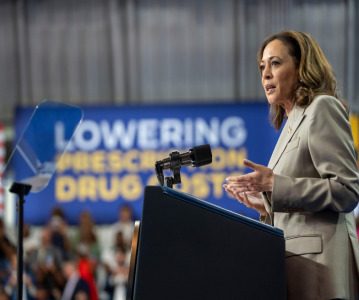
News Drug prices agreed upon as part of the US Inflation Reduction Act
The Inflation Reduction Act brought into constitution by the Biden administation in 2022, which proposed a drug price negotiation between the government and pharmaceutical companies, has reached it's first agreement.