
Teva Files Citizen Petition with FDA Regarding the Complexity of Copaxone Following the Agency’s Guidance

Teva Pharmaceutical Industries has announced that the company has filed a citizen petition (CP) regarding the approvability of purported generic versions of Copaxone. Teva submitted this CP according to the FDA’s procedural guidance and in accordance with the agency’s desire to facilitate public review and comment regarding new scientific data on gene expression.
Teva previously submitted much of this information to its Copaxone New Drug Application (NDA) and FDA responded by asking Teva to resubmit the information as a CP. According to FDA, “This will allow others the opportunity to comment and participate in the decision-making process, will allow Teva the opportunity to comment publicly on the views and opinions of others, and will facilitate creation of an administrative record on which the Agency may base future decisions.”
Teva’s CP provides new scientific data on gene expression and evidence to support arguments regarding active ingredient sameness, immunogenicity and bioequivalence testing with regard to its relapsing-remitting multiple sclerosis medicine, Copazone. As Teva’s data show, it would be contrary to the public’s health and welfare to approve a purported generic glatiramer acetate product that, based on current analytical technologies and confirmed by techniques such as gene expression evaluation, at best can be shown to be similar, but clearly not the same as, Copaxone. Teva’s position is that any potential generic version of Copaxone should use the same gene expression markers and biological pathways to demonstrate sameness, as well as be evaluated via pre-clinical testing and full-scale, placebo-controlled clinical trials with measured clinical endpoints (such as relapse rate) in patients with relapsing forms of multiple sclerosis to establish safety, efficacy and immunogenicity.
Teva looks forward to continued dialogue with FDA as it reviews and considers the new scientific data and information set forth in the citizen petition.
Related News
-

News Pharmaceutical Supply Chain People Moves
The latest appointments, promotions, and structural changes across the pharmaceutical supply chain.
-

News Merck KGaA to buy US biotech SpringWorks for US$3.9 billion
The German multinational pharmaceutical company Merck KGaA have signed a deal to buy US biotech company SpringWorks Therapeutics at an equity value of US$3.9 billion in a move to add rare cancer therapeutics to their pipelines.
-

News Cassava Sciences halts Alzheimer's drug trial after limited progress
Cassava Sciences have drawn a close to their investigations and development of the drug simufilam, which they intended to be used for the treatment of Alzheimer’s disease.
-

News US FDA adds haemodialysis bloodlines to devices shortage list
On March 14, 2025, the US FDA published an open letter to healthcare providers citing continuing supply disruptions of haemodialysis bloodlines, an essential component of dialysis machines.
-

News Vertex Pharmaceuticals stock jumps as FDA approves non-opioid painkiller
UK-based Vertex Pharmaceuticals saw their stock shares soar as the US FDA signed off on the non-opioid painkiller Journavx, also known as suzetrigine, for patients with moderate to severe acute pain, caused by surgery, accidents, or injuries.
-

News Lessons from CPHI Milan 2024: Sunny Intervals for Pharma Manufacturing?
As the 2024 CPHI conference wrapped up in Milan, we caught up with L.E.K. Consulting – a global strategy consulting firm with deep expertise in pharma manufacturing – to discuss evolving market perspectives and business outlook. -

News US BIOSECURE Act passed by US House of Representatives
The controversial act, which has already impacted several foreign companies operating in the US, was passed by the House of Representatives on September 9, 2024. It is now headed for the US Senate before it can be signed into law by President Joe Biden... -
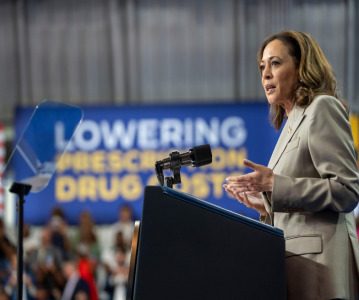
News Drug prices agreed upon as part of the US Inflation Reduction Act
The Inflation Reduction Act brought into constitution by the Biden administation in 2022, which proposed a drug price negotiation between the government and pharmaceutical companies, has reached it's first agreement.