
Tracking innovation with FUJIFILM: CPHI Frankfurt Track Sponsor Interview
.png)
CPHI Frankfurt, to be held at Messe Frankfurt from October 28–30, 2025, will once again bring the pharmaceutical industry together for 3 days of collaboration and innovation. Our Track Sponsor interview series sits down with some of our conference track sponsors to discuss key themes and trends impacting the industry.
FUJIFILM will be sponsoring the Next-Generation Bio Track in the conference programme at this year's CPHI. In this interview Jonathan Haigh from FUJIFILM Biotechnologies discusses all the potential biologics and new technologies hold for the industry.
Why was FUJIFILM excited to sponsor the Next-Gen Bio theatre, and what are you most excited about from the track?
The Next-Gen Bio Theatre offers a unique opportunity for the Life Sciences community to converge and ignite innovation. It brings together suppliers, technology users, drug developers, and manufacturers in one setting.
This year, we're particularly excited to share the technologies developed internally at FUJIFILM Biotechnologies, focused on continuous biomanufacturing. These advancements aim to drive process intensification and automation, ultimately making medicines more accessible globally.
With the growing demand for advanced therapies like CGT and ATMPs, what do you see as the key hurdles in scaling manufacturing processes while maintaining cost efficiency and quality?
Advanced therapies present an opportunity to transform the development and administration of treatments. Unlike traditional therapies that focus on treatment, advanced therapies hold the potential to cure, significantly impacting patients and their caregivers. Despite the promising opportunities, the challenge lies in the infancy of these technologies. As advanced therapies are new, we need to enhance the scalability of these technologies.
Additionally, the cost of goods presents a challenge, affecting the accessibility of these medicines. The industry requires further investment in understanding the science, processes, safety profile and manufacturability to fully realise the potential of advanced therapies.
The agenda highlights the importance of reducing Scope 3 emissions and adopting ecodesign principles. How do you think the biopharma industry can better integrate these practices into its value chain?
The biopharma industry recognises the significance of sustainability and sees substantial potential to incorporate it into design and processes. Lifecycle management is essential, as seen in single-use technologies, which, despite being plastic, can be improved through sustainable design and reuse practices.
As another example, we have a vendor partnership that supports the “circular economy” of used filters by repurposing and upcycling them into new filters.
We also find opportunities by intensifying processes and leveraging data analytics to reduce water usage, minimise clean room footprints, and decrease buffer consumption. By combining these elements, small changes can enhance efficiency and sustainability.
Global health equity and vaccine manufacturing in underserved regions are pressing issues. What steps do you think the industry as a whole needs to take to build resilient supply chains and manufacturing capabilities in these areas?
When developing medicines, accessibility is a crucial consideration. We aim to increase accessibility and intensify processes to reduce costs. Automation simplifies processes and reallocates skilled labour to other business areas. Simplifying processes also facilitates tech transfer globally, enabling medicine production in underserved regions.
Considering modalities like mRNA, with its smaller scale requirements and rapid manufacturing cycles, can ease tech transfer and operations worldwide.
What do you think are the most promising technologies or strategies that could redefine efficiency in biologics production?
FUJIFILM Biotechnologies is investing significantly in continuous biomanufacturing, which is the focus of our presentation at the forum. Continuous biomanufacturing enhances productivity, reduces clean room footprints, lowers energy costs, and accelerates process intensification.
Our technologies are poised to be transformative for our partners. We're utilising perfusion upstream bioreactors, evolving cell lines, and purposed-designed feeds and media to achieve competitive titres and yields.
We plan to discuss our proprietary Apollo X™ cell line, our sister company FUJIFILM Biosciences media feed, and our SymphonX™ proprietary downstream technology, offering a powerful solution for process intensification.
What do you think will be the most significant breakthroughs shaping the future of biologics manufacturing over the next decade?
As an entire organisation, we're actively investing in, and adopting AI.
FUJIFILM has a long history of developing AI technologies across its other business units starting in the camera business, with red-eye detection, and also within its medical businesses.
From the biopharma industry perspective, there's some great opportunities beyond the drug discovery side, which has seen most of AI’s early application.
In biomanufacturing, we can use AI to make our ecosystem – sensors, probes and technologies – all smarter, which can have a significant impact on the success of the execution of batches. In addition, AI has huge potential for preventative and predictive maintenance in biomanufacturing. So instead of the traditional way of maintaining pieces of equipment based on how much they've been used, we can start to use smart data and AI-assisted sensing to look at the data to predict when equipment will need maintenance.
We're also exploring how we could utilise AI to advance cell line developments and increase the efficiency of the cells in the bioreactor.
All of these potential applications with AI will further contribute to our overarching goal of making medicines more accessible by driving down the cost of goods through increasing batch success.
The Content Theatres at CPHI Frankfurt are more comprehensive than ever before, what are you most looking forward to from the show?
The show provides an excellent platform for collaboration, bringing together various supply chain elements from discovery to technology suppliers and end-users. It generates an inspiring energy that fosters collaboration and innovation. This year, I am particularly excited to showcase our SymphonX™ technology to attendees in person. We invite you to experience FUJIFILM Biotechnologies' innovations firsthand.
.jpg) Jonathan Haigh is the Head of UK Sites at FUJIFILM Biotechnologies, leading all aspects of the business and growth strategy across three UK sites. Jonathan has worked for FUJIFILM Biotechnologies for the last 13 years, and has been active in the biopharmaceutical industry for 20 years, working in both the Life Science technology vendor and end-user sectors, holding positions in both the US and UK. He completed a PhD in antibody purification from the University of Cambridge, and an MBA from Durham University Business School.
Jonathan Haigh is the Head of UK Sites at FUJIFILM Biotechnologies, leading all aspects of the business and growth strategy across three UK sites. Jonathan has worked for FUJIFILM Biotechnologies for the last 13 years, and has been active in the biopharmaceutical industry for 20 years, working in both the Life Science technology vendor and end-user sectors, holding positions in both the US and UK. He completed a PhD in antibody purification from the University of Cambridge, and an MBA from Durham University Business School.
Abstract:
Leveraging Continuous Biomanufactuing Within a kojoX™ Ecosystem for Improved Accessibility to Complex Biotherapeutics
With an increasing industry emphasis on complex modalities, sustainable manufacturing and medicine accessibility, the spotlight has been cast on continuous biomanufacturing as a solution. Our MaruX™ technology platform provides a third dimension to our scale-up and scale-out offering that can be leveraged for the production of complex molecules, bi-specifics, tri-specifics, and fusion proteins in cost-effective ways from clinical through to commercial scale. Sustainable manufacturing is achieved by reducing energy costs and manufacturing facility footprint, through process intensification and automation that enhance clean-room efficiencies. While our SymphonX™ technology enables both continuous and fed-batch manufacturing within one facility, offering flexibility for production processes. Both systems form an integral part of our kojoX™ globally harmonised ecosystem – designed to enable high quality bioproduction, faster tech transfer, supply chain resilience and reduced regulatory burden – delivering unmatched speed to market of life-changing medicines for both stainless steel and single use biomanufacturing.
Discover the full CPHI Frankfurt agenda here and plan your trip today!
Related News
-
News Rethinking Sustainability in the Pharmaceutical Industry – CPHI Frankfurt Interview
On site in the Messe Frankfurt for CPHI Frankfurt 2025 we had the chance to interview some of the speakers in the conference theatre, including Vera Carvalho Correia, Global ESG Senior Manager at Centrient Pharmaceuticals.
-
News CPHI Podcast Series: CPHI Frankfurt special – the future of health
Welcome to this special on-site episode of our podcast, recorded live at CPHI Frankfurt 2025. The following episode encapsulates the key themes that were discussed at CPHI Frankfurt this year.
-
News A Day in the Life of an Exhibitor at CPHI Frankfurt
This month's Day in the Life of interview looks a little different! After a successful week at CPHI Frankfurt, we catch up with one of our exhibitors to get a peak behind the scenes and see how they spend their days on site.
-
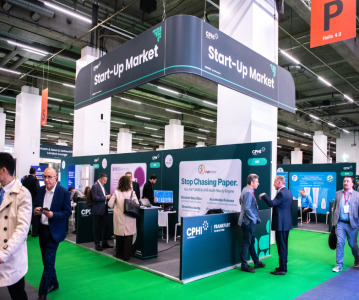
News A snapshot into the life of a Start-Up at CPHI Frankfurt
This interview captures a snapshot into what it is like for a Start-Up company attending CPHI Frankfurt for the first time, under the Start-Up Programme the event has been running for the last couple of years, and what this means to the people beh... -
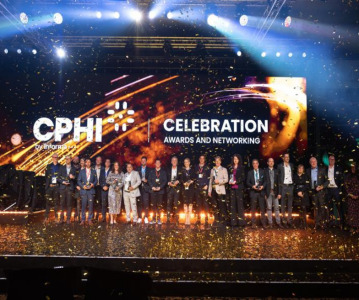
News CPHI Celebration - the winners from the 2025 CPHI Pharma Awards
CPHI Celebration was held on the first night of CPHI Frankfurt 2025 in October 2025, whereby pre-eminent pharma players came together to recognise winners of the 2025 CPHI Pharma Awards.
-
News CPHI Frankfurt 2025 – From the Floor
In a full-circle moment, our From the Floor blog returns to Frankfurt for the 2025 edition of CPHI Frankfurt. Taking place over 3 days from 28–30 October, we're excited to be back in a city of global innovation to meet, collaborate, and grow ... -
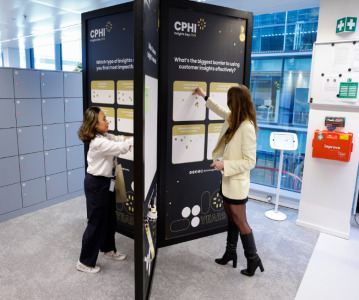
News Pharma in Focus: Key Findings from the CPHI community
Explore what the CPHI community has to say about the top trends emerging from the pharmaceutical industry and supply chain with our annual Strategic Insights infographic.
-
News CPHI Podcast Series: From Patents to Public Health: The GLP-1 Journey
The latest episode of the CPHI Podcast Series delves into the future of obesity management globally, offering opinins on might happen after patent expirys and new globals players entering the fray.