
Uniqsis expands LED photoreactor range
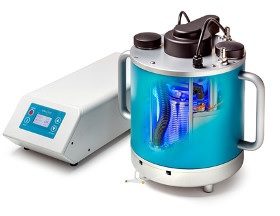
The availability of three new alternative switchable LED configurations provides chemists with the unique ability to optimally undertake almost any photochemistry reaction.
Uniqsis announces its PhotoSyn high-power photoreactor light module for continuous flow chemistry is now available with alternative LED array configurations that makes it compatible with a broader range of photochemical reactions.
The availability of three new alternative switchable LED configurations (blue, UVA-blue and blue-green-white) provides chemists with the unique ability to optimally undertake almost any photochemistry reaction. The operating wavelengths of the three LED array configurations are blue (455 nm), blue-green-white (455 nm, 530 nm and 420-700 nm) and UVA-blue (365 nm and 455 nm).
The curved, water-cooled LED arrays in the PhotoSyn are designed to maximise photon intensity and concentrate the available light on the independently temperature controlled central coil reactor. These high-quality LED’s have lifetimes of several years in continuous use without suffering a significant reduction in intensities.
The PhotoSyn incorporates a cooling fan to minimise undesirable radiative heating of the flow reactor whilst being cleverly engineered to completely prevent potentially hazardous light emissions from the unit, thereby avoiding the need to operate the instrument in a shielded enclosure. Moreover, the PhotoSyn is protected with safety interlocks that deactivate the light source and protect the user if any attempt is made to remove the cover whilst in use.
The PhotoSyn is compatible with both the Uniqsis Cold Coil standalone reactor module and the Polar Bear Plus Flow cryogenic flow reactor, which control the coil reactor temperature independently of the lamps. Reactions may be run from 150 °C down to sub-ambient temperatures dependent upon the power of the cooling unit used. The variable power supply allows the lamp power output to be adjusted from 10-100% making the unit suitable for both small scale R&D and scale up applications.
Related News
-

News Pharmaceutical Supply Chain People Moves
The latest appointments, promotions, and structural changes across the pharmaceutical supply chain.
-

News Merck KGaA to buy US biotech SpringWorks for US$3.9 billion
The German multinational pharmaceutical company Merck KGaA have signed a deal to buy US biotech company SpringWorks Therapeutics at an equity value of US$3.9 billion in a move to add rare cancer therapeutics to their pipelines.
-

News Cassava Sciences halts Alzheimer's drug trial after limited progress
Cassava Sciences have drawn a close to their investigations and development of the drug simufilam, which they intended to be used for the treatment of Alzheimer’s disease.
-
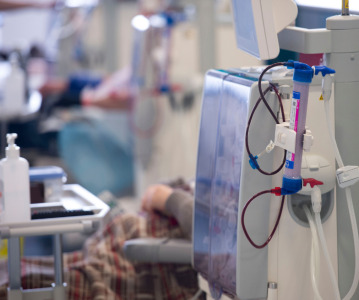
News US FDA adds haemodialysis bloodlines to devices shortage list
On March 14, 2025, the US FDA published an open letter to healthcare providers citing continuing supply disruptions of haemodialysis bloodlines, an essential component of dialysis machines.
-

News Vertex Pharmaceuticals stock jumps as FDA approves non-opioid painkiller
UK-based Vertex Pharmaceuticals saw their stock shares soar as the US FDA signed off on the non-opioid painkiller Journavx, also known as suzetrigine, for patients with moderate to severe acute pain, caused by surgery, accidents, or injuries.
-

News Lessons from CPHI Milan 2024: Sunny Intervals for Pharma Manufacturing?
As the 2024 CPHI conference wrapped up in Milan, we caught up with L.E.K. Consulting – a global strategy consulting firm with deep expertise in pharma manufacturing – to discuss evolving market perspectives and business outlook. -

News US BIOSECURE Act passed by US House of Representatives
The controversial act, which has already impacted several foreign companies operating in the US, was passed by the House of Representatives on September 9, 2024. It is now headed for the US Senate before it can be signed into law by President Joe Biden... -
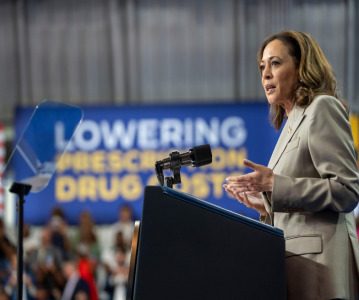
News Drug prices agreed upon as part of the US Inflation Reduction Act
The Inflation Reduction Act brought into constitution by the Biden administation in 2022, which proposed a drug price negotiation between the government and pharmaceutical companies, has reached it's first agreement.