
Advanced Computing in Pharma: 3 reasons why quantum computing could disrupt R&D

Quantum computing technology uses quantum systems called “qubits”. They work with non-binary values, unlike classical computing which uses only bits with values of 0 or 1, and can overlap each other and act as a group. The result is a much greater power than conventional computers and allows for faster decision making and calculations by taking into account several options simultaneously rather than taking them one after the other. Quantum computing could therefore solve calculations in a few seconds, where classical computers would take several years or even decades. Several industries are expected to benefit from quantum computing over the next few years, but the impact of quantum computing could be the greatest in the pharmaceutical industry and particularly for drug discovery.
Alcimed gives you 3 reasons why quantum computing could disrupt R&D in pharma:
1. Quantum computing in pharma could reduce the costs of drug discovery and drug design stages
The time it takes to develop a drug, from discovery to launch, is a process based on very costly methods for pharmaceutical companies and is commonly estimated at more than 2 billion dollars for a drug, with success rates of less than 10% between entry into clinical development and launch of the new drug. The profitability of R&D investments is therefore currently based for pharma companies on a few successful drugs. Quantum computing in pharma could drastically reduce these costs, and potentially in the long run the price of drugs. By enabling accurate modeling of drug-target interactions and more efficient screening of very large virtual libraries, quantum computing in the pharmaceutical industry could reduce the need for expensive in vitro testing.
The development time of a drug, from discovery to launch, is more than 10 years. Because for new drugs as quantum computers can study very complex systems such as the human biological system and its reactions to drugs. The technology could also make it easier to use pre-approved drugs for new applications. Quantum computing for pharmaceuticals makes it possible to perform hundreds of millions of comparisons of complex molecules simultaneously: matches between molecules are examined, the positive effects of a new therapeutic approach can be predicted, as well as the negative effects. Design time and results are improved. In the future, it will be interesting to follow which therapeutic areas will benefit most rapidly from quantum computing technology in the pharma industry.
2. Quantum computing could facilitate the design of clinical trials
In silico clinical trials without any humans, could be a reality thanks to quantum computing in pharma R&D. Even if the technology is very far from being mature for this specific purpose today, quantum computing could participate in the building of virtual patients. It would allow for clinical trials designs with as many virtual patients as possible, with components chosen by the clinical trial sponsor. Quantum computing could potentially reduce the time of clinical trials, the number of sites and of “real” patients, and in the meantime increase their quality and completeness. The technology could potentially allow the inclusion of population types that are most often not included in clinical trials.
3. Quantum computing could foster the arrival of new players in pharmaceutical R&D
In order to make quantum computing technology a reality for pharmaceutical R&D, the development of suitable software and algorithms is necessary. Indeed, the software and algorithms of classical computing do not work in the same way. New players are therefore entering the market of quantum computing and specialize themselves on drug discovery. This is for example the case of Rahko, ProteinQure, GTN Ltd, Menten AI, etc. Long-established players in the IT market are also investing in the quantum computing market for pharma R&D, such as Google, IBM or Honeywell. Finally, new companies are entering the quantum computing market such as D-Wave, Rigetti and Xanadu Quantum Technologies.
All these companies could be potential partners for the pharmaceutical industry. It will be interesting to observe whether new players, originally outside the pharmaceutical industry, will be able to position themselves on the drug development market and how pharmaceutical companies will reorganize themselves in order to collaborate with these new players.
Quantum computing technology is expected to transform the early stages of pharmaceutical research and development in the coming decades, depending on how well companies will embrace it. The technology is still emerging but is slowly maturing to be commercialized, and appears to be very promising for pharma R&D. The first companies to position themselves in this area could gain a significant advantage over their competitors in terms of skills, which are currently rare in quantum computing.
And indeed, several large pharmaceutical companies are already positioning themselves on the topic. Biogen is working with 1QBit, a software company, and with Accenture Labs to develop an application aiming at accelerating drug discovery. Boehringer Ingelheim is the first pharmaceutical company to have entered a partnership with Google Quantum AI in early 2021 to develop applications for simulating molecular dynamics. Roche is cooperating with Cambridge Quantum Computing, a quantum software company, to design R&D algorithms, notably for Alzheimer’s research.
Related News
-

News Swiss pharma industry warns US tariffs could harm global patient care
The Swiss pharmaceutical sector has raised alarms over new US tariffs on medicines, warning of disrupted supply chains, increased costs, and delayed innovation, all of which could jeopardise patient access to essential treatments worldwide.
-

News Women in Pharma: CPHI India – India’s Pharmaceutical Industry and Gender Inclusion Challenges
India’s pharmaceutical industry has emerged as a significant player in the global market, valued at USD 50 billion in FY 2023-2024, according to Frost & Sullivan’s analysis. This sector encompasses a diverse portfolio, including drugs, vacc... -
News Biogen acquires Apellis Pharmaceuticals to boost immunology and rare disease profile
Biogen Inc. has announced its acquisition of Apellis Pharmaceuticals, Inc., a move that is set to significantly enhance its growth portfolio in immunology and rare diseases. The agreement, valued at approximately US$5.6 billion, will see Biogen purchas... -

News Gilead Sciences acquires Ouro Medicines for over US$2 billion
Gilead Sciences confirms a deal to take over Ouro Medicines, adding to a portfolio of therapies for autoimmune diseases.
-
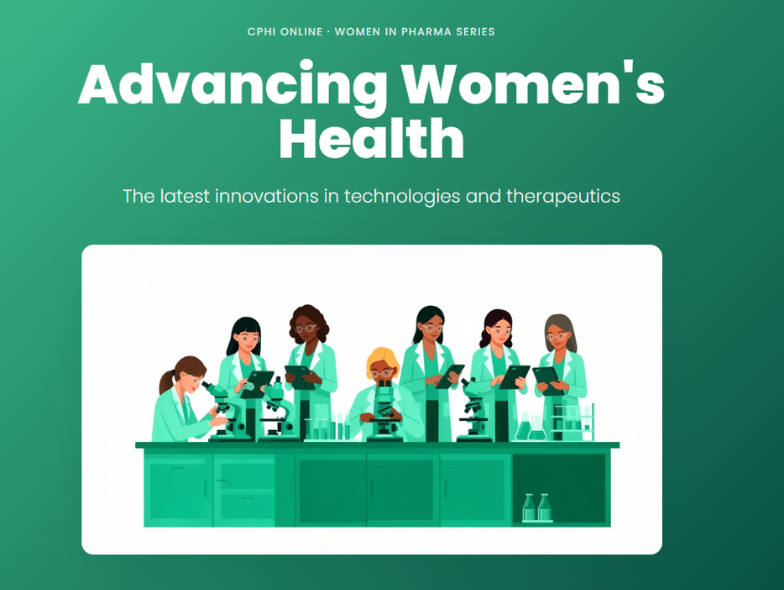
News Women in Pharma: Advancing Women's Health
Discover the latest innovations in technologies and therapeutics that are revolutionising women's health in our latest CPHI Online Women in Pharma infographic.
-

News CPHI Pharma Awards 2026: Recognising Excellence in an Evolving Industry
Submissions now open — deadline May 16
-

News Dr Reddy's to launch generic semaglutide in India
Dr Reddy’s Laboratories, one of India’s leading pharmaceutical companies, is preparing to launch a generic version of semaglutide, branded as Obeda, in March. Obeda is expected to provide a more affordable alternative to Ozempic a... -
News Frontier Biotech and GSK Forge RNA Therapy Partnership
Frontier Biotechnologies and GSK have entered a global licensing agreement to advance small interfering RNA (siRNA) therapeutics. This collaboration grants GSK exclusive rights to develop and commercialise two promising siRNA candidates, marking a mile...