
Agile Sciences creates a powerful new weapon in the fight against antibiotic resistance

Their proprietary family of 2 Amino-Imadazole compounds renders bacteria incapable of mounting any kind of defense against antibiotics or other threats.
Agile Sciences in Raleigh, NC has developed a potentially powerful, effective and affordable means to stem the tide of antibiotic resistance. Results show that their proprietary family of 2 Amino-Imadazole (2-AI) compounds, act directly on the response regulator protein of so-called bacterial two-component systems. This effectively renders the bacteria incapable of mounting any kind of defense against antibiotics or other threats. “Agile’s 2-AI compounds have been shown to affect all the bacterial resistance mechanisms reducing the amount of antibiotic needed to kill them, eliminating future resistance and reviving antibiotics that have previously been rendered useless due to resistance issues”, said Malcolm Thomas COO of Agile Sciences.
The dramatic increase in antibiotic resistance in recent years has alarmed healthcare experts. A recently released Wellcome Trust report commissioned by the British government estimates that deaths due to antibiotic resistance will rise from the current level of 700,000 to 10 million deaths a year. The CDC last week announced the first case of a US superbug. An E-coli strain resistant to all known antibiotics was detected in 49-year-old Pennsylvania woman. Dr Christopher Davies, an expert on antibiotic resistance from the Medical University of South Carolina, notes: “The antibiotic cupboard is bare, and it will take years for new ones to reach the market. What the Agile Sciences technology offers is a way to fight antibiotic resistance today. Their compounds make current antibiotics work better, breathe new life into older antibiotics and eradicate pathogenic biofilms.”
Derived from a natural marine organism, Agile’s technology was initially developed by two Professors at North Carolina State University and has extensive funding from NIH, the Cystic Fibrosis Foundation, North Carolina Biotechnology Center and NIAID.
Related News
-
News GSK announces £400 million investment in new Cambridge R&D centre
Pharmaceutical giant to establish flagship research facility on Cambridge Biomedical Campus as part of strategic pipeline acceleration
-
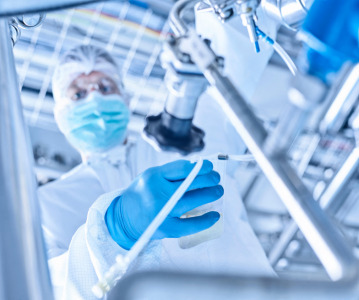
News Understanding the Benefits and Advances of Cleanroom Technology
In an industry where precision and sterility are crucial concerns, cleanrooms play a vital role in maintaining the integrity of pharmaceutical products like drugs, vaccines, and other medical products. So, what is a cleanroom?
-

News AbbVie secures GBP£1.2 billion deal for Gilgamesh’s psychedelic programme
AbbVie has penned a significant agreement to acquire the bretisilocin programme from Gilgamesh Pharmaceuticals for up to £1.2 billion, marking a bold step in the pharmaceutical giant's quest to develop treatments for psychiatric disorders. -

News Gates Foundation commits US$2.5 billion to women’s health research
The Bill & Melinda Gates Foundation has announced a substantial US$2.5 billion commitment to accelerate research and development focused exclusively on women's health through 2030.
-
News Mid-year review: notable FDA drug approvals of 2025
As we fly past the halfway point of 2025, the pharmaceutical landscape reliably continues to evolve with innovative therapies addressing critical medical needs. The FDA has already approved 17 groundbreaking medications this year, each representin... -
News US FDA announces new priority vouchers for accelerated review times
The US FDA announced a new priority program for drug developers – the Commissioner’s National Priority Voucher (CNPV) program aims to enhance the health interests of the US by allowing drug developers to redeem a voucher, shortening th... -
News Google-backed start-up raises US$600 million to support AI drug discovery and design
London-based Isomorphic Labs, an AI-driven drug design and development start-up backed by Google’s AI research lab DeepMind, has raised US$600 million in its first external funding round by Thrive Capital. The funding will provide further power t... -
News AstraZeneca to invest US$2.5 billion in Beijing R&D centre
Amid investigations of former AstraZeneca China head Leon Wang in 2024, AstraZeneca have outlined plans to establish its sixth global strategic R&D centre in China. Their aim is to further advance life sciences in China with major research and manufact...