
Understanding the Benefits and Advances of Cleanroom Technology
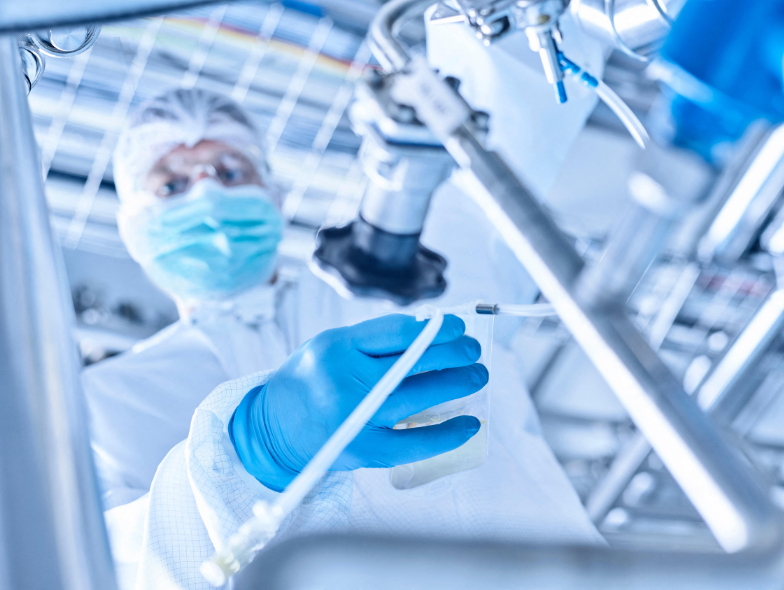
In an industry where precision and sterility are crucial concerns, cleanrooms play a vital role in maintaining the integrity of pharmaceutical products like drugs, vaccines, and other medical products. So, what is a cleanroom?
Serving as controlled environments designed to minimise contamination in the manufacturing process, they ensure the highest standards of product safety and quality. First introduced in the early sixties, these specialised spaces are meticulously engineered to regulate factors such as air quality, pressure, temperature, humidity, and particle levels. A cleanroom is made up of specialised equipment that can maintain a contamination-free atmosphere, from a separated space specifically for gowning, to the fan units and even the door seals of the rooms. The result is an environment where sensitive processes can be carried out without the risk of compromising the safety of the product being manufactured.
Whether from airborne particles, microorganisms, or human error, contamination can compromise product integrity, endanger patient safety, and force businesses to implement costly recall proceedings. As pharma becomes an increasingly scrutinised sector, pharmaceutical companies need to ensure their work meets different international standards and regulatory protocols.
In this article, we’ll explore exactly why cleanrooms are so important for preventing contamination, and the innovative solutions driving advancements in cleanroom technology. From high-efficiency particulate air (HEPA) filtration systems to cleanroom garments and best practices, we delve into how these measures ensure a sterile environment, enabling the production of safe and effective pharmaceutical products. Cleanroom solutions have evolved in recent years to help shape the future of pharmaceutical manufacturing, and protect the integrity of life-saving medicines.
Modular cleanroom equipment
While cleanrooms began as an integrated part of laboratory design, with specialised areas built in, the industry’s increasing demand for cleanroom technology has outstripped the available spaces. The industry has seen several shifts in the last few years, with demands for medicines increasing rapidly, and along with it numerable changes in regulation to be kept abreast of. This need for agility and flexibility has been answered with the evolution of modular cleanroom design. Beyond what is a cleanroom – what is a modular cleanroom? Modular cleanrooms are pre-fabricated set-ups with components and panels that can be assembled and disassembled as needed and reconfigured to the requirements of the lab in real time. This allows businesses to design something to their exact specifications, manufacturing the cleanroom in its own contamination-free space to further maximise environmental control, before delivering the prefabricated cleanroom to be installed onsite. By their nature, they are more cost-effective than standard cleanrooms, through their flexibility and down- and up-scaling capabilities.
Preexisting modular cleanrooms can be reconfigured or extended to adjust to evolving needs. There have been several steps forward in developing construction materials that have further cut the amount of particulate shedding during assembly, and these modular panels are often given an antimicrobial coat, reducing any accidental human contamination during the assembly and cleaning processes. It is also easier to maintain those environmental factors – temperature, pressure, humidity, and so on – in modular cleanrooms.
Improving cleanroom sustainability
The other key benefit of modular cleanroom equipment falls in line with a wider industry trend that has been an ever more important part of the conversation: sustainability. Not only can these spaces be reused, but they are also increasingly made from recycled or recyclable materials such as HPL (high-pressure laminate) or injection polyurethane. Research is also being conducted in how 3D printed materials can be used to further reduce the environmental impact of constructing and running cleanrooms.
Beyond the materials they are made from, great leaps have been made in improving the sustainability of core cleanroom processes. In particular, many organisations are changing how they use the air filtration systems, which form the backbone of every cleanroom. For example, rather than continuously running heating, ventilation, and air conditioning (HVAC) systems – a process that requires roughly 80% of their total energy consumption – many labs have adopted a more variable approach to controlling ventilation and airflow. Compounded by the rising use of EC+ fans, which make further significant reductions to all-round energy usage, and certifications such as the WELL Building Standard or LEED (Leadership in Energy and Environmental Design), cleanroom technology looks set to be even cleaner going forward.
More cleanroom trends for the year ahead
As AI continues to become one of the most widely discussed issues of the moment, the rising uptake of automation in cleanrooms cannot be overlooked. In cleanrooms, so much data needs to be gathered on a daily basis; using AI to analyse information gathered from IoT sensors across a cleanroom can help recognise potential issues with processes. This ensures that integrity remains high, precise records can be kept, and that operations can continue at their most efficient and productive rate.
On a broader level, it isn’t just data collection where automation can improve efficiency; testing, electrics, cleaning, and waste management processes can also be automated, helping to lower energy and usage. This also cuts down the potential for human contamination and manual error, giving researchers the greatest chance of accuracy and reliability in their work.
Conclusion
The way in which cleanroom technology has evolved in recent years has only cemented its reputation as one of the foundational elements of the pharmaceutical industry. While they were always the most reliable method for creating a controlled environment for the manufacture of medical products, advances like modular design and automation offer better accuracy, greater flexibility, and a reduced risk of accidental contamination by those working onsite, and so increasing safety.
As the need for innovation becomes even greater, pharma manufacturing looks set to continue its reliance on new advancements in such technology to meet demand. This not only applies to the cleanrooms themselves, but also processing the data using machine learning, AI, and other algorithmic analysis. All of these will continue their trajectory of rapid development in the future, which can only give promise of further, universal safe manufacturing processes for life-saving medicines.
Sources
Industry-Leading Modular Cleanrooms | AES Clean Technology
The Role of Clean Room Technology in the Pharmaceutical Industry1 | Sz Pharma
Contamination Control Strategies In Low Bioburden Biologic Drug Substance Manufacturing
https://ftscleanrooms.com/the-future-of-cleanrooms-how-ai-automation-sustainability-are-transforming-controlled-environments/
https://www.designtekconsulting.com/post/the-role-of-cleanrooms-in-achieving-sustainable-manufacturing-goals
https://cleanroomtechnology.com/the-future-of-cleanrooms-automation-digitisation-and-sustainability
https://www.14644.dk/recent-advances-in-cleanroom-technology
Related News
-
News Women in Pharma: The Final Chapter of 2025
Our monthly Women in Pharma series highlights the influential lives and work of impactful women working across the pharmaceutical industry, and how the industry can work towards making the healthcare industry and workplace more equitable and ... -

News Introducing the Pharmaceutical Sustainability Ecosystem from CPHI
The Sustainability Collective from CPHI unveils the groundbreaking Pharmaceutical Sustainability Ecosystem to drive pharmaceutical knowledge sharing, connection, and collaboration in order to change the face of sustainability in pharmceutical... -
News Navigating Cross-Border Pharmaceutical Logistics: Strategies for a More Resilient Supply Chain
This is a feature article written by Nick Fryer, Vice President of Marketing, Sheer Logistics
-
News A Day in the Life of a Director of Business Development
In this Day in the Life of interview, Thomas Hauser, Director of Business Development at Tjoapack. Thomas has spent nearly 30 years in the pharmaceutical industry and describes how he still finds curiosity and excitement in the bigger picture of global... -

News PhRMA trade association issues comments on Section 232 investigation
The Pharmaceutical Research and Manufacturers of America (PhRMA), an American trade association representing groups in the pharmaceutical industry, issued a letter on May 6, 2026 to the Department of Commerce regarding the Section 232 National Security... -

News Pharmaceutical Packaging Market Prospects: Shifting regional policies
The pharmaceutical packaging industry is experiencing significant transformation in 2025, driven by regulatory changes, supply chain challenges, and sustainability initiatives. The US BIOSECURE Act, passed through the House of Representatives in Septem... -
News Say hello to the CPHI Exhibitor Spotlight!
We’re kicking off a brand-new series where we shine the spotlight on some of the amazing companies gearing up to shake things up at CPHI Americas 2025 this May! The first company in our spotlight is TAPI, who are set to make a splash at its ve... -
News CPHI Podcast Series: How to build a successful CDMO partnership
The latest in our series for the CPHI Podcast Series focuses on partnerships, specifically those between pharma companies and CDMOs. Expert Christine Fürst from Vetter comments on how to make successful and lasting partnerships in the industr...