
Blend Therapeutics Secures $21 Million Financing and Unveils Novel Pentarin Platform for Cancer Therapeutics

Blend Therapeutics has secured $21 million in new funding. The new financing includes additional equity investment from a new investor and all of Blend’s existing venture investors in an expansion of the Series B round, as well as debt financing from an institutional investment firm.
The proceeds of the financing will enable Blend to fully exploit its proprietary Pentarin platform, unveiled, which creates novel, miniaturized biologic drug conjugates encapsulated in nanoparticles, representing a new class of cancer therapeutics. Including the $21 million announced today, Blend has obtained a total of $39.8 million in funding to date. Blend is backed by top-tier venture investors, including New Enterprise Associates, Flagship Ventures, NanoDimension and Eminent Venture Capital.
Blend has also secured a technology licence from a private biotechnology company for novel bi-podal biologic targeting ligands that is an exclusive license in the field of oncology. The in-licensing of this ligand technology is a strategic asset for Blend to develop a robust pipeline of Pentarins. Targeting ligands are one of the core components of Pentarins and Blend’s platform enables the conjugation of the targeting ligand to a therapeutic payload with a chemical linker to create miniaturized biologic drug conjugates (mBDCs), and encapsulates the mBDCs in proprietary nanoparticles to create Pentarins. Together, the components of the Pentarins have distinct yet synergistic anticancer capabilities: the nanoparticle enables high therapeutic concentration at the tumour site; the small size of mBDCs allows for effective penetration and distribution deep into the tumour tissue; the ligand’s targeting ability allows for specific binding to tumour cells; and the cell-killing payload is released inside the cancer cells.
“We are excited to unveil our Pentarin platform as a product engine that creates a new class of cancer therapeutics, and an exceptional opportunity to create value for patients as well as our investors. We look forward to conducting IND-enabling studies to advance our lead Pentarin drug program BTP-277 and completing IND enabling studies of our novel, personalized cisplatin, BTP-114, from our longstanding R&D in platinum drugs” said Richard Wooster, President of R&D of Blend. “Pentarins are an entirely new class of biologic drug conjugates specifically designed for solid tumours, and represent a significant advance in the field since the first development of antibody drug conjugates 35 years ago. We have created Pentarins to have a unique structure, miniaturization and nanoparticle encapsulation that enable the selective targeting of cancer cells and unprecedented penetration deep into tumour tissue, with the aim to improve the treatment of solid tumour cancers for patients.”
In the advancement of Blend’s pipeline of novel drug programmes, the proceeds from the financing will be used to further develop the company’s lead programme, BTP-114, through studies to enable filing of an investigational new drug (IND) application with the FDA. Based on Blend’s historical R&D in novel platinum drug discovery and distinct from the Pentarin platform, BTP-114 is a novel, personalized cisplatin prodrug with novel chemistry designed to preferentially accumulate platinum at the tumour site, deliver a concentrated therapeutic effect and target specific cancers. The funding will also enable Blend to advance its first Pentarin drug candidate, BTP-277, to IND enabling studies as well as exploring other internal Pentarin programmes. In addition, Blend anticipates developing Pentarins in partnership with biotechnology and pharmaceutical collaborators who have their own proprietary targeting protein scaffolds which can be deployed to create novel biologic drug conjugates using Blend’s Pentarin platform.
Related News
-
News GSK announces £400 million investment in new Cambridge R&D centre
Pharmaceutical giant to establish flagship research facility on Cambridge Biomedical Campus as part of strategic pipeline acceleration
-
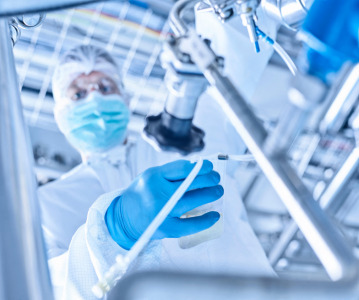
News Understanding the Benefits and Advances of Cleanroom Technology
In an industry where precision and sterility are crucial concerns, cleanrooms play a vital role in maintaining the integrity of pharmaceutical products like drugs, vaccines, and other medical products. So, what is a cleanroom?
-

News AbbVie secures GBP£1.2 billion deal for Gilgamesh’s psychedelic programme
AbbVie has penned a significant agreement to acquire the bretisilocin programme from Gilgamesh Pharmaceuticals for up to £1.2 billion, marking a bold step in the pharmaceutical giant's quest to develop treatments for psychiatric disorders. -

News Gates Foundation commits US$2.5 billion to women’s health research
The Bill & Melinda Gates Foundation has announced a substantial US$2.5 billion commitment to accelerate research and development focused exclusively on women's health through 2030.
-

News Mid-year review: notable FDA drug approvals of 2025
As we fly past the halfway point of 2025, the pharmaceutical landscape reliably continues to evolve with innovative therapies addressing critical medical needs. The FDA has already approved 17 groundbreaking medications this year, each representin... -

News US FDA announces new priority vouchers for accelerated review times
The US FDA announced a new priority program for drug developers – the Commissioner’s National Priority Voucher (CNPV) program aims to enhance the health interests of the US by allowing drug developers to redeem a voucher, shortening th... -
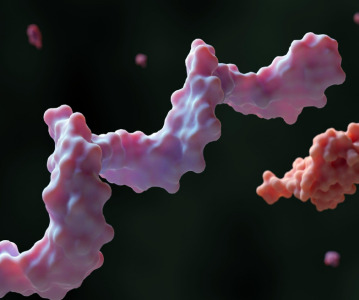
News Google-backed start-up raises US$600 million to support AI drug discovery and design
London-based Isomorphic Labs, an AI-driven drug design and development start-up backed by Google’s AI research lab DeepMind, has raised US$600 million in its first external funding round by Thrive Capital. The funding will provide further power t... -
News AstraZeneca to invest US$2.5 billion in Beijing R&D centre
Amid investigations of former AstraZeneca China head Leon Wang in 2024, AstraZeneca have outlined plans to establish its sixth global strategic R&D centre in China. Their aim is to further advance life sciences in China with major research and manufact...