
Clinical study affirms efficacy of SIRT with SIR-Spheres microspheres
New clinical research has highlighted the benefits of treating metastatic colorectal cancer with SIR-SPheres microspheres.
A large multi-centre clinical study has re-affirmed that Selective Internal Radiation Therapy (SIRT) using SIR-Spheres microspheres is safe and effective in patients with metastatic colorectal cancer.
SIR-Spheres microspheres are fully pre-market approved by the Food and Drug Administration as a form of radiation therapy for colorectal liver metastases. They are used either alone or alongside systemic chemotherapy and are usually administered via the hepatic artery, which supplies blood to the liver.
The new studies aimed to evaluate the overall survival rates of patients and tumour response to using this type of therapy, specifically in patients who are no longer responding to chemotherapy.
Dr Andrew Kennedy, director of radiation and oncology research at the Sarah Cannon Research Institute in Nashville, Tennessee, and lead investigator, explained that patients in the study had long histories of pre-treatment. He said: "These research findings should help to further define the role of SIRT in helping to shrink or control the tumors and prolong patient survival."
The researchers reported median survival rates of 13, nine and eight months in patients who had received one, two or three prior lines of chemotherapy. There were also no significant differences in adverse affects, prompting them to conclude that SIRT with SIR-Spheres microspheres provides a "favourable risk/benefit ratio" in patients who have failed chemotherapy for metastatic colorectal cancer.
Related News
-

News GSK announces £400 million investment in new Cambridge R&D centre
Pharmaceutical giant to establish flagship research facility on Cambridge Biomedical Campus as part of strategic pipeline acceleration
-
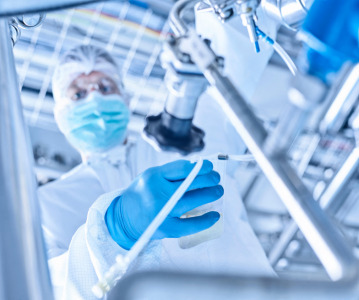
News Understanding the Benefits and Advances of Cleanroom Technology
In an industry where precision and sterility are crucial concerns, cleanrooms play a vital role in maintaining the integrity of pharmaceutical products like drugs, vaccines, and other medical products. So, what is a cleanroom?
-

News AbbVie secures GBP£1.2 billion deal for Gilgamesh’s psychedelic programme
AbbVie has penned a significant agreement to acquire the bretisilocin programme from Gilgamesh Pharmaceuticals for up to £1.2 billion, marking a bold step in the pharmaceutical giant's quest to develop treatments for psychiatric disorders. -

News Gates Foundation commits US$2.5 billion to women’s health research
The Bill & Melinda Gates Foundation has announced a substantial US$2.5 billion commitment to accelerate research and development focused exclusively on women's health through 2030.
-
News Mid-year review: notable FDA drug approvals of 2025
As we fly past the halfway point of 2025, the pharmaceutical landscape reliably continues to evolve with innovative therapies addressing critical medical needs. The FDA has already approved 17 groundbreaking medications this year, each representin... -

News US FDA announces new priority vouchers for accelerated review times
The US FDA announced a new priority program for drug developers – the Commissioner’s National Priority Voucher (CNPV) program aims to enhance the health interests of the US by allowing drug developers to redeem a voucher, shortening th... -

News Google-backed start-up raises US$600 million to support AI drug discovery and design
London-based Isomorphic Labs, an AI-driven drug design and development start-up backed by Google’s AI research lab DeepMind, has raised US$600 million in its first external funding round by Thrive Capital. The funding will provide further power t... -

News AstraZeneca to invest US$2.5 billion in Beijing R&D centre
Amid investigations of former AstraZeneca China head Leon Wang in 2024, AstraZeneca have outlined plans to establish its sixth global strategic R&D centre in China. Their aim is to further advance life sciences in China with major research and manufact...