
Cost-effective, scalable process development of vaccines in cell culture
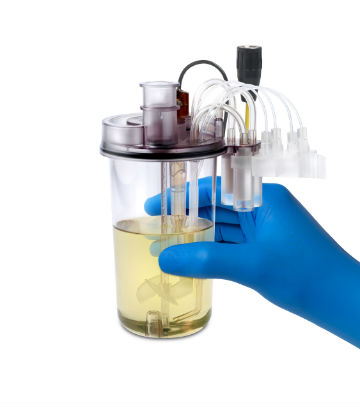
New mini microcarrier bioreactor for ambr high throughput system will enable cost-effective, scalable process development of vaccines in cell culture.
Sartorius Stedim Biotech introduces its mini microcarrier bioreactor for culturing adherent cells.
Sartorius Stedim Biotech (SSB) has launched its new mini bioreactor vessel for its ambr 250 high throughput (ht) system. This new vessel, which is designed for optimal growth of adherent cells on microcarriers will enable rapid, scalable cell culture process development of vaccines. It will be shown on Booth 47 at the BPI European Summit (23-25 April 2018) in Amsterdam, The Netherlands.
The single-use mini bioreactor for microcarrier culture has a working volume of 100-250 mL and features a single Elephant Ear impeller. This impeller type generates optimum mixing and suspension of microcarriers, allowing adherent cells to grow over the entire microcarrier surface. The new mini vessel is based on cell culture bioreactors in the ambr 250 ht system. Utilizing this bioreactor on the ambr 250 ht system will allow rapid scale-up of optimized adherent cell culture processes to SSB’s Biostat STR range of pilot- and manufacturing-scale stirred bioreactors. This results in shorter process development timelines than would be achieved by scientists using benchtop bioreactors and spinner flasks.
Simple to set up and use on the ambr 250 ht, this new single-use mini bioreactor minimizes set-up and turnaround time. With up to 24 bioreactors per ambr 250 ht system, the technology is ideal for Design of Experiments (DoE) studies to optimize process development for vaccine manufacturing using a Quality by Design (QbD) approach.
The new vessel has been tested in collaboration with bioprocess experts at Aston University and University College London as part of an Innovate UK funded project. During these studies, all the cell culture parameters were controlled by the ambr 250 ht automated workstation. The results showed that the new microcarrier vessel design enabled growth to confluence of Vero cells on Cytodex microcarriers’ surface.
“There has been increasing interest in using microcarriers for culturing adherent cell lines in single-use stirred bioreactors as they offer a cost-effective alternative to two-dimensional approaches for vaccine production using T-flasks and roller bottles,” stated Dr Barney Zoro, ambr Product Manager at Sartorius Stedim Biotech. “We are proud to be introducing our new ambr 250 mini bioreactor for culturing adherent cells at the BPI European Summit. Scientists visiting us on Booth 47 will find out how they can use our new mini bioreactor as a predictive model to help shorten their process development timelines and reduce their vaccine manufacturing costs.”

Related News
-
News Novartis signs US$3.2 bn subcutaneous delivery deal with Alteogen
Swiss pharma giant secures access to Korean biotech's ALT-B4 hyaluronidase platform in milestone-heavy agreement, marking Alteogen's fourth major licensing deal of 2026 as competition intensifies in the subcutaneous drug delivery space.
-

News Women in Pharma: The philosophy of pharmaceutical leadership
In this latest instalment of our Women in Pharma series, we sit down with Clarissa Sowemimo-Coker, Chief Strategy Officer at Ambrose Healthcare and CPHI Middle East Advisory Board Member.
-

News The PSCI Supplier Partnership - Collaboration for Responsible Supply Chains
About the Pharmaceutical Supply Chain Initiative The Pharmaceutical Supply Chain Initiative (PSCI) is the leading, member-led association for pharmaceutical companies working collaboratively to build responsible supply chains. Founded in 2006 and es... -

News AstraZeneca shares plunge 8.9% after reports of BMS talks
Britain's largest drugmaker lost more than GBP£17 billion in market value following reports of preliminary merger discussions with Bristol Myers Squibb that could create a pharmaceutical giant worth nearly US$400 billion, though investors rem... -

News GSK announces £400 million investment in new Cambridge R&D centre
Pharmaceutical giant to establish flagship research facility on Cambridge Biomedical Campus as part of strategic pipeline acceleration
-

News The CPHI Sustainability Summit - Where Conversation Becomes Collaboration
The Report Was Never the Destination - “The future of pharmaceutical sustainability won’t be shaped by individual organisations working in isolation. It will be shaped by partnerships, shared expertise and the willingness to work diffe... -

News Trump's generic drug tariffs set to reshape global pharmaceutical supply chains
The US president has announced plans to impose tariffs of up to 200% on imported generic medicines from August 2028, giving manufacturers a two-year window to establish domestic production facilities. The move threatens to upend a global supply chain t... -

News Building Safer, More Responsible Pharmaceutical Supply Chains: PSCI Global Audit Insights
The Pharmaceutical Supply Chain Initiative (PSCI) has released its seventh annual Audit Findings Analysis Report, offering unprecedented insights into supplier practices across the global pharmaceutical and healthcare industry.With a record-breaking 24...