
The Shift: Why Sustainability is Moving to the Centre of CPHI Milan 2026
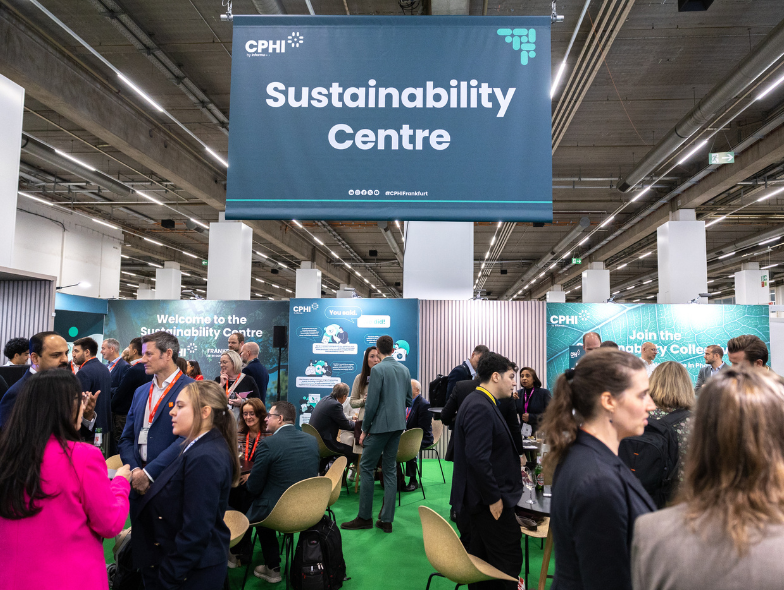
CPHI Online contributor David Roach takes a look at how conversations around sustainability in the pharmaceutical industry can and must be transformed into actionable deliveries, and what the inaugural CPHI Sustainability Summit means for the industry.
The Time is Now
There has been a shift in how sustainability is talked about across the pharmaceutical and healthcare industry. Not overnight. Not dramatically. But enough that you can feel it in the conversations.
Sustainability used to sit more comfortably as an ambition. Something to work towards. To signal. To build into long-term strategy. Now it feels closer than that. More immediate. More connected to real decisions.
And those decisions don’t sit neatly in one place. They land differently depending on where you are in the system.
For procurement teams, sustainability is shaping what gets bought, from whom, and under what conditions. For suppliers, it is becoming embedded in how value is demonstrated; not just what is produced, but how it is produced. And for those already deep into sustainability, the challenge is no longer awareness, but precision. Measurement. Alignment. Confidence.
These are no longer theoretical questions. They are operational. And not always straightforward to resolve.
Across a number of recent conversations - some structured, others more informal - a common theme emerges; there is no shortage of discussion, but there is still a gap when it comes to application. Put simply, the industry does not need more conversation, it needs something it can use.
Which leads to the thinking behind CPHI Milan 2026 and the decision to stage the inaugural Sustainability Summit.
If people are being asked to step away from their day-to-day roles, travel internationally, and invest both time and budget to attend… usefulness has to be clear. Not implied. Not assumed. Delivered.
Where Pressure is Being Felt
“We’ve moved from setting targets to executing real decarbonisation actions across product design and manufacturing. But pace depends on partnership. Getting buyers and suppliers in the same room is essential to turn ambition into something deliverable.” Robert Williams - Senior Director, Sustainable Procurement at AstraZeneca.
The gap between intent and application is becoming more visible in quite specific ways.
Take packaging. Not the biggest issue in isolation, but one of the clearest places where everything converges: regulation, safety, materials, supply chains, disposal. This is where sustainability stops being conceptual and starts colliding with operational reality.
Choosing between two materials where neither option is clearly ‘better’. Trying to meet a sustainability target while staying within a regulatory framework that does not flex for change. These are no longer outliers… they are becoming routine.
From a procurement perspective, that shift is already well underway. Targets are no longer enough. The focus is moving into execution; specific decarbonisation actions across product design, manufacturing processes, and energy use.
There is progress. Real progress. But it is not linear. And it is not complete.
Because once you move beyond the more contained changes - energy, infrastructure - things get harder. More dependent on coordination. On innovation. On decisions where the answers are not always clear.
A System Under Strain and Not Yet Fully Aligned
“We haven’t created the conditions to change commercial products at the scale and pace required. The real challenge now sits in materials and product design - where innovation competes with speed, cost, and risk. We need far more honesty about what actually works.” Nicola Coles - Forum Director, BioPhorum.
The further you get into implementation, the more the limits of the system start to show.
Data is everywhere, just often not where you need it. Life Cycle Assessment (LCA) work is being stretched beyond what it was designed for. Expectations are moving faster than the systems behind them. Visibility and traceability across the full product lifecycle remain inconsistent.
And underneath that is something more fundamental: Scope 3 emissions.
Much of the challenge sits here; where impact is distributed across the value chain, but responsibility is less clearly owned. The industry has made progress where change is relatively contained. But once you get into materials and product design, things do slow down.
In R&D, new materials compete with speed-to-market. In commercial manufacturing, they compete with cost, risk, and the complexity of global change. And increasingly, those decisions are not happening in one geography.
Pharma manufacturing is globally distributed, with significant concentration in developing markets. Over the next decade, much of the transformation in the value chain will be driven from places like China and India. While sustainability is emerging as a strategic focus in the key manufacturing hubs, pace of change is currently limited by lack of reward for sustainability-focused transformation.
“Sustainability in pharma is often seen as a developed market priority… but the reality is much of the value chain sits elsewhere. The pace of innovation is encouraging, but adoption depends on market demand. Until sustainability is consistently rewarded, progress will remain uneven.” - Pushpa Vijayaraghavan - Sathguru Management Consultants.
Ambition may be global, but execution is local.
When Collaboration Still Falls Short
There is no shortage of talk about collaboration. But in practice, it often falls short. Partly because sustainability is still not aligned among licence holders, so supply chains get inconsistent signals. Partly because organisations are cautious about what they share. And partly because there is still uncertainty around what actually works.
This creates an uneasy dynamic. A push for action - driven by procurement pressure, market expectations, or positioning - sitting beside hesitation.
Waiting. Watching. Not always moving first.
In a volatile global environment, that hesitation is amplified. Companies and countries are looking inward, strengthening supply chain resilience, rethinking where and how key components are produced.
The next phase of sustainability will not be delivered through isolated effort. It will depend on shared understanding. Not just of ambition, but of impact.
What works. What doesn’t. And why?
Why This Moment Feels Different
“Sustainability is no longer a side agenda - it’s the foundation of long-term resilience. We’ve taken the easier steps. What comes next requires systematic change. We’re done with pharma doing this in silos.” Peylina Chu - Sustainability Collective Steering Committee Chair.
The shift is not happening in isolation. It is being driven by external pressure: climate, geopolitics, supply chain disruption. All exposing the same thing: fragility.
What was previously framed as sustainability is now being understood as a foundation for long-term resilience.
But that shift also brings tension.
There are mixed forces at play. Increasing focus on supply chain resilience. Renewed attention on areas like API manufacturing. Greater interest in renewable energy. And at the the same time, commercial uncertainty can limit the pace at which sustainability is prioritised; especially where the reward is not immediately clear.
Progress is happening… but not always evenly.
The easier wins have largely been taken so what comes next is deeper… more structural… more dependent on coordination across the entire system.
The Role of Policy and What Comes Next
“The scale of change needed is still being underestimated. We need a ‘sustainable by design’ mindset - but also a system that measures, incentivises and learns by doing. That means pragmatic visionaries who can hold long-term ambition and operational reality together.” Dr. Fiona Adshead - Sustainable Healthcare Commission.
Regulation is often positioned as a barrier but in reality, much of the opportunity sits in how existing frameworks are interpreted and used. There is more room to act than is sometimes assumed. At the same time, the scale of what is coming is still not fully absorbed meaning the shift required is not incremental, it is structural. And this demands a different mindset, one that combines long-term ambition with practical action. One that measures, learns, and adapts.
The fundamental realisation is: there is no roadmap, only direction.
Why Milan Matters Now
CPHI Milan has always operated at scale. Tens of thousands of attendees. Thousands of exhibitors. A full cross-section of the global pharmaceutical and healthcare industry. Scale is not new. What is new is how it is being used. Creating the conditions for meaningful progress within that is something else.
And that is the thinking behind the first Sustainability Summit.
“The Sustainability Collective is about breaking down walls - bringing competitors, suppliers, and innovators together to work on challenges none of us can solve alone. When the right people are in the same room, you move beyond ideas into solutions that work across the value chain.” Silvia Forroova - Sustainability Collective Director - Partnerships & Sustainability, Pharma Portfolio, Founder of the CPHI Sustainability Collective.
This isn’t an add-on. This is a two-day intentional shift bringing sustainability into the centre of how the industry engages its challenges.
Across procurement. Across supply. Across sustainability leadership.
The Meeting Point
This is where the Sustainability Summit begins to differentiate itself.
Not in size. But in intent.
Because this is not about more conversation. It is about creating a space where expectations can be tested, assumptions can be challenged, and decisions worked through together
Particularly between buyers and suppliers
That interaction is where progress accelerates… or stalls.
And it is not something that can be replicated through reports, webinars, or isolated conversations.
It requires presence.
What People Actually Need
The Sustainability Summit will matter if it delivers something tangible. Not just ideas. Not just alignment. But something real that can be applied.
A clearer sense of what ‘good’ looks like. A better understanding of where to focus. More confidence in the decisions that follow.
Time is limited. Travel is expensive. The ROI has to be real.
At this level, attending has to change something, not just inform it. It has to shape decisions, clarify trade-offs, or open up conversations that simply don’t happen elsewhere. For buyers, that might mean a clearer sense of what to prioritise and what to challenge. For suppliers, it’s about understanding how expectations are really evolving. And crucially, where to focus effort in a way that lands.
So What Happens Next?
The question is no longer whether sustainability matters. It is what decisions are made next, and whether the people making them feel equipped to make them.
This is what makes this moment different.
This is what makes Milan worth the time. Not just to attend. But to work through the decisions that do not get resolved anywhere else.
“We’re already seeing across the industry that change is possible… when people work together with intent. The question now is how quickly can we scale that.” Peylina Chu - Sustainability Collective Steering Committee Chair.
We would like to thank all the contributors for their involvement in this article. Find out more about the CPHI Sustainability Collective and the inaugural Sustainability Summit at CPHI Milan 2026 on our dedicated page.
Related News
-

News EU drafts deal to end essential medicines shortage
European negotiators have agreed new legislation to tackle persistent shortages of essential medicines by prioritising supply security over price in public procurement and supporting domestic pharmaceutical manufacturing with strategic funding.
-
News Thermo Fisher Scientific offloads microbiology business to PE firm Astorg
The life sciences giant is divesting its global microbiology unit, which generated $645 million in revenue last year, to the pan-European private equity firm as part of an active portfolio management strategy. The transaction is expected to close in th... -
News Boehringer Ingelheim to invest in new AI Accelerator in London
Boehringer Ingelheim has unveiled a cutting-edge AI Accelerator in London’s Knowledge Quarter, marking a significant step in computational innovation and the future of pharmaceutical research.
-

News Women in Pharma: Leading Change in STEM, Beyond Quotas
Our monthly Women in Pharma series highlights the influential lives and work of impactful women working across the pharmaceutical industry, and how the industry can work towards making the healthcare industry and workplace more equitable and inclusive. -

News DCAT Week 2026: Insights from Thermo Fisher Scientific
Anil Kane, PhD, MBA, serves as the Executive Director and Global Head of Technical & Scientific Affairs at Thermo Fisher Scientific, a global leader in scientific research and innovation. In this exclusive interview, Kane shares his and Thermo Fisher&#... -
News Amazon Bio Discovery launched to accelerate AI-powered drug discovery
Amazon Web Services (AWS) has introduced Amazon Bio Discovery, a new platform designed to harness AI in the field of drug discovery. The initiative aims to address the challenges of lengthy and expensive drug development processes by providing research... -
News Swiss pharma industry warns US tariffs could harm global patient care
The Swiss pharmaceutical sector has raised alarms over new US tariffs on medicines, warning of disrupted supply chains, increased costs, and delayed innovation, all of which could jeopardise patient access to essential treatments worldwide.
-
News Women in Pharma: CPHI India – India’s Pharmaceutical Industry and Gender Inclusion Challenges
India’s pharmaceutical industry has emerged as a significant player in the global market, valued at USD 50 billion in FY 2023-2024, according to Frost & Sullivan’s analysis. This sector encompasses a diverse portfolio, including drugs, vacc...