
DCAT Week 2026: Insights from Thermo Fisher Scientific

Anil Kane, PhD, MBA, serves as the Executive Director and Global Head of Technical & Scientific Affairs at Thermo Fisher Scientific, a global leader in scientific research and innovation. In this exclusive interview, Kane shares his and Thermo Fisher's experiences and insights gained from DCAT Week 2026, held in New York City from March 23-26, 2026.
1. What are some of the key takeaways for Thermo Fisher from DCAT 2026?
Between customer conversations, engagements with industry experts and news from other key players in the pharmaceutical manufacturing industry, a few insights from DCAT Week 2026 stood out as particularly meaningful. For example, companies are heavily investing in manufacturing capacity, development capabilities, and facility buildouts. Investments in these areas signal that the industry is still in a state of scaling aggressively. There is high customer demand for these assets as processes become more complex, time sensitive, and reliant on external partners, like CDMOs.
At the same time, we are also witnessing more companies offering capabilities in integrated development, manufacturing, and commercial capacity. This means for CDMOs, differentiation is becoming more difficult. From Thermo Fisher’s perspective, we understand this and are continuing to leverage and bolster our competitive advantages of enabling simplicity throughout the entire manufacturing process in a fragmented ecosystem. We are continuing to showcase this through offerings like Accelerator™ Drug Development, OSD Predict, and collaboration with key industry players like AstraZeneca and SHL Medical. Additionally, one of the other themes coming out of the event was how biotech and pharmaceutical customers are demanding that capacity come with expertise. Capacity is a critical factor for customers when selecting a CDMO partner, but it’s only part of the equation. Equally important is the know-how to deploy that capacity effectively, backed by scientific depth, specialised technologies, the right talent, and strong technical capabilities.
2. Can you elaborate on any new facilities, technologies, or processes that are being used to enhance sterile and oral solid dose production?
At this year’s DCAT annual meeting in New York City, Thermo Fisher highlighted new and upcoming activations aimed at enhancing and expanding its manufacturing network to meet the rising demand for drug products across sterile injectables and oral solid doses (OSD). In terms of steriles, the company is scaling fill-finish, packaging and development capabilities for pre-filled syringes, vials, and lyophilized formats. Its Ridgefield site in New Jersey also recently expanded, through a collaboration with SHL Medical. This integration is enabling Ridgefield to become a North American hub that brings fill-finish, autoinjector assembly, and packaging into one integrated location to support self-administered therapies.
Additionally, Thermo Fisher is adding 12 new sterile injectable and packaging lines and five new development lines with advanced isolator and gloveless technologies, along with expanded sterility testing infrastructure. These investments will increase annual sterile capacity by 680 million units, bringing total output to nearly 1.5 billion.
Alongside these activities, the company is also making a point to strengthen its OSD development offerings with new compaction simulators, encapsulation, and packaging capacities across United States, Canada, and Europe. These upgrades support more flexible scale-up, improved potency handling, and integrated development-to-commercial pathways across its network.
3. What challenges are being faced by the pharmaceutical manufacturing sector, and how is the industry addressing them?
Pharmaceutical manufacturing is becoming more complex on multiple fronts, and keeping pace with these evolving challenges is proving difficult for the industry.
Drug formulations are becoming increasingly complex. Biologics, injectables, and personalised therapies are more challenging to manufacture and often require specialised capabilities and setups. However, customers who are working to get their drugs through the manufacturing and commercialisation lifecycle want to move faster, putting pressure on timelines without leaving room for mistakes. This is where the idea of capacity, alongside expertise, comes into play. The growing use of AI, predictive analysis, and data is helping to solve this problem as it enables better planning, earlier risk identification, and more informed decision making. These factors let companies make educated decisions, without sacrificing reliability for speed.
Another challenge across the ecosystem is evolving regulations and added complications. CDMOs with harmonised, globally compliant quality processes are better positioned to navigate international operations and avoid supply chain disruptions, especially when manufacturing across regions.
4. How is Thermo Fisher working to bolster its clinical trial services and addressing the complexity of clinical trials, particularly in rare diseases and personalised medicine?
This year, Thermo Fisher is uplevelling clinical trial services to better support complex studies, especially in rare disease and personalised medicine. The company is strengthening capabilities across all development phases, with a focus on integrating lab, clinical, and research services.
Our research and development (R&D) partnership with AstraZeneca’s BioVenture Hub in Gothenberg, Sweden, is a great example of this. By engaging with AstraZeneca, we are allowing teams to leverage on-site collaboration in research areas like genomics and proteomics. The company is also opening a new bioanalytical lab in Gothenburg to expand GLP services across a range of methods. Additionally, Thermo Fisher is increasing good manufacturing practice (GMP) lab capacity in Ireland and adding Phase I clinical trial capabilities in Prague.
These investments are meant to give customers and partners seamless, end-to-end support, particularly for complex and early-stage trials where speed, flexibility, and scientific depth are crucial factors.
5. What are the key digital and data capabilities Thermo Fisher is focusing on to drive innovation?
Thermo Fisher is advancing its digital and data capabilities by leveraging a ‘connected CDMO’ strategy. This means using AI to strengthen operational performance, increase supply chain reliability and enhance the customer experience.
These efforts are focused on accelerating tech transfer, improving planning and execution and increasing transparency and visibility across the drug development and manufacturing cycle. Ultimately, the goal is to deliver faster, more predictable outcomes while giving customers clearer visibility, to make more informed decisions, throughout the entire commercial manufacturing process.
6. What are the next steps for Thermo Fisher in 2026 to build on the momentum from DCAT 2026?
DCAT serves as an important catalyst for Thermo Fisher, providing a valuable opportunity to engage directly with customers and industry stakeholders. Following dozens of conversations at this year’s meeting, the focus now is on translating those discussions into tangible actions that address evolving customer needs. A clear takeaway is that customers are no longer looking for isolated capabilities – they are increasingly prioritising integrated, end-to-end solutions that span development, clinical and commercial manufacturing. At the same time, there is greater urgency around accelerating timelines while maintaining flexibility and building more resilient, transparent supply chains.
Looking ahead to the rest of 2026, Thermo Fisher will continue to build on this momentum by expanding flexible capacity across sterile formats and further strengthening oral solid dose development and scale-up capabilities. These efforts are designed to help customers adapt more quickly as modalities evolve and regulatory expectations shift. In parallel, the company is advancing its “connected CDMO” strategy by scaling digital solutions and integrating AI to enhance operational performance, improve quality, and increase supply chain visibility.
Another key priority is deepening integration across Thermo Fisher’s global network to simplify what is often a highly fragmented ecosystem. As customers look to streamline their supplier base without sacrificing agility, Thermo Fisher is investing in more seamless, end-to-end pathways that enable a single, trusted partner model. Ultimately, these next steps are centered on delivering greater speed, flexibility, and predictability – helping customers bring increasingly complex therapies to market more efficiently.
Related News
-

News Amazon Bio Discovery launched to accelerate AI-powered drug discovery
Amazon Web Services (AWS) has introduced Amazon Bio Discovery, a new platform designed to harness AI in the field of drug discovery. The initiative aims to address the challenges of lengthy and expensive drug development processes by providing research... -

News Swiss pharma industry warns US tariffs could harm global patient care
The Swiss pharmaceutical sector has raised alarms over new US tariffs on medicines, warning of disrupted supply chains, increased costs, and delayed innovation, all of which could jeopardise patient access to essential treatments worldwide.
-

News Women in Pharma: CPHI India – India’s Pharmaceutical Industry and Gender Inclusion Challenges
India’s pharmaceutical industry has emerged as a significant player in the global market, valued at USD 50 billion in FY 2023-2024, according to Frost & Sullivan’s analysis. This sector encompasses a diverse portfolio, including drugs, vacc... -
News Biogen acquires Apellis Pharmaceuticals to boost immunology and rare disease profile
Biogen Inc. has announced its acquisition of Apellis Pharmaceuticals, Inc., a move that is set to significantly enhance its growth portfolio in immunology and rare diseases. The agreement, valued at approximately US$5.6 billion, will see Biogen purchas... -
News Gilead Sciences acquires Ouro Medicines for over US$2 billion
Gilead Sciences confirms a deal to take over Ouro Medicines, adding to a portfolio of therapies for autoimmune diseases.
-
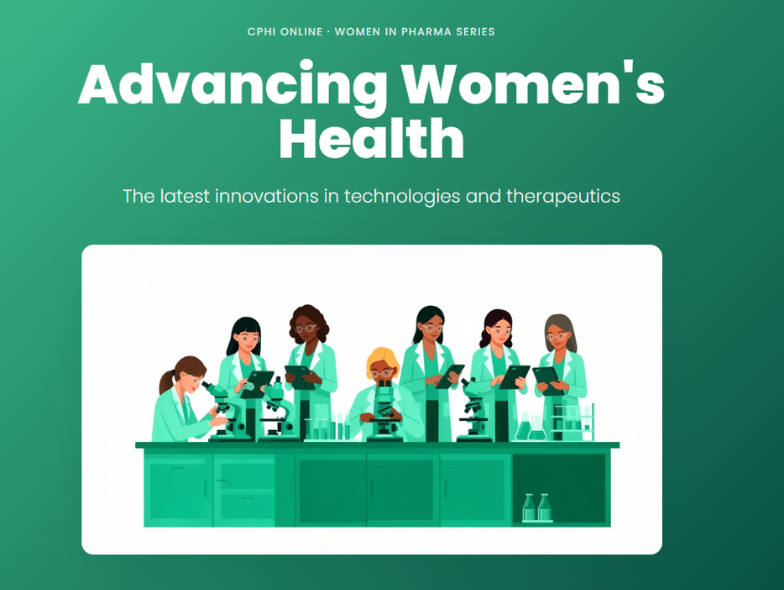
News Women in Pharma: Advancing Women's Health
Discover the latest innovations in technologies and therapeutics that are revolutionising women's health in our latest CPHI Online Women in Pharma infographic.
-

News CPHI Pharma Awards 2026: Recognising Excellence in an Evolving Industry
Submissions now open — deadline May 16
-
News Dr Reddy's to launch generic semaglutide in India
Dr Reddy’s Laboratories, one of India’s leading pharmaceutical companies, is preparing to launch a generic version of semaglutide, branded as Obeda, in March. Obeda is expected to provide a more affordable alternative to Ozempic a...