
CPHI Discover: How is the Biden Administration impacting the US pharma market?
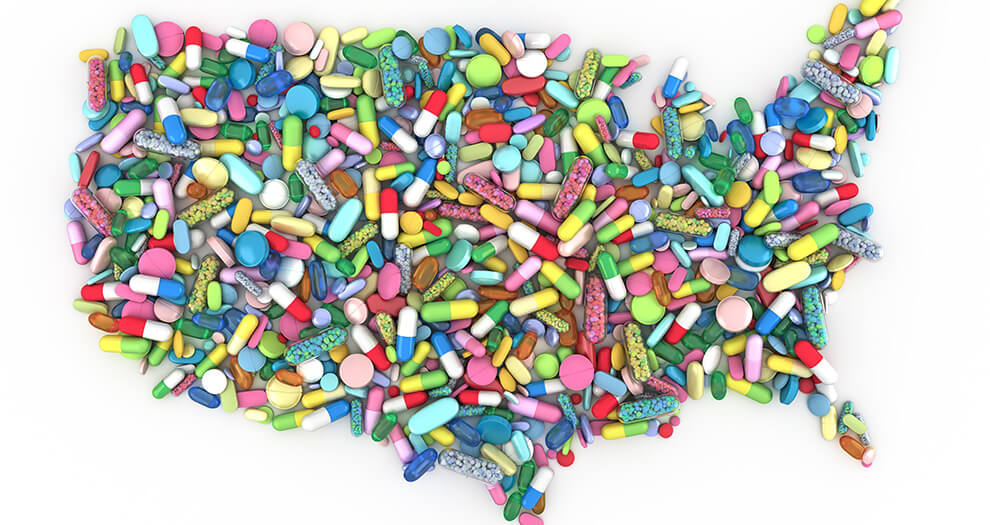
Ahead of the session, How will the New Administration Impact the US Pharma Market? at CPHI Discover on Tuesday 18th May – global pharma’s largest ever virtual gathering – we spoke with one of the speakers, Nielsen Hobbs, Executive Editor, Policy and Regulation, Informa Pharma Intelligence.
In January 2021, the US Department of Health and Human Services (HHS) and the Food and Drug Administration (FDA) started operating under the new US administration. While the focus over the past 12 months has been on COVID-19 vaccines and treatments, there is now an increased interest to see what lies ahead for M&A, drug pricing, partnering and reshoring manufacturing. In this interview, Nielsen Hobbs discusses the impact of the Biden Administration on policy changes and the supply chain as well as the potential of bringing manufacturing back to the USA. Nielsen also provides his view on Janet Woodcock’s tenure thus far and what to expect from the FDA in the next 2-3 years.
CPHI Discover: Do you think certain types of manufacturing are better placed for reshoring (bio/vaccines/finished dose)?
Nielsen Hobbs: Anything that could prove useful in a pandemic – which is basically anything – is probably going to be targeted for reshoring by politicians. But some manufacturing shifts will be more challenging to accomplish than others, and firms that want to participant in the efforts will need to communicate the specific needs of each type of production as the programs are designed.
CPHI Discover: What is your view on the duality of lowering healthcare costs and bringing manufacturing home (which is traditionally more expensive)?
Nielsen Hobbs: I’ve got some bad news for industry: the public does not care about your margins. ‘It costs too much to create American jobs’ is not a winning argument. For firms concerned about the growing political interest in reshoring, there are some bits of good news, though. Despite the Biden Administration’s comfort with the Defense Production Act, its efforts at boosting domestic manufacturing have so far focused mostly on incentives, not punitive measures. And Republicans are likely to retake control of Congress in the midterms, so if reshoring legislation hasn’t passed by then, the resumption of partisan gridlock means it probably won’t.
CPHI Discover: Do you envisage we are at the beginning of significant policy changes to increase domestic manufacturing and reshoring or was there a lot of temporary noise caused by the pandemic issue and other macroeconomic trends that will gradually fade over the next couple of years?
Nielsen Hobbs: As Georg Hegel observed, ‘We learn from history that we do not learn from history.’ Those expecting another cycle of neglect followed by panic during a public crisis are probably right, but there are some indications that things might be different this time around. The Biden Administration is keen to show the American public that government can work for them, and making sure there is domestic pharmaceutical manufacturing capacity ready when it is needed is part of that. The broader populist politics that drove former President Trump’s rise show no sign of abating either, but will probably not be accompanied by a robust policy effort should Republicans retake the White House.
CPHI Discover: What is your view of the implications of Janet Woodcock’s place as current FDA commissioner (i.e. having come from Center for Drug Evaluation and Research)?
Nielsen Hobbs: The pharmaceutical industry has nothing to worry about with Janet Woodcock as the acting commissioner of FDA. She’s arguably the most experienced person to ever hold the job, and while sponsors might want her to still be hands-on at CDER, her replacement, Patrizia Cavazzoni, has ably guided the center through the challenges of the pandemic.
CPHI Discover: Do you see her taking on the role permanently and what can we expect in the next 2-3 years from the FDA? For example, Scott Gottlieb seemed to oversee an acceleration of drug approvals and timelines.
Nielsen Hobbs: The downside of Woodcock’s decades of experience is the baggage, and the FDA’s role in the opioid epidemic appears to be blocking her nomination to be permanent commissioner. Several Democratic senators have voiced concerns about her role in FDA’s approvals of opioids, and whether that’s a good shell for underlying objections to agency coziness with industry or not, those objections have meant that Woodcock isn’t being nominated. The Biden Administration is uninterested in having the intraparty fight that nominating her would cause. Ironically, if Biden’s agenda stalls – if the infrastructure bill sinks and the healthcare legislation doesn’t happen – then you might see Woodcock’s nomination, since party unity will have already fizzled.
In terms of the fortunes of drug approvals, those will likely be driven by industry response to the pandemic more than who the commissioner is. As the agency likes to say, it can’t approve applications it doesn’t receive. So if sponsors are slow to resuscitate a trial disrupted by the pandemic, or stop a development program because of a market reassessment, FDA approvals may drop in the coming years regardless of whether the agency takes a more conservative stance with sponsors – something I don’t think FDA will do anyway.
Gottlieb gets a lot of credit for the agency’s success during his tenure, and he was a remarkable advocate and leader, but he’ll be the first to tell you he had no influence on which applications were submitted and approved during his two-year stint. For the most part, the development decisions were made before he got to the agency, and product-specific regulatory questions were resolved without his input. That being said, he had a significant, positive effect on the climate surrounding the agency.
Related News
-

News Swiss pharma industry warns US tariffs could harm global patient care
The Swiss pharmaceutical sector has raised alarms over new US tariffs on medicines, warning of disrupted supply chains, increased costs, and delayed innovation, all of which could jeopardise patient access to essential treatments worldwide.
-

News Women in Pharma: CPHI India – India’s Pharmaceutical Industry and Gender Inclusion Challenges
India’s pharmaceutical industry has emerged as a significant player in the global market, valued at USD 50 billion in FY 2023-2024, according to Frost & Sullivan’s analysis. This sector encompasses a diverse portfolio, including drugs, vacc... -
News Biogen acquires Apellis Pharmaceuticals to boost immunology and rare disease profile
Biogen Inc. has announced its acquisition of Apellis Pharmaceuticals, Inc., a move that is set to significantly enhance its growth portfolio in immunology and rare diseases. The agreement, valued at approximately US$5.6 billion, will see Biogen purchas... -

News Gilead Sciences acquires Ouro Medicines for over US$2 billion
Gilead Sciences confirms a deal to take over Ouro Medicines, adding to a portfolio of therapies for autoimmune diseases.
-
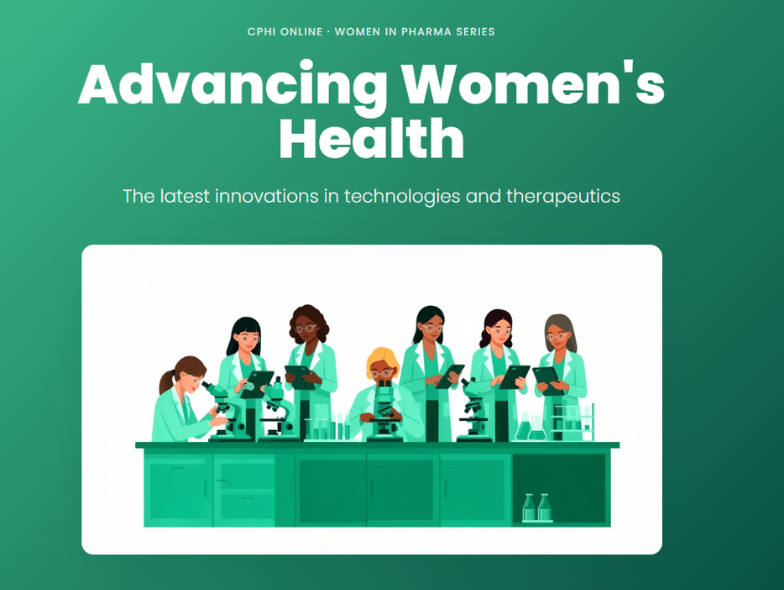
News Women in Pharma: Advancing Women's Health
Discover the latest innovations in technologies and therapeutics that are revolutionising women's health in our latest CPHI Online Women in Pharma infographic.
-

News CPHI Pharma Awards 2026: Recognising Excellence in an Evolving Industry
Submissions now open — deadline May 16
-
News Dr Reddy's to launch generic semaglutide in India
Dr Reddy’s Laboratories, one of India’s leading pharmaceutical companies, is preparing to launch a generic version of semaglutide, branded as Obeda, in March. Obeda is expected to provide a more affordable alternative to Ozempic a... -
News Frontier Biotech and GSK Forge RNA Therapy Partnership
Frontier Biotechnologies and GSK have entered a global licensing agreement to advance small interfering RNA (siRNA) therapeutics. This collaboration grants GSK exclusive rights to develop and commercialise two promising siRNA candidates, marking a mile...