
Drugmakers pledge faster, more equitable medicine access in Europe

Drugmakers have agreed to speed up the market launch of new drugs in underserved EU member states as an alternative to stricter regulation.
Members of the European Federation of Pharmaceutical Industries and Associations (EFPIA) have agreed to a proposal designed to deliver faster, more equitable access to medicines across Europe.
From today, EFPIA member companies commit to file for pricing and reimbursement in all EU countries as soon as possible and no later than two years from the central EU market authorisation, provided that local systems allow it.
The lobby group says this will increase the availability of innovative medicines in Europe and decrease the amount of time patients spend waiting for new drugs by several months.
According to data published by EFPIA last week, the gap in the time it takes for patients to access new medicines in different EU member states is widening, with patients in Germany waiting 133 days on average compared to 899 days for patients in Romania.
There are also disparities in terms of availability of innovative medicines, with less than 30% of centrally approved products available in smaller and Eastern European member states, compared with 92% in Germany and 46% on average in the EU.
IQVIA modelling predicts that the commitment to file would increase the availability of medicines from 18% up to 64% in several countries. It also estimates a reduction in the time spent waiting for new medicines by up to five months in countries such as Bulgaria, Poland and Romania.
The commitment to file comes after EFPIA warned against proposed rules that would force drugmakers to bring products to all EU countries within a certain deadline. They say that regulation could backfire and discourage companies from bringing some products to the region’s public health systems altogether.
The group said: ‘We understand that some of the proposals being discussed could introduce obligations for (drugmaker) to market or supply all EU Member States.
The industry has concerns regarding the use of regulatory tools designed for medicines authorisation being applied to address availability issues that are within the remit of member states’.
In addition to the commitment to file, EFPIA said it was proposing an equity-based tiered pricing system, where the price of innovative medicines would vary depending on the country’s ability to pay.
Related News
-

News Pharmaceutical Supply Chain People Moves
The latest appointments, promotions, and structural changes across the pharmaceutical supply chain.
-

News Merck KGaA to buy US biotech SpringWorks for US$3.9 billion
The German multinational pharmaceutical company Merck KGaA have signed a deal to buy US biotech company SpringWorks Therapeutics at an equity value of US$3.9 billion in a move to add rare cancer therapeutics to their pipelines.
-

News Cassava Sciences halts Alzheimer's drug trial after limited progress
Cassava Sciences have drawn a close to their investigations and development of the drug simufilam, which they intended to be used for the treatment of Alzheimer’s disease.
-

News US FDA adds haemodialysis bloodlines to devices shortage list
On March 14, 2025, the US FDA published an open letter to healthcare providers citing continuing supply disruptions of haemodialysis bloodlines, an essential component of dialysis machines.
-

News Vertex Pharmaceuticals stock jumps as FDA approves non-opioid painkiller
UK-based Vertex Pharmaceuticals saw their stock shares soar as the US FDA signed off on the non-opioid painkiller Journavx, also known as suzetrigine, for patients with moderate to severe acute pain, caused by surgery, accidents, or injuries.
-

News Lessons from CPHI Milan 2024: Sunny Intervals for Pharma Manufacturing?
As the 2024 CPHI conference wrapped up in Milan, we caught up with L.E.K. Consulting – a global strategy consulting firm with deep expertise in pharma manufacturing – to discuss evolving market perspectives and business outlook. -

News US BIOSECURE Act passed by US House of Representatives
The controversial act, which has already impacted several foreign companies operating in the US, was passed by the House of Representatives on September 9, 2024. It is now headed for the US Senate before it can be signed into law by President Joe Biden... -
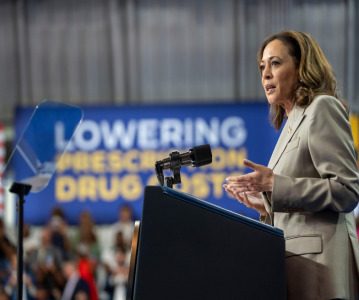
News Drug prices agreed upon as part of the US Inflation Reduction Act
The Inflation Reduction Act brought into constitution by the Biden administation in 2022, which proposed a drug price negotiation between the government and pharmaceutical companies, has reached it's first agreement.