
EMA starts rolling review of Moderna’s Omicron-targeting vaccine, as well as Pfizer-BioNTech rival
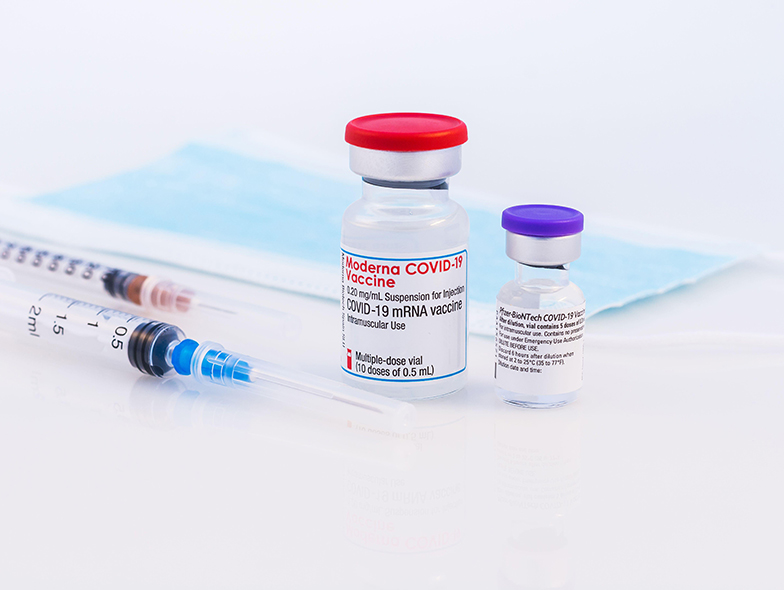
The vaccines have been adapted to target the Omicron variant, which has been the dominant variant globally since the beginning of the year
The European Medicines Agency (EMA) has initiated a rolling review of Moderna’s variant-adapted COVID-19 vaccine, which the company says targets the Omicron variant as well as the original strain first detected in China.
The US-based vaccine maker said last week that the so-called bivalent vaccine produced a better immune response against Omicron than the original shot.
The EMA also started a rolling review of the mRNA, variant-adapted vaccine created by Pfizer and BioNTech last Wednesday. A rolling review is a regulatory tool that EMA uses to speed up the assessment of a promising medicine or vaccine during a public health emergency. Here, the regulator assesses the data as it becomes available, and the process continues until there is enough data for a formal marketing application.
Omicron cases have been surging across the world, fuelled by the highly transmissible BA.4 and BA.5 sub-variants. The US Centers for Disease Control and Prevention (CDC) said that these sub lineages make up about 8.3% and 13.3% of cases respectively in the US, as of June 11. BA.4 and BA.5 have also been designated variants of concern in Europe, however the BA.2.12.1 sub-variant remains the most prevalent.
According to a study published recently in Nature, people who were infected with Omicron early in its spread may be vulnerable to reinfection by later sub-variants due to mutations that have developed.
Vaccinated patients with Omicron BA.1 breakthrough infections developed antibodies that could neutralise that virus plus the original SARS-CoV-2 virus, but mutations in the BA.2.12.1, BA.4, and BA.5 sub lineages allow them to evade antibody protection.
Several international bodies have raised concerns over the global relaxation of COVID rules in the last six months, warning that cases are likely to surge again as autumn and winter close in.
In May, the White House announced that America could record as many as 100 million Covid-19 infections in the latter half of this year, while WHO Director-General Tedros Adhanom Ghebreyesus warned the pandemic was ‘certainly not over’.
Related News
-

News Understanding the Benefits and Advances of Cleanroom Technology
In an industry where precision and sterility are crucial concerns, cleanrooms play a vital role in maintaining the integrity of pharmaceutical products like drugs, vaccines, and other medical products. So, what is a cleanroom?
-

News AbbVie secures GBP£1.2 billion deal for Gilgamesh’s psychedelic programme
AbbVie has penned a significant agreement to acquire the bretisilocin programme from Gilgamesh Pharmaceuticals for up to £1.2 billion, marking a bold step in the pharmaceutical giant's quest to develop treatments for psychiatric disorders. -

News Gates Foundation commits US$2.5 billion to women’s health research
The Bill & Melinda Gates Foundation has announced a substantial US$2.5 billion commitment to accelerate research and development focused exclusively on women's health through 2030.
-

News Mid-year review: notable FDA drug approvals of 2025
As we fly past the halfway point of 2025, the pharmaceutical landscape reliably continues to evolve with innovative therapies addressing critical medical needs. The FDA has already approved 17 groundbreaking medications this year, each representin... -

News US FDA announces new priority vouchers for accelerated review times
The US FDA announced a new priority program for drug developers – the Commissioner’s National Priority Voucher (CNPV) program aims to enhance the health interests of the US by allowing drug developers to redeem a voucher, shortening th... -

News Google-backed start-up raises US$600 million to support AI drug discovery and design
London-based Isomorphic Labs, an AI-driven drug design and development start-up backed by Google’s AI research lab DeepMind, has raised US$600 million in its first external funding round by Thrive Capital. The funding will provide further power t... -

News AstraZeneca to invest US$2.5 billion in Beijing R&D centre
Amid investigations of former AstraZeneca China head Leon Wang in 2024, AstraZeneca have outlined plans to establish its sixth global strategic R&D centre in China. Their aim is to further advance life sciences in China with major research and manufact... -

News Experimental drug for managing aortic valve stenosis shows promise
The new small molecule drug ataciguat is garnering attention for its potential to manage aortic valve stenosis, which may prevent the need for surgery and significantly improve patient experience.