
Entirely Novel Strategy to Molecular Anticancer Therapy Tricks Malignant Cells
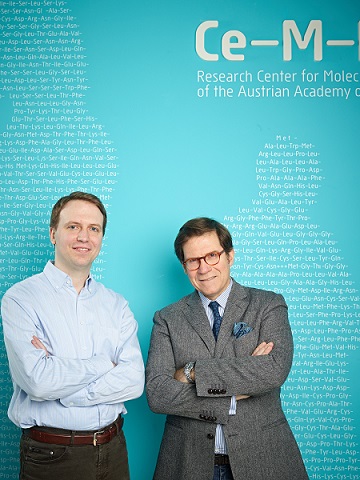
A ground-breaking study spearheaded by Scientific Director Giulio Superti-Furga at the CeMM Research Center for Molecular Medicine of the Austrian Academy of Sciences shows that fast-growing cancer cells are sensitive towards imbalances in the metabolism of nucleotides, the building blocks of DNA. This vulnerability can be exploited for a radically novel antitumour therapeutic approach.
Not only did the researchers from Vienna, in a joint effort with colleagues from Oxford and Stockholm, identify the enzyme MTH1 as an Achilles heel of malignant tumour cells, but also, in a wonderful twist of fate, they discovered the chemical mirror image of an existing anticancer drug called crizotinib to be an efficient inhibitor of MTH1 activity. The study was published in advance online by the renowned scientific journal Nature on 2 April 2014.
The importance of MTH1 starts at replication forks, where DNA molecules are duplicated by template-guided serial assembly of nucleotide building blocks. It is crucial that these individual building blocks are intact to prevent DNA damage and defects such as mutations. MTH1 is a nucleotide sanitizing enzyme that removes damaged nucleotides. Unlike in normal cells where this feature is not required because nucleotides are intact, cancer cells suffer from oxidative stress which leads to the damage of nucleotides and thus, MTH1 is indispensable for preserving genome integrity by preventing the incorporation of damaged DNA building blocks. Clearance of those building blocks damaged by oxidation allows cancer cells to divide and proliferate infinitely. Upon disruption of this protective mechanism by an MTH1 inhibitor, oxidized nucleotides are incorporated into newly synthesized DNA. The damaged DNA strands break and the cancer cell dies.
Selectively Toxic Anticancer Agent Identified in Model Study
In the present study, the researchers at CeMM successfully applied a mass spectrometry-based analytical technique (chemical proteomics) to elucidate the mode of action of a small molecule that was found to selectively target cancer cells. When examining an incidentally impure laboratory-grade batch of the known and approved protein kinase inhibitor and anticancer drug crizotinib, the researchers discovered an interesting activity that could not be explained by the known properties of this compound. Further investigations revealed that the impurity was the chemical mirror image (enantiomer) of crizotinib, which is identical to crizotinib but varies slightly in its three-dimensional structure. Strikingly, this stereoisomer was found to be a highly specific inhibitor of the MTH1 enzyme. This entirely unexpected activity distinguishes the so far unexplored enantiomer completely from the clinically used drug and offers hope for a novel therapeutic strategy:
According to this concept, a specific MTH1 inhibitor should be able to exploit the MTH1 dependency present in cancer cells to induce cell death. While the development of new therapeutic drugs is frequently associated with complications and years of optimization experiments, which means that it often takes decades before patients can benefit from the initial discovery, this Viennese study could significantly accelerate the drug development process. Giulio Superti-Furga, principal investigator and leader of the study: “It’s really a rare stroke of luck that we have not only found a previously unknown sore spot of aggressive cancers, but that by chance we simultaneously identified a chemical substance that is a mirror image of one of the best new anticancer agents in the clinic. Double Jackpot!” Kilian Huber, first author of the study adds: “This very high similarity to an already approved and clinically evaluated drug may open the opportunity to quickly test our findings in the clinic for the benefit of the patients.”
“This paper represents a creative and original application of pharmacology, signal transduction biochemistry, and structural biology employed to make inroads into the therapy of cancers that have to date resisted effective treatment,.” commented Robert A. Weinberg, founding member of the Whitehead Institute for Biomedical Research, Professor of Biology at MIT in Cambridge, USA. Professor Weinberg discovered the first human oncogene RAS and the first tumour suppressor gene RB, and in fact, was the first proponent of MTH1 as a potentially novel and attractive target in oncology. This idea is also supported by a study, which was conducted in parallel by Thomas Helleday at the Karolinska Institute in Stockholm and published as an article back-to-back in the same issue of Nature.
www.cemm.oeaw.ac.at
Related News
-

News GSK announces £400 million investment in new Cambridge R&D centre
Pharmaceutical giant to establish flagship research facility on Cambridge Biomedical Campus as part of strategic pipeline acceleration
-

News Understanding the Benefits and Advances of Cleanroom Technology
In an industry where precision and sterility are crucial concerns, cleanrooms play a vital role in maintaining the integrity of pharmaceutical products like drugs, vaccines, and other medical products. So, what is a cleanroom?
-

News AbbVie secures GBP£1.2 billion deal for Gilgamesh’s psychedelic programme
AbbVie has penned a significant agreement to acquire the bretisilocin programme from Gilgamesh Pharmaceuticals for up to £1.2 billion, marking a bold step in the pharmaceutical giant's quest to develop treatments for psychiatric disorders. -

News Gates Foundation commits US$2.5 billion to women’s health research
The Bill & Melinda Gates Foundation has announced a substantial US$2.5 billion commitment to accelerate research and development focused exclusively on women's health through 2030.
-

News Mid-year review: notable FDA drug approvals of 2025
As we fly past the halfway point of 2025, the pharmaceutical landscape reliably continues to evolve with innovative therapies addressing critical medical needs. The FDA has already approved 17 groundbreaking medications this year, each representin... -

News US FDA announces new priority vouchers for accelerated review times
The US FDA announced a new priority program for drug developers – the Commissioner’s National Priority Voucher (CNPV) program aims to enhance the health interests of the US by allowing drug developers to redeem a voucher, shortening th... -

News Google-backed start-up raises US$600 million to support AI drug discovery and design
London-based Isomorphic Labs, an AI-driven drug design and development start-up backed by Google’s AI research lab DeepMind, has raised US$600 million in its first external funding round by Thrive Capital. The funding will provide further power t... -

News AstraZeneca to invest US$2.5 billion in Beijing R&D centre
Amid investigations of former AstraZeneca China head Leon Wang in 2024, AstraZeneca have outlined plans to establish its sixth global strategic R&D centre in China. Their aim is to further advance life sciences in China with major research and manufact...