
Gene-Silencing Data now Publicly Available to Help Scientists Better Understand Disease
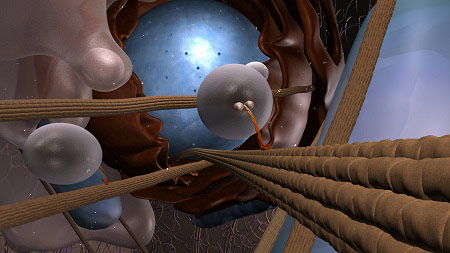
For the first time, large-scale information on the biochemical makeup of small interfering RNA (siRNA) molecules is available publicly. These molecules are used in research to help scientists better understand how genes function in disease. Making these data accessible to researchers worldwide increases the potential of finding new treatments for patients.
NIH’s National Center for Advancing Translational Sciences (NCATS) collaborated with Life Technologies Corporation of Carlsbad, California, which owns the siRNA information, to make it available to all researchers.
The siRNA molecules, which can selectively inhibit the activity of genes, are used in RNA interference (RNAi) research. RNAi is a natural process that cells use to control the activity of specific genes. Its discovery led to the 2006 Nobel Prize in Physiology or Medicine.
Last month, a team of NIH scientists, led by Richard Youle, PhD, at the National Institute of Neurological Disorders and Stroke (NINDS), and Scott Martin, PhD, at NCATS, used RNAi to find genes that linked to Parkinson’s disease, a devastating movement disorder. The new genes may represent new starting points for developing treatments. The study results were published online in the 24 November 2013 issue of Nature External Web Site Policy.
Scientists have harnessed the power of RNAi to study the function of many individual genes by reducing their activity levels, or silencing them. This process enables researchers to identify genes and molecules that are linked to particular diseases. To do this, researchers use siRNAs, which are RNA molecules that have a complementary chemical makeup, or sequence, to that of a targeted gene. While the gene is silenced, researchers look for changes in cell functions to gain insights about what it normally does. By silencing genes in the cell one at a time, scientists can explore and understand their complex relation to other genes in the context of disease.
Until now, a major limitation in the scientific community’s use of RNAi data has been the lack of a publicly available dataset, along with siRNA sequences directed against every human gene. Historically, providers have not allowed publishing of proprietary siRNA sequence information. To address this problem, NCATS and Life Technologies are providing all researchers with access to siRNA data from Life Technologies’ Silencer Select siRNA library, which includes 65,000 siRNA sequences targeting more than 20,000 human genes. Simultaneously, NCATS is releasing complementary data on the effects of each siRNA molecule on biological functions. All of this information is available to the public free-of-charge through NIH’s public database PubChem.
“Producing and releasing these data demonstrate NCATS’ commitment to speeding the translational process for all diseases,” said NCATS Director Christopher P. Austin, MD. “The Human Genome Project showed that public data release is critical to scientific progress. Similarly, I believe that making RNAi data publicly available will revolutionise the study of biology and medicine.”
Experts from the NIH RNAi initiative, administered by NCATS’ Division of Pre-Clinical Innovation, conduct screens for NIH investigators. They will add new RNAi data into PubChem on an ongoing basis, making the database a growing resource for gene function studies.
“By releasing all our siRNA sequences, we are enabling novel strategies to advance fundamental understanding of biology and discovery of new potential drug targets,” said Mark Stevenson, president and chief operating officer of Life Technologies.
NIH invites other companies that sell siRNA libraries and researchers who conduct genome-wide RNAi screens with the Life Technologies library to deposit sequence data and biological activity information into PubChem. For assistance with submitting data to PubChem, researchers may contact [email protected].
“Translation of siRNA library screening results into impactful downstream experiments is the ultimate goal of scientists using our library,” said Alan Sachs, MD, PhD, head of global research and development for Life Technologies. “The availability of these sequence data should greatly facilitate this effort because scientists no longer will be blinded to the actual sequence they are targeting.”
Related News
-

News GSK announces £400 million investment in new Cambridge R&D centre
Pharmaceutical giant to establish flagship research facility on Cambridge Biomedical Campus as part of strategic pipeline acceleration
-

News Understanding the Benefits and Advances of Cleanroom Technology
In an industry where precision and sterility are crucial concerns, cleanrooms play a vital role in maintaining the integrity of pharmaceutical products like drugs, vaccines, and other medical products. So, what is a cleanroom?
-

News AbbVie secures GBP£1.2 billion deal for Gilgamesh’s psychedelic programme
AbbVie has penned a significant agreement to acquire the bretisilocin programme from Gilgamesh Pharmaceuticals for up to £1.2 billion, marking a bold step in the pharmaceutical giant's quest to develop treatments for psychiatric disorders. -

News Gates Foundation commits US$2.5 billion to women’s health research
The Bill & Melinda Gates Foundation has announced a substantial US$2.5 billion commitment to accelerate research and development focused exclusively on women's health through 2030.
-

News Mid-year review: notable FDA drug approvals of 2025
As we fly past the halfway point of 2025, the pharmaceutical landscape reliably continues to evolve with innovative therapies addressing critical medical needs. The FDA has already approved 17 groundbreaking medications this year, each representin... -

News US FDA announces new priority vouchers for accelerated review times
The US FDA announced a new priority program for drug developers – the Commissioner’s National Priority Voucher (CNPV) program aims to enhance the health interests of the US by allowing drug developers to redeem a voucher, shortening th... -
News Google-backed start-up raises US$600 million to support AI drug discovery and design
London-based Isomorphic Labs, an AI-driven drug design and development start-up backed by Google’s AI research lab DeepMind, has raised US$600 million in its first external funding round by Thrive Capital. The funding will provide further power t... -

News AstraZeneca to invest US$2.5 billion in Beijing R&D centre
Amid investigations of former AstraZeneca China head Leon Wang in 2024, AstraZeneca have outlined plans to establish its sixth global strategic R&D centre in China. Their aim is to further advance life sciences in China with major research and manufact...