
LDC and Boehringer Ingelheim join forces to discover a novel approach for the treatment of schizophrenia

The novel approach builds on ground-breaking research results from Prof. Moritz Rossner and his team at the Max Planck Institute of Experimental Medicine in Göttingen.
The Lead Discovery Center (LDC), Max Planck Innovation GmbH and Boehringer Ingelheim International have signed an agreement providing Boehringer Ingelheim with the option to receive the exclusive rights to a new lead compound for the treatment of schizophrenia to be discovered and developed at the LDC.
The novel approach builds on ground-breaking research results from Prof. Moritz Rossner and his team at the Max Planck Institute of Experimental Medicine in Göttingen. He will work closely together with the LDC team to identify and optimize novel compounds with strong therapeutic potential and develop it further to the stage of a validated pharmaceutical lead with in vivo efficacy. Moritz Rossner holds also a Professorship at Ludwig Maximilians University, Munich and is a co-founder of Systasy Bioscience.
Schizophrenia is a chronic, severe and disabling mental disorder ranked among the 12 most debilitating diseases by the World Health Organization. It affects about 1 in 100 people worldwide, changing the way they behave, think and perceive the world. Although anti-psychotic medications and psychosocial interventions can effectively reduce symptoms and improve patients’ lives, there remains a strong need for new drugs truly addressing causative mechanisms and cognitive impairment.
“Schizophrenia is an incredibly complex disorder, which dramatically changes the life of the individual affected,” says Prof. Rossner. “We believe our approach holds strong potential to improve the treatment options for patients, and this collaboration with the LDC and Boehringer Ingelheim is a great opportunity to advance it from our laboratory into pharmaceutical development.”
In this early discovery project Boehringer Ingelheim will take a seat on the project development team and will pay an option fee. In addition, the company will allocate internal resources to the program and support collaborating partners to strengthen the early development work. Once the project has attained proof-of-concept in relevant in vivo models Boehringer Ingelheim can exclusively license the lead at pre-defined terms for subsequent preclinical and clinical development. Any revenue the LDC may receive from commercialization will be shared with the academic inventors and collaborating institutions.
“Since the LDC’s inception, we have been in close contact with Boehringer Ingelheim, establishing a relationship based on mutual trust over the years. We very much appreciate their expertise and commitment to driving forward innovative therapeutic approaches,”says Bert Klebl, CEO of the LDC. “It is a great pleasure for us to be launching our first joint project in the field of mental disorders, which we believe is often underestimated. We see strong commercial opportunities here, and there is already a strong line-up of promising projects in this area from our academic network.”
Related News
-
News GSK announces £400 million investment in new Cambridge R&D centre
Pharmaceutical giant to establish flagship research facility on Cambridge Biomedical Campus as part of strategic pipeline acceleration
-
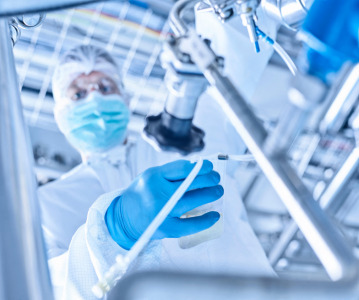
News Understanding the Benefits and Advances of Cleanroom Technology
In an industry where precision and sterility are crucial concerns, cleanrooms play a vital role in maintaining the integrity of pharmaceutical products like drugs, vaccines, and other medical products. So, what is a cleanroom?
-

News AbbVie secures GBP£1.2 billion deal for Gilgamesh’s psychedelic programme
AbbVie has penned a significant agreement to acquire the bretisilocin programme from Gilgamesh Pharmaceuticals for up to £1.2 billion, marking a bold step in the pharmaceutical giant's quest to develop treatments for psychiatric disorders. -

News Gates Foundation commits US$2.5 billion to women’s health research
The Bill & Melinda Gates Foundation has announced a substantial US$2.5 billion commitment to accelerate research and development focused exclusively on women's health through 2030.
-

News Mid-year review: notable FDA drug approvals of 2025
As we fly past the halfway point of 2025, the pharmaceutical landscape reliably continues to evolve with innovative therapies addressing critical medical needs. The FDA has already approved 17 groundbreaking medications this year, each representin... -

News US FDA announces new priority vouchers for accelerated review times
The US FDA announced a new priority program for drug developers – the Commissioner’s National Priority Voucher (CNPV) program aims to enhance the health interests of the US by allowing drug developers to redeem a voucher, shortening th... -
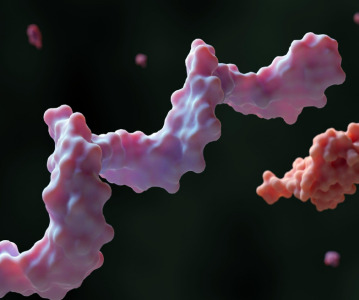
News Google-backed start-up raises US$600 million to support AI drug discovery and design
London-based Isomorphic Labs, an AI-driven drug design and development start-up backed by Google’s AI research lab DeepMind, has raised US$600 million in its first external funding round by Thrive Capital. The funding will provide further power t... -

News AstraZeneca to invest US$2.5 billion in Beijing R&D centre
Amid investigations of former AstraZeneca China head Leon Wang in 2024, AstraZeneca have outlined plans to establish its sixth global strategic R&D centre in China. Their aim is to further advance life sciences in China with major research and manufact...