
Lycotec Turns Red Wine to Medicine

The French Paradox is a phenomenon that people in France, who have highest consumption of red wine per person, have the lowest cardiovascular mortality rate and one of the longest in longevity in the Western world. One of the key molecules behind this is a grape flavonoid molecule trans-Resveratrol, t-RSV.
Numerous experimental laboratory studies of this molecule have generated promising results for potential applications of t-RSV from prevention and treatment of numerous diseases such as diabetes, cardiovascular pathologies and cancer, to use in anti-ageing products.
However, studies in humans have so far not provided convincing evidence of clinical benefits of t-RSV. This frustration has been attributed to the fact that when this molecule is used not as a part of red wine, but in its isolated form, it gets modified by the factors of the gastro-intestinal tract (GIT), and loses its metabolic activity.
To circumvent this problem the Cambridge based company Lycotec has developed an oral delivery technology, Lycosome, which can protect valuable but vulnerable molecules to minimise their modification by GIT. When its inventor and the CEO of the company, Dr Ivan Petyaev, applied this technology for t-RSV, the level of its unmodified form in the blood of volunteers was increased by up to 10 fold.
Having developed this potentiated form of t-RSV, Lycotec undertook an ambitious trial to test this product in the treatment of Foot Ulcer, the most severe clinical complication of Diabetes. This condition has no specific pharmaceutical treatment and is the leading cause of lower limb amputation in the world. A limb is lost every 30 minutes due to a mine explosion; a limb is lost every 20 seconds due to diabetes.
Diabetes affect 28 million people in the US, 2.6 million in the UK and 280 million people worldwide. 60–70% of those with diabetes will develop peripheral neuropathy, or loss of sensation in their feet. 25% of people with diabetes develop a foot ulcer, and 1 in 5 will require an amputation because of the development of its persistent and progressing infection.
Every year there are more than 90,000 amputations in the US, and 5000 in the UK due to diabetes. After the first amputation, 50% of people will have their other limb amputated within 2 years. The 5 year mortality rate after the first amputation is 68% - second only to lung cancer, 86% (breast cancer 23%, prostate cancer 8%).
The first pivotal randomised, blind, placebo controlled study on 24 patients with diabetic foot ulcer was led by the principle investigator Dr Yuriy Bashmakov, and the results have now been published in the journal of Endocrinology (www.hindawi.com/journals/isrn.endocrinology/2014/816307/).
The study has shown that daily administration of only 50 mg twice a day of t-RSV-Lycosome, on top of regular care and general diabetes treatment, resulted in an almost complete closure of the ulcer by 95%. In the placebo group the reduction of the size of the ulcer was noticeable but by only 50% from the pre-treatment level. At the same time there was a significant change in the Foot Pressure Test in the t-RSV group but no change in the placebo group.
Lycotec recognises that these results need to be confirmed and further evaluated in larger clinical trials. However, this first trial provided new hope, not only for patients with this severe diabetic complication, for which no specific pharmaceutical treatment exists, but also for people with other diseases where the rationale of the use of t-RSV has been demonstrated. Moreover, the high potency new generation of t-RSV –Lycosome, due to its status of food supplement status can not only be used as a drug, but for prevention, health maintenance, performance boost and anti-ageing nutritional products.
Lycotec is currently looking for licensing out and partnering opportunities for t-RSV –Lycosome to be taken to the next development and commercialisation level with Pharmaceutical, Nutrition and Cosmetic Industries.
Related News
-
News GSK announces £400 million investment in new Cambridge R&D centre
Pharmaceutical giant to establish flagship research facility on Cambridge Biomedical Campus as part of strategic pipeline acceleration
-
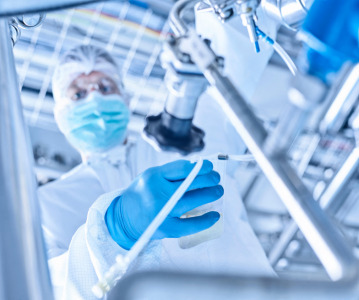
News Understanding the Benefits and Advances of Cleanroom Technology
In an industry where precision and sterility are crucial concerns, cleanrooms play a vital role in maintaining the integrity of pharmaceutical products like drugs, vaccines, and other medical products. So, what is a cleanroom?
-

News AbbVie secures GBP£1.2 billion deal for Gilgamesh’s psychedelic programme
AbbVie has penned a significant agreement to acquire the bretisilocin programme from Gilgamesh Pharmaceuticals for up to £1.2 billion, marking a bold step in the pharmaceutical giant's quest to develop treatments for psychiatric disorders. -

News Gates Foundation commits US$2.5 billion to women’s health research
The Bill & Melinda Gates Foundation has announced a substantial US$2.5 billion commitment to accelerate research and development focused exclusively on women's health through 2030.
-

News Mid-year review: notable FDA drug approvals of 2025
As we fly past the halfway point of 2025, the pharmaceutical landscape reliably continues to evolve with innovative therapies addressing critical medical needs. The FDA has already approved 17 groundbreaking medications this year, each representin... -
News US FDA announces new priority vouchers for accelerated review times
The US FDA announced a new priority program for drug developers – the Commissioner’s National Priority Voucher (CNPV) program aims to enhance the health interests of the US by allowing drug developers to redeem a voucher, shortening th... -

News Google-backed start-up raises US$600 million to support AI drug discovery and design
London-based Isomorphic Labs, an AI-driven drug design and development start-up backed by Google’s AI research lab DeepMind, has raised US$600 million in its first external funding round by Thrive Capital. The funding will provide further power t... -
News AstraZeneca to invest US$2.5 billion in Beijing R&D centre
Amid investigations of former AstraZeneca China head Leon Wang in 2024, AstraZeneca have outlined plans to establish its sixth global strategic R&D centre in China. Their aim is to further advance life sciences in China with major research and manufact...