
Merck announces recipients of third annual €1 million ‘Grant for Oncology Innovation’ award

Grant established by Merck recognizes pioneering research in personalized treatment of solid tumours.
Merck has announced the recipients of the 2016 Grant for Oncology Innovation (GOI), who will share a €1 million grant to progress their respective research initiatives. The winners were formally awarded at an award presentation coinciding with the 2016 annual European Society of Medical Oncology (ESMO) Congress in Copenhagen, Denmark.
The three winning proposals, which focus on breast cancer, colorectal cancer and lung cancer, were selected from a total of 405 applications representing 49 countries, following a comprehensive review by an expert scientific steering committee made up of internationally renowned oncologists.
The 2016 GOI winners are
• Alberto Bardelli, University of Torino, Italy, for his proposal: ‘Heterogeneity and clonal evolution as a therapeutic opportunity for colorectal cancers’
• Enriqueta Felip, Vall d’Hebron Institute of Oncology, Spain, for her proposal: ‘New technologies for new treatments: liquid biopsy meets immunotherapy’
• Dr Dongxu Liu, Auckland University of Technology, New Zealand for his proposal: ‘How does SHON* expression in tumors determine the efficacy of endocrine therapy in breast cancer?’
“The Grant for Oncology Innovation is an example of Merck’s commitment to scientific innovation in oncology. We are proud to support pioneering work that pushes the boundaries of creativity and science in order to deliver transformative innovation with a potential to improve the lives of cancer patients in the near-term future,” said Dr Steven Hildemann, Global Chief Medical Officer and Head of Global Medical and Safety at Merck´s Biopharma business. “We are honored to recognize these talented and inspiring researchers and to play a role in enabling these innovative projects to become a reality.”
Related News
-

News GSK announces £400 million investment in new Cambridge R&D centre
Pharmaceutical giant to establish flagship research facility on Cambridge Biomedical Campus as part of strategic pipeline acceleration
-
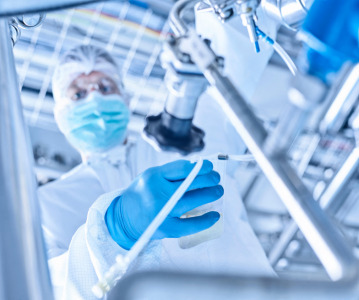
News Understanding the Benefits and Advances of Cleanroom Technology
In an industry where precision and sterility are crucial concerns, cleanrooms play a vital role in maintaining the integrity of pharmaceutical products like drugs, vaccines, and other medical products. So, what is a cleanroom?
-

News AbbVie secures GBP£1.2 billion deal for Gilgamesh’s psychedelic programme
AbbVie has penned a significant agreement to acquire the bretisilocin programme from Gilgamesh Pharmaceuticals for up to £1.2 billion, marking a bold step in the pharmaceutical giant's quest to develop treatments for psychiatric disorders. -

News Gates Foundation commits US$2.5 billion to women’s health research
The Bill & Melinda Gates Foundation has announced a substantial US$2.5 billion commitment to accelerate research and development focused exclusively on women's health through 2030.
-

News Mid-year review: notable FDA drug approvals of 2025
As we fly past the halfway point of 2025, the pharmaceutical landscape reliably continues to evolve with innovative therapies addressing critical medical needs. The FDA has already approved 17 groundbreaking medications this year, each representin... -

News US FDA announces new priority vouchers for accelerated review times
The US FDA announced a new priority program for drug developers – the Commissioner’s National Priority Voucher (CNPV) program aims to enhance the health interests of the US by allowing drug developers to redeem a voucher, shortening th... -
News Google-backed start-up raises US$600 million to support AI drug discovery and design
London-based Isomorphic Labs, an AI-driven drug design and development start-up backed by Google’s AI research lab DeepMind, has raised US$600 million in its first external funding round by Thrive Capital. The funding will provide further power t... -
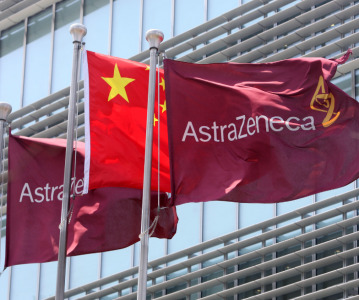
News AstraZeneca to invest US$2.5 billion in Beijing R&D centre
Amid investigations of former AstraZeneca China head Leon Wang in 2024, AstraZeneca have outlined plans to establish its sixth global strategic R&D centre in China. Their aim is to further advance life sciences in China with major research and manufact...