
Merck Presents Interim Data from Phase 1B Study of MK-3475, Investigational Anti-PD-1 Immunotherapy, in Previously-Treated Patients with NSCLC

Merck, known as MSD outside the US and Canada, have announced the presentation of interim data from a Phase 1B trial (PN001) evaluating MK-3475, an investigational anti-PD-1 immunotherapy, in patients with previously-treated non-small cell lung cancer (NSCLC).
The data were presented by Dr Edward Garon, Director of Thoracic Oncology, Jonsson Comprehensive Cancer Center, University of California, Los Angeles, at the 15th World Conference on Lung Cancer in Sydney, Australia (Abstract # MO18.02). Detailed interim data were presented for response rates and safety from a cohort of 38 previously-treated NSCLC patients who received MK-3475 10 mg/kg every 3 weeks, as well as initial findings from an analysis of the relationship between response rates and PD-L1 expression.
“We are encouraged by these initial responses in NSCLC patients,” said Dr Eric H. Rubin, Vice President, Oncology, Merck Research Laboratories. “Based on these preliminary data and other research, we believe that PD-L1 expression has the potential to be a useful predictor of response to MK-3475 in certain cancers. We look forward to further data from this and other studies to help us to understand the potential role of MK-3475 in lung cancer, and of PD-L1 as a biomarker.”
Based on data from this Phase IB study, Merck initiated a Phase II/III trial comparing two doses of MK-3475, 10 mg/kg every 3 weeks and 2 mg/kg every 3 weeks (10 mg/kg Q3W and 2 mg/kg Q3W), versus docetaxel in previously-treated patients with NSCLC who have received at least one prior treatment regimen (see clinicaltrials.gov). Merck plans to present data from ongoing studies evaluating 10 mg/kg Q2W and 10 mg/kg Q3W dosing regimens for MK- 3475 in patients with NSCLC in 2014.
Related News
-
News GSK announces £400 million investment in new Cambridge R&D centre
Pharmaceutical giant to establish flagship research facility on Cambridge Biomedical Campus as part of strategic pipeline acceleration
-
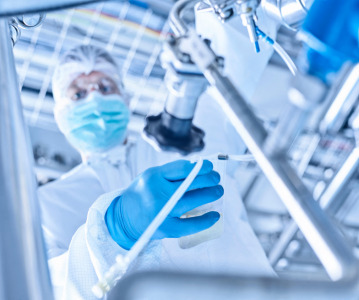
News Understanding the Benefits and Advances of Cleanroom Technology
In an industry where precision and sterility are crucial concerns, cleanrooms play a vital role in maintaining the integrity of pharmaceutical products like drugs, vaccines, and other medical products. So, what is a cleanroom?
-

News AbbVie secures GBP£1.2 billion deal for Gilgamesh’s psychedelic programme
AbbVie has penned a significant agreement to acquire the bretisilocin programme from Gilgamesh Pharmaceuticals for up to £1.2 billion, marking a bold step in the pharmaceutical giant's quest to develop treatments for psychiatric disorders. -

News Gates Foundation commits US$2.5 billion to women’s health research
The Bill & Melinda Gates Foundation has announced a substantial US$2.5 billion commitment to accelerate research and development focused exclusively on women's health through 2030.
-

News Mid-year review: notable FDA drug approvals of 2025
As we fly past the halfway point of 2025, the pharmaceutical landscape reliably continues to evolve with innovative therapies addressing critical medical needs. The FDA has already approved 17 groundbreaking medications this year, each representin... -

News US FDA announces new priority vouchers for accelerated review times
The US FDA announced a new priority program for drug developers – the Commissioner’s National Priority Voucher (CNPV) program aims to enhance the health interests of the US by allowing drug developers to redeem a voucher, shortening th... -

News Google-backed start-up raises US$600 million to support AI drug discovery and design
London-based Isomorphic Labs, an AI-driven drug design and development start-up backed by Google’s AI research lab DeepMind, has raised US$600 million in its first external funding round by Thrive Capital. The funding will provide further power t... -
News AstraZeneca to invest US$2.5 billion in Beijing R&D centre
Amid investigations of former AstraZeneca China head Leon Wang in 2024, AstraZeneca have outlined plans to establish its sixth global strategic R&D centre in China. Their aim is to further advance life sciences in China with major research and manufact...