
Molecule shows ability to thwart pathogens’ genetic resistance to antibiotic
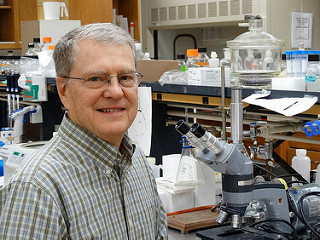
Bruce Geller, professor of microbiology, Oregon State University.
The molecule, which is a PPMO, will likely be ready for testing in humans in about 3 years.
Oregon State University (OSU) researchers have developed a new weapon in the battle against antibiotic-resistant germs - a molecule that neutralizes the bugs’ ability to destroy the antibiotic.
Scientists at OSU were part of an international collaboration that demonstrated the molecule’s ability to inhibit expression of an enzyme that makes bacteria resistant to a wide range of penicillins.
The molecule is a PPMO (peptide-conjugated phosphorodiamidate morpholino oligomer). The enzyme it combats is known as New Delhi metallo-beta-lactamase, or NDM-1, and it’s accompanied by additional genes that encode resistance to most, if not all, antibiotics.
“We’re targeting a resistance mechanism that’s shared by a whole bunch of pathogens,” said Bruce Geller, professor of microbiology in OSU’s College of Science and College of Agricultural Sciences, who’s been researching molecular medicine for more than a decade. “It’s the same gene in different types of bacteria, so you only have to have one PPMO that’s effective for all of them, which is different than other PPMOs that are genus specific.”
The Oregon State study showed that in vitro the new PPMO restored the ability of an antibiotic - in this case meropenem, an ultra-broad-spectrum drug of the carbapenem class - to fight three different genera of bacteria that express NDM-1. The research also demonstrated that a combination of the PPMO and meropenem was effective in treating mice infected with a pathogenic strain of E. coli that is NDM-1 positive.
Results of the study, supported by a grant from the National Institutes of Health, were recently published in the Journal of Antimicrobial Chemotherapy.
Geller says the PPMO will likely be ready for testing in humans in about 3 years.
“We’ve lost the ability to use many of our mainstream antibiotics,” Geller said. “Everything’s resistant to them now. That’s left us to try to develop new drugs to stay one step ahead of the bacteria, but the more we look the more we don’t find anything new. So that’s left us with making modifications to existing antibiotics, but as soon as you make a chemical change, the bugs mutate and now they’re resistant to the new, chemically modified antibiotic.”
That progression, Geller explains, made the carbapenems, the most advanced penicillin-type antibiotic, the last line of defense against bacterial infection.
“The significance of NDM-1 is that it is destroys carbapenems, so doctors have had to pull out an antibiotic, colistin, that hadn’t been used in decades because it’s toxic to the kidneys,” Geller said. “That is literally the last antibiotic that can be used on an NDM-1-expressing organism, and we now have bacteria that are completely resistant to all known antibiotics. But a PPMO can restore susceptibility to antibiotics that have already been approved, so we can get a PPMO approved and then go back and use these antibiotics that had become useless.”
In addition to Geller, the research team included Oregon State postdoctoral scholars Erin Sully and Lixin Li and OSU undergraduate student Christina Moody, as well as scientists from Sarepta Therapeutics, Harvard Medical School, the University of Fribourg, and the University of Texas Southwestern.
Related News
-

News GSK announces £400 million investment in new Cambridge R&D centre
Pharmaceutical giant to establish flagship research facility on Cambridge Biomedical Campus as part of strategic pipeline acceleration
-
News Understanding the Benefits and Advances of Cleanroom Technology
In an industry where precision and sterility are crucial concerns, cleanrooms play a vital role in maintaining the integrity of pharmaceutical products like drugs, vaccines, and other medical products. So, what is a cleanroom?
-

News AbbVie secures GBP£1.2 billion deal for Gilgamesh’s psychedelic programme
AbbVie has penned a significant agreement to acquire the bretisilocin programme from Gilgamesh Pharmaceuticals for up to £1.2 billion, marking a bold step in the pharmaceutical giant's quest to develop treatments for psychiatric disorders. -

News Gates Foundation commits US$2.5 billion to women’s health research
The Bill & Melinda Gates Foundation has announced a substantial US$2.5 billion commitment to accelerate research and development focused exclusively on women's health through 2030.
-
News Mid-year review: notable FDA drug approvals of 2025
As we fly past the halfway point of 2025, the pharmaceutical landscape reliably continues to evolve with innovative therapies addressing critical medical needs. The FDA has already approved 17 groundbreaking medications this year, each representin... -

News US FDA announces new priority vouchers for accelerated review times
The US FDA announced a new priority program for drug developers – the Commissioner’s National Priority Voucher (CNPV) program aims to enhance the health interests of the US by allowing drug developers to redeem a voucher, shortening th... -
News Google-backed start-up raises US$600 million to support AI drug discovery and design
London-based Isomorphic Labs, an AI-driven drug design and development start-up backed by Google’s AI research lab DeepMind, has raised US$600 million in its first external funding round by Thrive Capital. The funding will provide further power t... -

News AstraZeneca to invest US$2.5 billion in Beijing R&D centre
Amid investigations of former AstraZeneca China head Leon Wang in 2024, AstraZeneca have outlined plans to establish its sixth global strategic R&D centre in China. Their aim is to further advance life sciences in China with major research and manufact...