
NIH funds biobank to support Precision Medicine Initiative Cohort Program

$142 million will be awarded over 5 years to the Mayo Clinic to establish the world’s largest research-cohort biobank for the PMI Cohort Program, a longitudinal research study which aims to enroll 1 million or more US participants to advance precision medicine.
As part of President Obama’s Precision Medicine Initiative (PMI), the National Institutes of Health will award $142 million over 5 years to the Mayo Clinic, Rochester, Minnesota, to establish the world’s largest research-cohort biobank for the PMI Cohort Program, a longitudinal research study which aims to enroll 1 million or more US participants to advance precision medicine. The award will support the collection, storage and distribution for research use of biological samples known as biospecimens. Laboratory analyses of the biospecimens, including chemical and genetic tests, will be a key component of the core PMI Cohort Program data set. These data, combined with other information provided by volunteers such as lifestyle and health questionnaires, medication history, electronic health records, physical exams, and environmental exposures and real time physiology tracked through mobile health technologies, will help researchers study individual differences in health and disease.
“This range of information at the scale of 1 million people will be an unprecedented resource for researchers working to understand all the factors that influence health and disease,” said NIH Director Francis S. Collins. “The more we understand about individual differences, the better able we will be to tailor the prevention and treatment of illness.”
The Mayo Clinic will provide the infrastructure to store, analyze and make available to researchers more than 35 million biospecimens and associated data using state-of-the-art laboratory automation and robotics for efficient processing and retrieval. Biobank staff will follow a detailed set of policies to safeguard the collection against contamination or loss and to protect participant confidentiality. Additionally, the Mayo Clinic Florida Biospecimen Accessioning and Processing Core laboratory site will provide sample storage for 20-25% (8-10 million samples) of the collection, in order to protect the national resource from a localized natural disaster.
Stephen N. Thibodeau, co-director of the Mayo Clinic Center for Individualized Medicine Biorepositories Program, and Mine Cicek, director of the Mayo Clinic Biospecimen Accessioning and Processing Core Laboratory, will oversee the biobank. Dr Thibodeau also will serve on the PMI Cohort Program Steering Committee to help guide the program’s plans and activities.
“This is an extraordinary opportunity for Mayo Clinic to participate with NIH and share our expertise in such an important national research initiative,” says Dr. Thibodeau. “We are delighted that our state-of-the-art facilities will serve as an active, vital research resource for the 1 million participant biospecimen collection. The Mayo Clinic Center for Individualized Medicine is committed to embracing the potential of precision medicine to improve healthcare.”
Later this summer, NIH will announce funding awards for the PMI Cohort Program Coordinating Center, Participant Technologies Center and Healthcare Provider Organization Enrollment Centers, in preparation for the program’s main launch later in 2016.
Related News
-
News GSK announces £400 million investment in new Cambridge R&D centre
Pharmaceutical giant to establish flagship research facility on Cambridge Biomedical Campus as part of strategic pipeline acceleration
-
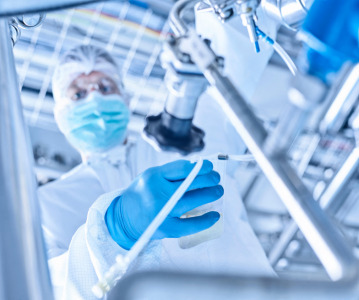
News Understanding the Benefits and Advances of Cleanroom Technology
In an industry where precision and sterility are crucial concerns, cleanrooms play a vital role in maintaining the integrity of pharmaceutical products like drugs, vaccines, and other medical products. So, what is a cleanroom?
-

News AbbVie secures GBP£1.2 billion deal for Gilgamesh’s psychedelic programme
AbbVie has penned a significant agreement to acquire the bretisilocin programme from Gilgamesh Pharmaceuticals for up to £1.2 billion, marking a bold step in the pharmaceutical giant's quest to develop treatments for psychiatric disorders. -

News Gates Foundation commits US$2.5 billion to women’s health research
The Bill & Melinda Gates Foundation has announced a substantial US$2.5 billion commitment to accelerate research and development focused exclusively on women's health through 2030.
-

News Mid-year review: notable FDA drug approvals of 2025
As we fly past the halfway point of 2025, the pharmaceutical landscape reliably continues to evolve with innovative therapies addressing critical medical needs. The FDA has already approved 17 groundbreaking medications this year, each representin... -

News US FDA announces new priority vouchers for accelerated review times
The US FDA announced a new priority program for drug developers – the Commissioner’s National Priority Voucher (CNPV) program aims to enhance the health interests of the US by allowing drug developers to redeem a voucher, shortening th... -
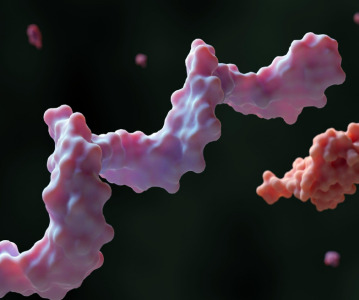
News Google-backed start-up raises US$600 million to support AI drug discovery and design
London-based Isomorphic Labs, an AI-driven drug design and development start-up backed by Google’s AI research lab DeepMind, has raised US$600 million in its first external funding round by Thrive Capital. The funding will provide further power t... -
News AstraZeneca to invest US$2.5 billion in Beijing R&D centre
Amid investigations of former AstraZeneca China head Leon Wang in 2024, AstraZeneca have outlined plans to establish its sixth global strategic R&D centre in China. Their aim is to further advance life sciences in China with major research and manufact...