
Novartis Cosentyx Receives Positive CHMP Opinion for First-Line Treatment of Moderate-to-Severe Psoriasis Patients?

Novartis has announced that the Committee for Medicinal Products for Human Use (CHMP) has adopted a positive opinion recommending approval of Cosentyx (secukinumab, formerly known as AIN457) as a first-line systemic treatment of moderate-to-severe plaque psoriasis in adults who are candidates for systemic therapy.
This recommendation would mean doctors could use secukinumab first-line to treat their psoriasis patients, as an alternative to other first-line systemic treatments, which have significant side effects. Currently, all biologic treatments for psoriasis, including anti-tumour necrosis factor therapies (anti-TNFs) and ustekinumab are recommended for second-line systemic therapy in Europe.
Secukinumab (at a dose of 300 mg) is the first interleukin-17A (IL-17A) inhibitor to be recommended as a first-line treatment option for psoriasis patients who require systemic therapy in Europe. Secukinumab works by inhibiting the action of IL-17A, a protein that is found in high concentrations in skin affected by the disease.
"This positive CHMP opinion for secukinumab as a first-line treatment of psoriasis brings us one step closer to approval in Europe and making clear skin a reality for psoriasis patients," said David Epstein, Division Head, Novartis Pharmaceuticals. "With this exciting news, we may change the way psoriasis is treated, as 50% of patients are unhappy with their current psoriasis therapies, demonstrating an urgent need for new treatments that clear skin faster and for a longer time."
The ultimate aim of psoriasis treatment is clear skin for patients. In clinical studies, 70% or more patients achieved clear skin (PASI 100) or almost clear skin (PASI 90) with secukinumab 300 mg during the first 16 weeks of treatment.
The CHMP opinion was based on the positive results of the Phase III clinical trial programme in moderate-to-severe plaque psoriasis and follows the unanimous recommendation of approval in October from the Dermatologic and Ophthalmic Drugs Advisory Committee (DODAC) to the FDA.
In these trials, secukinumab consistently demonstrated very high skin clearance, including superiority to Enbrel (etanercept) in the head-to-head FIXTURE study. Seventy percent or more secukinumab 300 mg patients achieved clear skin (PASI 100) or almost clear skin (PASI 90) during the first 16 weeks of treatment in the FIXTURE and ERASURE studies; this was maintained in the majority of patients up to Week 52 (with continued treatment). Secukinumab patients in the FIXTURE, ERASURE, FEATURE and JUNCTURE studies (reviewed by the US FDA) also observed significant differences as early as Week 2 and on average, secukinumab 300 mg patients had symptoms reduced by 50% by Week 3, compared to Week 7 for Enbrel (etanercept) patients, in FIXTURE. Secukinumab demonstrated a favorable safety profile, with similar incidence and severity of adverse events between secukinumab treatment arms (300 mg and 150 mg).
The European Commission reviews the recommendations of the CHMP. The final decision on approval, usually granted in approximately two months of the CHMP opinion, will be applicable to all European Union (EU) and European Economic Area (EEA) countries.
Related News
-

News GSK announces £400 million investment in new Cambridge R&D centre
Pharmaceutical giant to establish flagship research facility on Cambridge Biomedical Campus as part of strategic pipeline acceleration
-
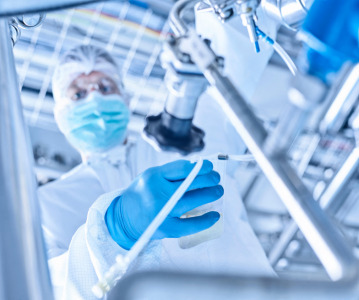
News Understanding the Benefits and Advances of Cleanroom Technology
In an industry where precision and sterility are crucial concerns, cleanrooms play a vital role in maintaining the integrity of pharmaceutical products like drugs, vaccines, and other medical products. So, what is a cleanroom?
-

News AbbVie secures GBP£1.2 billion deal for Gilgamesh’s psychedelic programme
AbbVie has penned a significant agreement to acquire the bretisilocin programme from Gilgamesh Pharmaceuticals for up to £1.2 billion, marking a bold step in the pharmaceutical giant's quest to develop treatments for psychiatric disorders. -

News Gates Foundation commits US$2.5 billion to women’s health research
The Bill & Melinda Gates Foundation has announced a substantial US$2.5 billion commitment to accelerate research and development focused exclusively on women's health through 2030.
-

News Mid-year review: notable FDA drug approvals of 2025
As we fly past the halfway point of 2025, the pharmaceutical landscape reliably continues to evolve with innovative therapies addressing critical medical needs. The FDA has already approved 17 groundbreaking medications this year, each representin... -

News US FDA announces new priority vouchers for accelerated review times
The US FDA announced a new priority program for drug developers – the Commissioner’s National Priority Voucher (CNPV) program aims to enhance the health interests of the US by allowing drug developers to redeem a voucher, shortening th... -
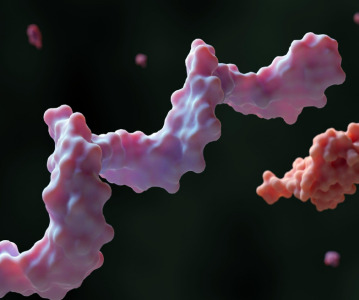
News Google-backed start-up raises US$600 million to support AI drug discovery and design
London-based Isomorphic Labs, an AI-driven drug design and development start-up backed by Google’s AI research lab DeepMind, has raised US$600 million in its first external funding round by Thrive Capital. The funding will provide further power t... -
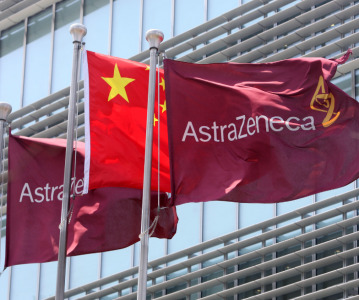
News AstraZeneca to invest US$2.5 billion in Beijing R&D centre
Amid investigations of former AstraZeneca China head Leon Wang in 2024, AstraZeneca have outlined plans to establish its sixth global strategic R&D centre in China. Their aim is to further advance life sciences in China with major research and manufact...