
Oxford University to create institute to fight antimicrobial resistance after Ineos donation

The donation from Ineos will create a new institute to tackle the "silent pandemic"
After its recent victory in rapidly designing a vaccine against COVID-19, the University of Oxford is to create a new institute to tackle antimicrobial resistance (AMR), with the help of a £100 million donation from petrochemical company, Ineos.
With the financial boost from Ineos, the new Ineos Oxford Institute (IOI) will benefit from the university's "internationally outstanding" expertise and facilities and will create collaborative and cross-disciplinary links across the sciences.
Based between two sites in Oxford, the IOI will link the University’s Department of Chemistry with the Department of Zoology in the new Life & Mind Building, which is currently under construction.
The majority of global antibiotic consumption by volume is used for agriculture, and drug use in animals is contributing significantly to their lessening effectiveness in humans. The IOI will, therefore, concentrate on designing novel antimicrobials just for animals, as well as exploring new human drugs.
As well as drug discovery work, the IOI intends to partner with other global leaders in the field of AMR to raise awareness and promote responsible use of antimicrobial drugs.
The academic team will contribute to research on the type and extent of drug-resistant microbes across the world. It will also seek to attract and train the brightest minds in science to tackle this ‘silent pandemic’.
According to the university, each year, AMR causes an estimated 1.5 million excess deaths; by 2050, this figure could rise to in excess of 10 million.
In addition, its predicted global economic toll of $100 trillion by mid-century. makes it arguably the greatest healthcare and economic challenge facing the world post-COVID.
Since the 1980s, drug discovery has made little progress in developing new antibiotics, probably the direct result of the lack of funding and/or scientific interest.
Perhaps now, after living with coronavirus, such threats to global health have come into sharp relief, as have the benefits — and success — of working collaboratively to find solutions.
"We must be looking right now for new antibiotics with the same urgency as we have been for vaccines. The consequence of continued complacency doesn’t bear thinking about," cautioned Surgeon David Sweetnam, Adviser to the Ineos Oxford Institute.
Professor Louise Richardson, Vice Chancellor of the University of Oxford, said: "It is another example of a powerful partnership between public and private institutions to address global problems. Oxford played a crucial role in the early development of antibiotics so it is only appropriate that we take the lead in developing a solution to antimicrobial resistance."
Related News
-

News Pharmaceutical Supply Chain People Moves
The latest appointments, promotions, and structural changes across the pharmaceutical supply chain.
-

News Merck KGaA to buy US biotech SpringWorks for US$3.9 billion
The German multinational pharmaceutical company Merck KGaA have signed a deal to buy US biotech company SpringWorks Therapeutics at an equity value of US$3.9 billion in a move to add rare cancer therapeutics to their pipelines.
-

News Cassava Sciences halts Alzheimer's drug trial after limited progress
Cassava Sciences have drawn a close to their investigations and development of the drug simufilam, which they intended to be used for the treatment of Alzheimer’s disease.
-
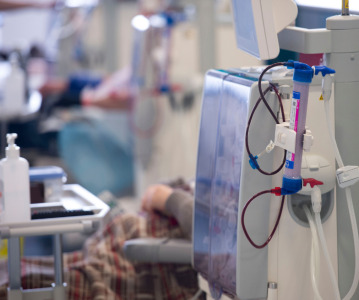
News US FDA adds haemodialysis bloodlines to devices shortage list
On March 14, 2025, the US FDA published an open letter to healthcare providers citing continuing supply disruptions of haemodialysis bloodlines, an essential component of dialysis machines.
-

News Vertex Pharmaceuticals stock jumps as FDA approves non-opioid painkiller
UK-based Vertex Pharmaceuticals saw their stock shares soar as the US FDA signed off on the non-opioid painkiller Journavx, also known as suzetrigine, for patients with moderate to severe acute pain, caused by surgery, accidents, or injuries.
-

News Lessons from CPHI Milan 2024: Sunny Intervals for Pharma Manufacturing?
As the 2024 CPHI conference wrapped up in Milan, we caught up with L.E.K. Consulting – a global strategy consulting firm with deep expertise in pharma manufacturing – to discuss evolving market perspectives and business outlook. -

News US BIOSECURE Act passed by US House of Representatives
The controversial act, which has already impacted several foreign companies operating in the US, was passed by the House of Representatives on September 9, 2024. It is now headed for the US Senate before it can be signed into law by President Joe Biden... -
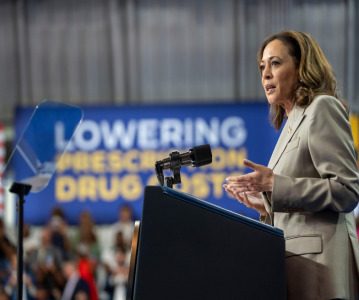
News Drug prices agreed upon as part of the US Inflation Reduction Act
The Inflation Reduction Act brought into constitution by the Biden administation in 2022, which proposed a drug price negotiation between the government and pharmaceutical companies, has reached it's first agreement.