
Packaging Under Pressure: Where Sustainability in Pharma Meets Reality
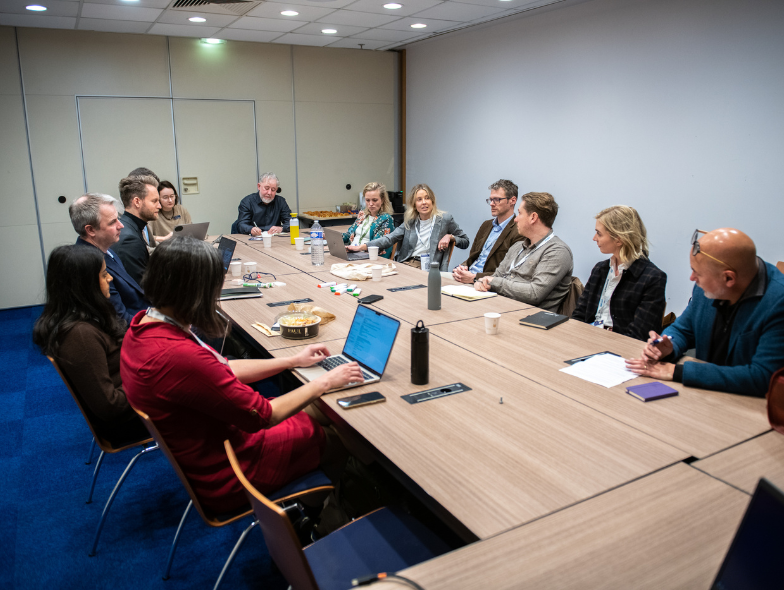
Photography by Eduardo Allanegui
A Reflection on the Sustainability Collective Roundtable Session at Pharmapack 2026
Packaging is not the biggest sustainability challenge facing pharma and healthcare, but it may be the most revealing. As expectations shift from ambition to delivery, packaging is emerging as the point where regulation, data, materials and operational reality collide. A recent Sustainability Collective roundtable at Pharmapack Paris 26 offered a candid look at what this collision reveals, and why collective learning matters more than ever.
Packaging has quietly become one of the clearest stress tests for sustainability in pharma and healthcare.
Not because it represents the sector’s largest environmental impact, but because it sits at the intersection of multiple, often competing pressures: regulation, patient safety, material selection, data integrity, global supply chains, and end-of-life considerations. As sustainability moves from high-level commitments to day-to-day execution, packaging is frequently where that shift becomes visible, and where misalignment is hardest to ignore.
It was in this context that members of the Sustainability Collective convened during Pharmapack Paris 26 for a non-attributable roundtable discussion. The Collective brings together stakeholders from across pharma and healthcare to create space for open, practical dialogue on shared sustainability challenges, particularly those that cut across organisational and functional boundaries. The intention is not to force consensus, but to recognise patterns, tensions, and opportunities that are difficult to see in isolation.
The discussion reflected this purpose. Reporting requirements, packaging regulation, decarbonisation expectations, and emerging considerations around nature and biodiversity were all present, but rarely in neat compartments. Instead, they overlapped. The same questions resurfaced in different forms:
• What data do we actually have?
• How confident are we in it?
• How precise does it need to be?
• How do we avoid solving the same problems repeatedly, in slightly different ways?
To encourage candour, the discussion was deliberately non-attributable. What follows is not a set of conclusions or recommendations, but an observer’s reflection on how the conversation unfolded, and what it may suggest about where collective effort could be most effective next.
What reporting is really exposing
Reporting entered the conversation early and remained a consistent reference point, but participants were responding to more than regulation itself. Reporting requirements are acting as a proxy for a broader question: how well are organisations structurally equipped to understand and manage their impacts?
 In many cases, the underlying data already exists, but it is fragmented. Packaging specifications may sit in one system, procurement data in another. Lifecycle Assessments developed for one purpose are now being asked to serve several. Pulling this information together is possible, and several participants described doing exactly that, but the process is often manual, time-consuming and vulnerable to change.
What stood out was the growing tension around what constitutes ‘good enough’. Some teams are accustomed to working directionally, improving year on year and making reasonable assumptions where data is incomplete. Others are now being asked to apply levels of precision closer to financial reporting. Neither approach is inherently flawed, but the gap between them is becoming harder to manage, with packaging data frequently sitting at the centre of that tension.
From the outside, it can be tempting to propose simple starting points: focus on the highest-volume products, the dominant materials, the largest markets. The discussion made clear how quickly these apparent shortcuts encounter operational reality. Large portfolios, shared components, and market-specific variants mean progress is rarely linear.
Where misalignment shows up first
If reporting exposes internal strain, the supplier interface is where it tends to surface most clearly.
There was little evidence of resistance to being asked for sustainability data. Instead, participants described fatigue, particularly around inconsistent requests. Similar questions arriving in different formats. Slightly different assumptions about boundaries. Different levels of detail requested for essentially the same information.
Packaging sits at the centre of this experience. It is tangible, regulated, and comparatively easy to interrogate, even when providing robust answers is far from straightforward. From one perspective, this attention reflects progress. From another, it feels like parallel effort without cumulative learning.
While no one suggested a simple fix, there was a shared sense that even modest alignment, such as common definitions, clearer baselines and reusable datasets, could significantly reduce unnecessary friction. Not by lowering expectations, but by preventing them from shifting sideways.
Where theory meets operational reality
Packaging returned to the conversation repeatedly, sometimes explicitly, sometimes almost inadvertently.
Regulation plays a role, but packaging also resists abstraction. Materials must be selected, whether aluminium, glass, PVC, polyethylene, or polypropylene. Formats must be approved, products distributed, and waste managed. It is where sustainability stops being conceptual and begins to encounter real operational constraints. 
The tone in the room was pragmatic. Participants acknowledged that regulation continues to evolve, interpretation remains uneven, and some requirements are genuinely difficult to deliver. But there was little appetite for waiting until every uncertainty is resolved.
Instead, the conversation focused on sequencing: starting where progress feels achievable, learning from those steps and keeping more complex challenges, such as reuse targets or recycled content in sensitive applications, visible without allowing them to stall momentum elsewhere. In this sense, packaging emerged less as a discrete problem to solve and more as a proving ground for how the system adapts under pressure.
Keeping packaging in perspective
Importantly, no one argued for packaging to dominate the sustainability agenda. Energy use, waste management and global transport remain major drivers of impact, and that was well understood.
What packaging appeared to offer was something slightly different: visibility. Decisions made here ripple quickly across the value chain, exposing where coordination is working and where it is not. This is why packaging so often becomes the entry point for broader conversations around Scope 3 emissions, disposal pathways, and collaboration with healthcare providers.
From an observer’s perspective, packaging functioned less as the answer and more as a lens, a way of seeing how effectively the system is currently functioning.
Nature and biodiversity: recognised, but unresolved
Nature and biodiversity were part of the discussion, though more tentatively.
There was clear recognition that these issues matter and will become increasingly difficult to sideline. At the same time, there was honesty about how challenging they are to address in practice. Measurement remains underdeveloped, frameworks continue to proliferate, and trade-offs, particularly around bio-based polymers, paper-based laminates, or recycled content in sensitive applications, are difficult to compare or communicate with confidence.
What appeared to be missing was not concern, but a shared language. Carbon, for all its limitations, provides one. Nature does not yet. Without that, decision-making risks feeling either tentative or symbolic.
Here again, the value of shared learning came into focus, not because solutions already exist, but because navigating this space individually increases the risk of unintended consequences.
From Paris to Milan: grounding the next conversation
Stepping back, what lingered was not any single issue, but how consistently the same themes resurfaced: data that does not quite align, requests that do not quite match, and systems that were not designed for this level of scrutiny.
Packaging brings these tensions into focus precisely because it cannot remain theoretical. Decisions must be made, often with imperfect information. And when alignment is missing, the effects are felt quickly, frequently by suppliers first.
This is where the Sustainability Collective adds particular value. Not as a technical authority or finished framework, but as a convening space, one that allows packaging to be considered as a system, linking regulation, materials, data, design and end-of-life, and enabling these connections to be explored collectively rather than organisation by organisation.
As the Sustainability Summit in Milan approaches, there is an opportunity to build on what has surfaced in Paris – not by broadening the conversation, but by grounding it. Using packaging as a practical anchor. Comparing notes. Testing assumptions. Clarifying an increasingly complex landscape of requirements and acronyms. Learning from what is already working, in pharma, in FMCGs, and beyond.
The roundtable did not resolve these challenges, and it was never intended to. What it demonstrated was a shared willingness to sit with complexity and speak openly about where things are not yet aligned. The next step may simply be to give that willingness somewhere to land, and to continue the work together.
.png) David Roach is a creative strategist, writer, and storyteller working across pharma, sustainability, and complex global industries. He focuses on the space where ambition meets reality, translating regulatory, technical, and systemic change into clear, human stories that help organisations think, decide, and act differently. Based between Oxford and The Hague, he works internationally.
David Roach is a creative strategist, writer, and storyteller working across pharma, sustainability, and complex global industries. He focuses on the space where ambition meets reality, translating regulatory, technical, and systemic change into clear, human stories that help organisations think, decide, and act differently. Based between Oxford and The Hague, he works internationally.
Related News
-

News Swiss pharma industry warns US tariffs could harm global patient care
The Swiss pharmaceutical sector has raised alarms over new US tariffs on medicines, warning of disrupted supply chains, increased costs, and delayed innovation, all of which could jeopardise patient access to essential treatments worldwide.
-

News Women in Pharma: CPHI India – India’s Pharmaceutical Industry and Gender Inclusion Challenges
India’s pharmaceutical industry has emerged as a significant player in the global market, valued at USD 50 billion in FY 2023-2024, according to Frost & Sullivan’s analysis. This sector encompasses a diverse portfolio, including drugs, vacc... -

News Biogen acquires Apellis Pharmaceuticals to boost immunology and rare disease profile
Biogen Inc. has announced its acquisition of Apellis Pharmaceuticals, Inc., a move that is set to significantly enhance its growth portfolio in immunology and rare diseases. The agreement, valued at approximately US$5.6 billion, will see Biogen purchas... -

News Gilead Sciences acquires Ouro Medicines for over US$2 billion
Gilead Sciences confirms a deal to take over Ouro Medicines, adding to a portfolio of therapies for autoimmune diseases.
-
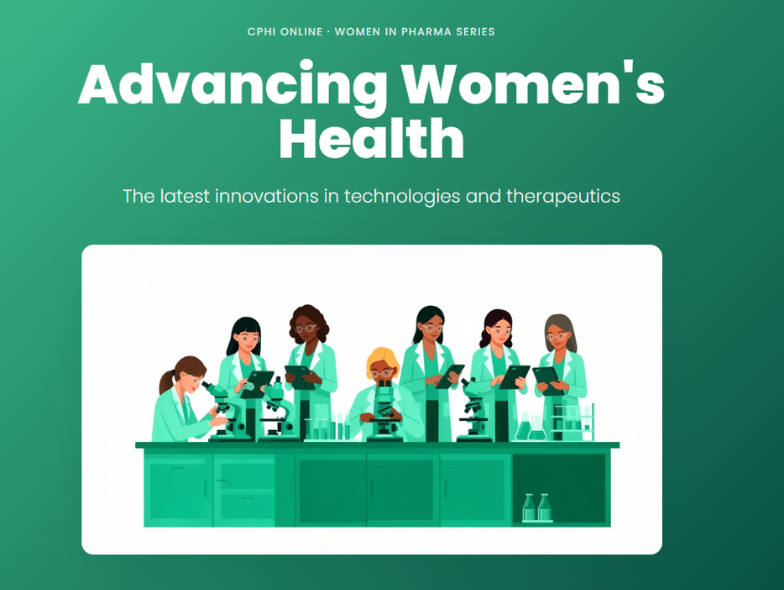
News Women in Pharma: Advancing Women's Health
Discover the latest innovations in technologies and therapeutics that are revolutionising women's health in our latest CPHI Online Women in Pharma infographic.
-

News CPHI Pharma Awards 2026: Recognising Excellence in an Evolving Industry
Submissions now open — deadline May 16
-

News Dr Reddy's to launch generic semaglutide in India
Dr Reddy’s Laboratories, one of India’s leading pharmaceutical companies, is preparing to launch a generic version of semaglutide, branded as Obeda, in March. Obeda is expected to provide a more affordable alternative to Ozempic a... -

News Frontier Biotech and GSK Forge RNA Therapy Partnership
Frontier Biotechnologies and GSK have entered a global licensing agreement to advance small interfering RNA (siRNA) therapeutics. This collaboration grants GSK exclusive rights to develop and commercialise two promising siRNA candidates, marking a mile...