
Researchers find a gap in the brain’s firewall against Parkinson’s disease

NIH-funded mouse study identifies a key player in the progression of the disorder.
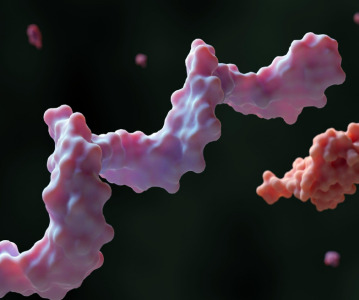
In a study in mice, researchers found that they could reduce the progression of the toxic aggregates of a protein known as α-synuclein that are found in the brains of Parkinson’s disease patients. The results suggest that another protein called lymphocyte-activation gene 3 (LAG3) plays a role in transmitting α-synuclein aggregates from one brain cell to another and could provide a possible target to slow the progression of Parkinson’s disease. The study, published in Science, was partially funded by the National Institutes of Health’s National Institute of Neurological Disorders and Stroke (NINDS).
“This study represents a significant advance in understanding the neurobiological changes underlying Parkinson’s disease,” said Beth-Anne Sieber, a program director at NINDS. “The identification of LAG3 as a mediator in transmitting abnormal α-synuclein between neurons provides both insight into the disease mechanism and a potential therapeutic target for the disease.”
Analogous to how a computer virus corrupts data, the presence of abnormal α-synuclein in neurons can damage healthy α-synuclein protein, which promotes the formation of additional aggregates. These aggregates then pass from one neuron to another just as computer viruses move to other computers on the same network.
“In looking for ways to slow the progression of Parkinson’s disease, we were interested to see how abnormal α-synuclein enters neurons. Therefore, we began by looking for proteins that would be involved in that process,” said Ted M. Dawson, director of the Institute for Cell Engineering and the NINDS Morris K. Udall Centers of Excellence for Parkinson's Disease Research at Johns Hopkins University School of Medicine in Baltimore, and senior author of this study.
Dr Dawson and his colleagues used a synthetic form of abnormal ɑ-synuclein, called pre-formed fibrils, to induce Parkinson’s disease-like symptoms and ultimately focused on the protein LAG3 based on its role as a transmembrane protein and the fact that it binds to fibrils much more tightly than healthy α-synuclein protein. Transmembrane proteins are large molecules with components located both on the interior and the exterior of cells; some transmembrane proteins function as gatekeepers that allow specific molecules to enter or exit cells.
To test the role of LAG3, Dr Dawson’s group compared normal mice with those that lacked the gene for LAG3 and were unable to make that specific protein. When normal mice were injected with α-synuclein fibrils, they quickly developed Parkinson’s disease-like symptoms, including changes in movement, grip strength, and the eventual death of dopamine neurons, the type of brain cell most affected by the disease. However, the mice lacking LAG3 that received fibril injections appeared to have normal grip strength and movement and had no significant loss of dopamine neurons.
Dr Dawson’s team also looked at neurons that had been removed from both types of mice and grown in culture dishes. When α-synuclein fibrils were added to normal neurons, they were quickly pulled into the cells and passed along to neighboring cells; however, this was seen only in very few neurons from the mice that lacked LAG3.
“We knew from these experiments that LAG3 was important for the neurons’ ability to take up α-synuclein fibrils,” said Dr Dawson. “Antibodies that block the activity of LAG3 are being tested in clinical trials as a form of cancer immunotherapy. We were therefore curious to see whether we could use similar antibodies to block the function of LAG3.”
Neurons treated with the LAG3 antibodies behaved similarly to the neurons that lacked LAG3. There was a considerable decrease in their ability to take up fibrils and to pass them on to neighboring neurons. These results suggested that LAG3 function could be blocked by antibodies, providing a possible means to slow or stop the progression of Parkinson’s disease.
Dr Dawson and his colleagues are currently testing the LAG3 antibody in animal models of Parkinson’s disease to further explore possible therapeutic and protective effects against the progression of disease symptoms.
Related News
-

News GSK announces £400 million investment in new Cambridge R&D centre
Pharmaceutical giant to establish flagship research facility on Cambridge Biomedical Campus as part of strategic pipeline acceleration
-

News Understanding the Benefits and Advances of Cleanroom Technology
In an industry where precision and sterility are crucial concerns, cleanrooms play a vital role in maintaining the integrity of pharmaceutical products like drugs, vaccines, and other medical products. So, what is a cleanroom?
-

News AbbVie secures GBP£1.2 billion deal for Gilgamesh’s psychedelic programme
AbbVie has penned a significant agreement to acquire the bretisilocin programme from Gilgamesh Pharmaceuticals for up to £1.2 billion, marking a bold step in the pharmaceutical giant's quest to develop treatments for psychiatric disorders. -

News Gates Foundation commits US$2.5 billion to women’s health research
The Bill & Melinda Gates Foundation has announced a substantial US$2.5 billion commitment to accelerate research and development focused exclusively on women's health through 2030.
-

News Mid-year review: notable FDA drug approvals of 2025
As we fly past the halfway point of 2025, the pharmaceutical landscape reliably continues to evolve with innovative therapies addressing critical medical needs. The FDA has already approved 17 groundbreaking medications this year, each representin... -

News US FDA announces new priority vouchers for accelerated review times
The US FDA announced a new priority program for drug developers – the Commissioner’s National Priority Voucher (CNPV) program aims to enhance the health interests of the US by allowing drug developers to redeem a voucher, shortening th... -
News Google-backed start-up raises US$600 million to support AI drug discovery and design
London-based Isomorphic Labs, an AI-driven drug design and development start-up backed by Google’s AI research lab DeepMind, has raised US$600 million in its first external funding round by Thrive Capital. The funding will provide further power t... -

News AstraZeneca to invest US$2.5 billion in Beijing R&D centre
Amid investigations of former AstraZeneca China head Leon Wang in 2024, AstraZeneca have outlined plans to establish its sixth global strategic R&D centre in China. Their aim is to further advance life sciences in China with major research and manufact...