
SGS expands elemental impurity testing services

Company has successfully developed and validated impurity test methods in line with ICH Q3D regulatory guidelines.
SGS has expanded elemental analysis testing capabilities at its Chennai, India laboratory. The site has invested in three inductively coupled plasma mass spectrometry (ICP-MS) systems, in a move to address the updated ICH Q3D regulatory guidelines on elemental impurities and establish a South East Asia Center of Excellence for elemental analysis.
ICH Q3D Step 4 was published in December 2014. Since then, it has required that a risk analysis be deployed for all drug products on the specified list of elements and their permitted daily exposure (PDE) limits. The guideline came into effect in June 2016 for new drug products, and existing products needed to comply by December 2017. Using Agilent 7700 and 7800 ICP-MS systems, SGS’s laboratory in Chennai has now successfully developed and validated impurity test methods in line with ICH Q3D.
Chennai now joins a number of the laboratories across Europe and North America within the SGS laboratory network to offer elemental impurity testing for pharmaceutical products, and providing local support to drug developers.
“SGS has a well-trained and qualified elemental impurities team in Chennai that can effectively support pharmaceutical and biopharmaceutical companies in the South East Asia region, in accordance with the ICH 3QD guidelines,” commented Sathananthan Sangaran, National Operations Director of India. He added: “On a global level, SGS is fully committed to offering its clients access to the very latest technology and expertise to ensure regulatory demands can be met efficiently.”
The 1,850-m2 Chennai laboratory was opened in 2005 and has strong capabilities in method development and validation analytical chemistry as well as batch release, utilities qualification and monitoring; healthcare product and healthcare supplement testing; microbiological testing; safety and stability studies.

Related News
-

News Pharmaceutical Supply Chain People Moves
The latest appointments, promotions, and structural changes across the pharmaceutical supply chain.
-

News Merck KGaA to buy US biotech SpringWorks for US$3.9 billion
The German multinational pharmaceutical company Merck KGaA have signed a deal to buy US biotech company SpringWorks Therapeutics at an equity value of US$3.9 billion in a move to add rare cancer therapeutics to their pipelines.
-

News Cassava Sciences halts Alzheimer's drug trial after limited progress
Cassava Sciences have drawn a close to their investigations and development of the drug simufilam, which they intended to be used for the treatment of Alzheimer’s disease.
-
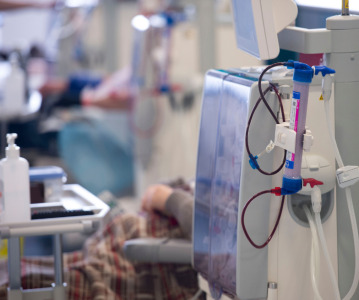
News US FDA adds haemodialysis bloodlines to devices shortage list
On March 14, 2025, the US FDA published an open letter to healthcare providers citing continuing supply disruptions of haemodialysis bloodlines, an essential component of dialysis machines.
-

News Vertex Pharmaceuticals stock jumps as FDA approves non-opioid painkiller
UK-based Vertex Pharmaceuticals saw their stock shares soar as the US FDA signed off on the non-opioid painkiller Journavx, also known as suzetrigine, for patients with moderate to severe acute pain, caused by surgery, accidents, or injuries.
-
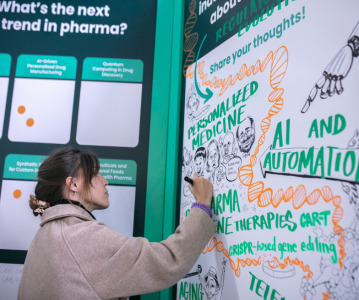
News Lessons from CPHI Milan 2024: Sunny Intervals for Pharma Manufacturing?
As the 2024 CPHI conference wrapped up in Milan, we caught up with L.E.K. Consulting – a global strategy consulting firm with deep expertise in pharma manufacturing – to discuss evolving market perspectives and business outlook. -
News US BIOSECURE Act passed by US House of Representatives
The controversial act, which has already impacted several foreign companies operating in the US, was passed by the House of Representatives on September 9, 2024. It is now headed for the US Senate before it can be signed into law by President Joe Biden... -
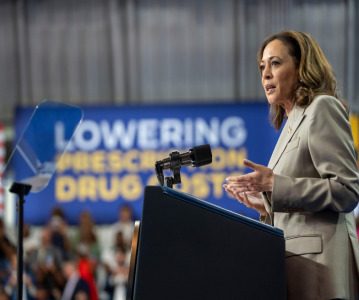
News Drug prices agreed upon as part of the US Inflation Reduction Act
The Inflation Reduction Act brought into constitution by the Biden administation in 2022, which proposed a drug price negotiation between the government and pharmaceutical companies, has reached it's first agreement.