
Thinking Outside the Box, What's Driving R&D in Pharma Packaging?
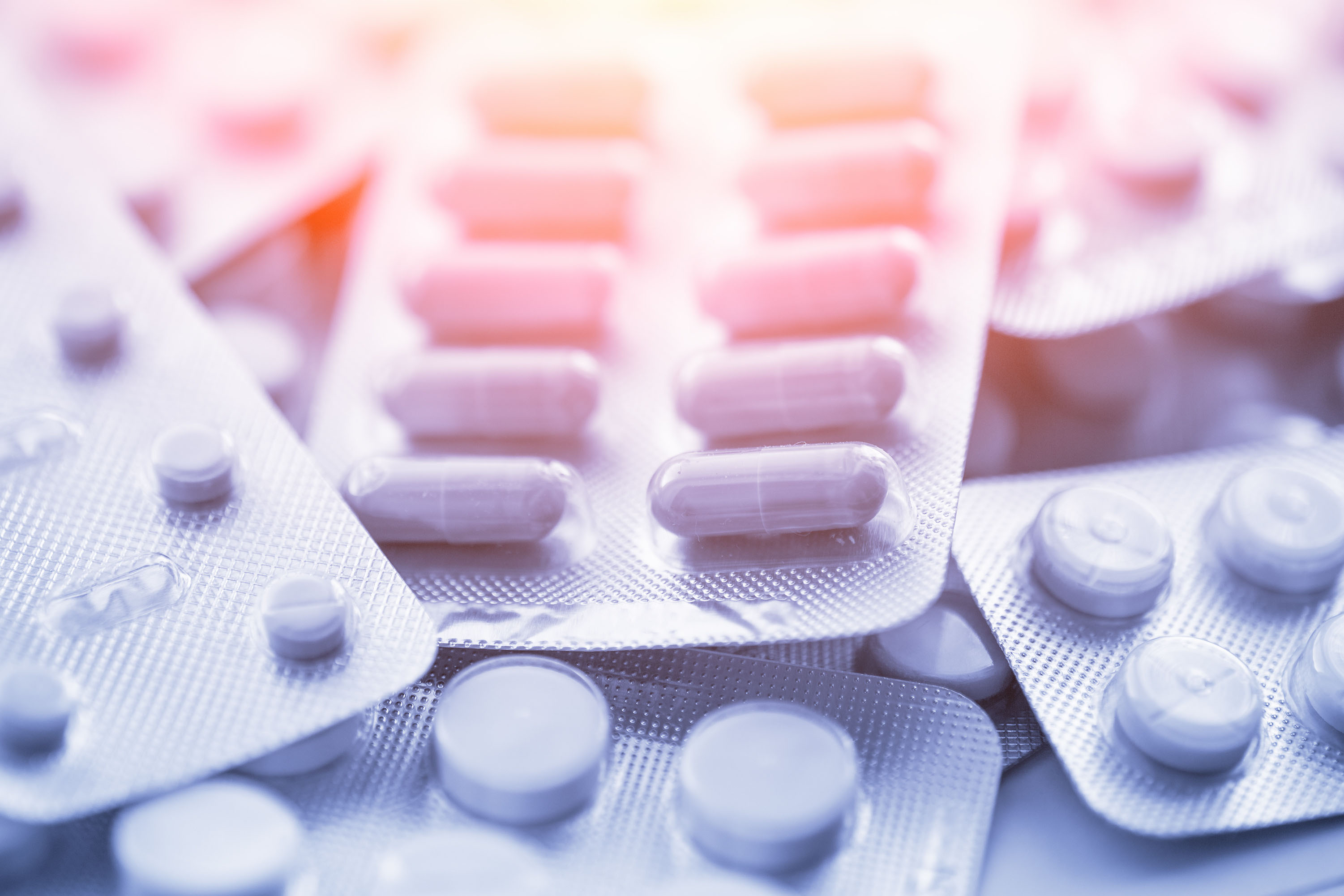
Evolving patient needs, growing demand for traceability and increasing cost pressures have awakened innovation in the pharmaceutical packaging sector.
Packaging development is no longer just about creating containers that ensure drugs are stable on the pharmacy shelf. Nowadays designers must consider ease-of-access, traceability and compliance with regulations like the US Drug Supply Chain Security Act (DSCSA) [1] and the Falsified Medicines Directive in the European Union [2].
Ger Standhardt from the NVC Netherlands Packaging Centre told us “We mainly see things happening in areas that are pushed by legal requirements such as serialization, anti-tampering devices and patient-centric packaging design, including adherence packaging.”
Continued growth of the large molecule drugs sector and the emergence of cell and gene therapies are also impacting pharmaceutical packaging designed Standhardt says. “The main difference with biopharma products is that they are usually in liquid form and often require more environmental conditioning” he explained.
Patient-centricity
Patient centricity is impacting all types of packaging and delivery devices says Pierre Pienaar, president of the World Packaging Organization (WPO). He told us “Patients are and will always be at the centre of the pharma sector.
“If one looks over the years at the development of the industry, one will clearly see how well the pharma industry achieves this. They strive to make it easier for patients to comply with prescribed regimens.”
Pienaar cited the Epipen, Mylan’s epinephrine auto-injector for anaphylactic shock, as an example. He explained that by focusing on the patient, Epipen’s designers had given it an “ease of use in anxious moments.”
Other packaging design elements also reflect the focus on the patient says Pienaar, citing “printing on certain blister packs that remind the patient when to take their respective drugs” as an example.
Standhardt has also observed the trend. He told us “Patient centricity is certainly a buzzword and it creates opportunities for better packaging – or packaging that is better for the patient, not just for the supply chain and packaging operations.”
Global logistics
Another factor is the lengthening of supply chains. A drug taken by a US patient may have been manufactured locally or in a different continent. The challenge of protecting a medicine for shipment around the world is changing the packaging industry, particularly in its use of tracking technology says Pienaar.
“The integration of IT with all the other sectors and departments will ultimately prove critical, particularly with the logistics of getting the medicine to those patients in time, every time and in the right condition.”
Packaging innovation
Reinventing the wheel is usually not a good idea. The drug industry has been packaging medicines for more than one hundred years and effective designs and processing, filling and closing technologies are established. This has made some firms innovation averse according to Pienaar, who told us “The small molecule prescription drug sector is rather conservative in its approach to packaging development.”
However, other parts of the industry – such as the over-the-counter (OTC) and consumer healthcare sectors - are more open to innovation.
Pienaar told us “In recent years some multinationals have moved out of their comfort zone and ventured into unchartered territory in their ideas and thinking to embrace non-traditional packaging ideas. “This is great to see, especially in the OTC pharma sector,” he said, citing innovations like the recent introduction of tube packaging as an example.
Materials science and economics
Cost also impacts what drug firms expect of packaging suppliers. Companies want to protect drugs as effectively as possible. However, they also want to minimize spending and this is driving innovation in materials.
“The most important aspect of pharma packaging is shelf-life,” Pienaar told us, explaining that material science developers aim to find the ‘sweet spot’ where economics and performance are balanced. He added that “The pharma industry knows too well that an easy solution in material selection is to pick glass and aluminium. This is good for barrier, but it is not economical and sometimes impractical.”
“Fortunately there is plenty of work currently being done around the world in packaging science. R&D labs continuously come up with new barrier technology as they seek the right construction for a specific product which has good barrier and is economically sound.”
Patent loss
The pharmaceutical patent cliff and the corresponding growth of the generic drug sector are also impacting packaging development. In generics, price is the key battleground. The main reason non-branded drugs are cheaper than branded equivalents because they do not need to be examined in clinical trials.
However, other factors like manufacturing and packaging cost also play an important part in keeping prices low according to Pienaar. “The challenge is to make generic drug prices competitive and this is where costings are focussed on. The development of packaging materials continues to aid the reduction of costs.”
He added that “Technologists and engineers help industry find the most suitable type of packaging that best fits the pricing structure without compromising product quality, thus ensuring a good reliable medicine is available at a fair price.”
Procurement challenges
Packaging procurement is another area where pharmaceutical companies seek to minimize costs. The packaging sector, like the drug industry, is global. A medicine made in India could be sealed in a blister-pack made in Europe and put in a box made in China before being shipped to the US.
Effective packaging procurement in a highly globalized market can be a challenge according to Pienaar, who says “The relationship between sales, procurement and packaging development is paramount.”
He explained that when such interaction does not take place there can be problems. “Sometimes procurement departments are fed outdated or incorrect data which impedes their ability to order.”
“In such circumstances, knowledge of the global packaging market is important because alternative sources may need to be identified quickly to prevent supply interruptions”, Pienaar said.
Future packaging
Biopharmaceutical packaging is an active area of R&D. In particular, there is a need for improved primary and secondary packaging technologies for large molecule drugs or cell and gene therapies.
While current packaging solutions are adequate, efforts to create technologies that are better able to protect these highly sensitive medicines continue, according to Pienaar, who told us he is confident the industry can rise to the challenge.
“Having been in packaging for over 35 years, having a pharmacy background and having crossed the globe many times in my role as WPO President, I can comfortably say that the packaging industry will once again rise to the challenge as it has done so well for the past 35 years. I know they will again seek the correct solution to develop packaging for cell and gene therapies.”
Standhardt is also positive about the level of innovation going on in the packaging sector, particularly the input being provided by large pharmaceutical and healthcare companies. He said, “I really like the way UCB approaches its packaging designs with a lot of patient involvement, but the way Abbott has launched its metered liquid dosing device in India is also very nice.”
The latter device – called LiDoCon – premiered in India in 2017 [3]. It is designed to deliver measured doses of liquid pharmaceuticals and over-the-counter medicines in a hygienic and convenient manner.
At the time, Raviraj Pillai, head of Abbott's pharmaceutical Innovation and Development Center in Mumbai said the device “provides safer, more accurate and convenient dosing of liquid medicines, ultimately making it easier for people to take their medicine and get better."
Digital packaging
The use of so-called ‘digital packaging’ is also going to increase in the future according to Chris Waterhouse, managing director of consulting group iDiPac, who cited personalized medicine as a potential area of application.
He told us “Structurally, digital ‘print’ systems can meet future needs. For example, digital capabilities facilitate the move to smaller batch sizes, including in areas like cell and gene therapy where a product is manufactured for a specific patient.
“The digital approach is flexible and agile, which means it is well suited to the personalized medicine where the ability seamlessly interact with the patient, manufacturing and supply chain is vital,” he said.
Smart bar codes on pharmaceutical packaging are also likely to become more common Waterhouse says, explaining that their ability to provide the patient with information and return data to healthcare professionals has multiple potential benefits.
“For the patient, better outcomes are achieved. For Governments, smart barcodes can lower costs. And for the drug industry they can increase sales,” he said, explaining the ability to track the percentage of prescribed drugs that are taken can help shape production and marketing efforts.
The complete package
As drug industry requirements continue to evolve, packaging developers will need to continue innovating. The sector’s ability to combine patient and regulatory demands with innovative design will be key to creating the next generation of drug packaging for the 21st century.
If you're looking to meet the leading manufacturers and developers of pharma packaging solutions, learn the latest developments through quality conferences and access unparalleled networking opportunities we offer a portfolio of CPHI and Pharmapack exhibitions in all major pharma markets throughout the year - take a look at our event calendar for more information.
References
[1] https://www.govinfo.gov/content/pkg/PLAW-113publ54/pdf/PLAW-113publ54.pdf
[2] https://ec.europa.eu/health/sites/health/files/files/eudralex/vol-1/dir_2011_62/dir_2011_62_en.pdf
[3] https://www.abbott.in/media-center/press-releases/abbott-pioneers-new-liquid-dosing-device-lidocon-in-india.htm
Related News
-

News Understanding the Benefits and Advances of Cleanroom Technology
In an industry where precision and sterility are crucial concerns, cleanrooms play a vital role in maintaining the integrity of pharmaceutical products like drugs, vaccines, and other medical products. So, what is a cleanroom?
-

News AbbVie secures GBP£1.2 billion deal for Gilgamesh’s psychedelic programme
AbbVie has penned a significant agreement to acquire the bretisilocin programme from Gilgamesh Pharmaceuticals for up to £1.2 billion, marking a bold step in the pharmaceutical giant's quest to develop treatments for psychiatric disorders. -

News Gates Foundation commits US$2.5 billion to women’s health research
The Bill & Melinda Gates Foundation has announced a substantial US$2.5 billion commitment to accelerate research and development focused exclusively on women's health through 2030.
-

News Mid-year review: notable FDA drug approvals of 2025
As we fly past the halfway point of 2025, the pharmaceutical landscape reliably continues to evolve with innovative therapies addressing critical medical needs. The FDA has already approved 17 groundbreaking medications this year, each representin... -

News US FDA announces new priority vouchers for accelerated review times
The US FDA announced a new priority program for drug developers – the Commissioner’s National Priority Voucher (CNPV) program aims to enhance the health interests of the US by allowing drug developers to redeem a voucher, shortening th... -

News Google-backed start-up raises US$600 million to support AI drug discovery and design
London-based Isomorphic Labs, an AI-driven drug design and development start-up backed by Google’s AI research lab DeepMind, has raised US$600 million in its first external funding round by Thrive Capital. The funding will provide further power t... -

News AstraZeneca to invest US$2.5 billion in Beijing R&D centre
Amid investigations of former AstraZeneca China head Leon Wang in 2024, AstraZeneca have outlined plans to establish its sixth global strategic R&D centre in China. Their aim is to further advance life sciences in China with major research and manufact... -
News Experimental drug for managing aortic valve stenosis shows promise
The new small molecule drug ataciguat is garnering attention for its potential to manage aortic valve stenosis, which may prevent the need for surgery and significantly improve patient experience.