
Tumour microproteins could provide basis for cancer vaccines
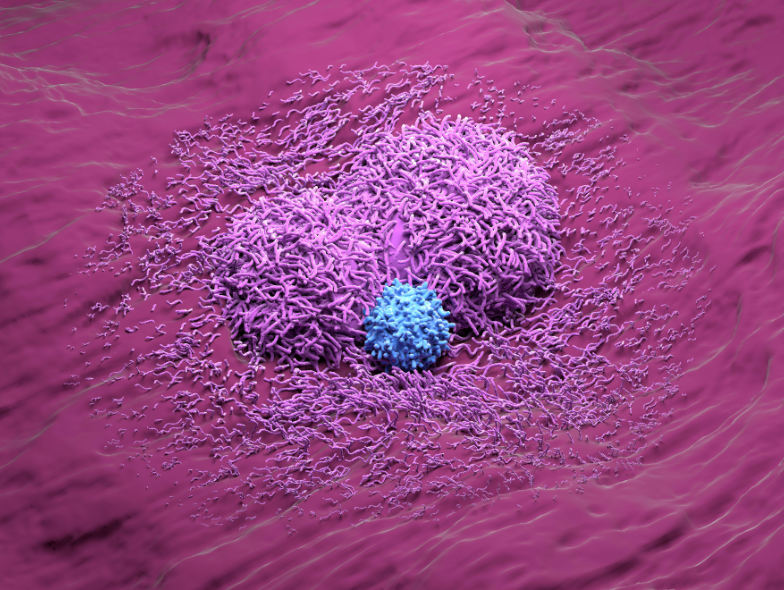
A recent study published in Science Advances has identified a set of microproteins produced exclusively in liver tumours, which may provide a clear target for the development of a cancer vaccine.
A group of researchers from the Hospital del Mar Research Institute, Cima University of Navarra, and Pompeu Fabra University have discovered a group of microprotein molecules expressed exclusively in liver tumour cells. These microproteins may provide the basis for immune cell activation and targeting against the tumour, which could in turn be exploited to develop cancer vaccines.
Data from tumours and healthy tissue from over 100 liver cancer patients were integrated and allowed the researchers to identify the tumour microproteins. These microprotein molecules were coded by genes previously thought incapable of encoding proteins. Mar Alba, an ICREA researcher at the Hospital del Mar Research Institute, commented “In recent years, there has been increasing attention to this group of genes, which, due to their short length or low expression, were considered non-coding. New techniques have revealed that some of these genes can indeed produce small molecules.” These techniques include computational techniques like transcriptomics, proteomics, and translatomics. Laboratory experiments aimed at studying immune responses supplemented the studies.
The mechanism of cancer vaccines involves the immune system’s ability to recognise and target foreign cancer cells and the peptides they generate. However, low mutation rates in cancer cells have provided a challenge for the development of effective cancer vaccines. Microproteins, once believed too difficult to detect, can offer an alternative to researchers. “This study shows that there is a significant number of microproteins exclusively expressed in tumour cells that could be used to develop new treatments,” Marta Espinosa Camarena, a Hospital del Mar Research Institute researcher, stated.
Any potential cancer vaccine may also be used to treat many patients, as the same microproteins were expressed in several individuals. This differs from other potential cancer vaccine mechanisms that rely on patient-specific mutations. Puri Fortes, researcher at CIMA and CIBERehd, stated “We have seen that some of these microproteins can stimulate the immune system, potentially generating a response against cancer cells. This response can be enhanced with vaccines, similar to the coronavirus vaccines, but producing these microproteins. These vaccines could stop or reduce tumour growth.”
Future research hopes to further explore the application of these microproteins in developing and administering cancer vaccines.
Source:
Microproteins found in tumors could lead to cancer vaccines [Accessed July 15, 2024] https://www.eurekalert.org/news-releases/1050401
Related News
-

News Swiss pharma industry warns US tariffs could harm global patient care
The Swiss pharmaceutical sector has raised alarms over new US tariffs on medicines, warning of disrupted supply chains, increased costs, and delayed innovation, all of which could jeopardise patient access to essential treatments worldwide.
-

News Women in Pharma: CPHI India – India’s Pharmaceutical Industry and Gender Inclusion Challenges
India’s pharmaceutical industry has emerged as a significant player in the global market, valued at USD 50 billion in FY 2023-2024, according to Frost & Sullivan’s analysis. This sector encompasses a diverse portfolio, including drugs, vacc... -

News Biogen acquires Apellis Pharmaceuticals to boost immunology and rare disease profile
Biogen Inc. has announced its acquisition of Apellis Pharmaceuticals, Inc., a move that is set to significantly enhance its growth portfolio in immunology and rare diseases. The agreement, valued at approximately US$5.6 billion, will see Biogen purchas... -

News Gilead Sciences acquires Ouro Medicines for over US$2 billion
Gilead Sciences confirms a deal to take over Ouro Medicines, adding to a portfolio of therapies for autoimmune diseases.
-

News Women in Pharma: Advancing Women's Health
Discover the latest innovations in technologies and therapeutics that are revolutionising women's health in our latest CPHI Online Women in Pharma infographic.
-

News CPHI Pharma Awards 2026: Recognising Excellence in an Evolving Industry
Submissions now open — deadline May 16
-

News Dr Reddy's to launch generic semaglutide in India
Dr Reddy’s Laboratories, one of India’s leading pharmaceutical companies, is preparing to launch a generic version of semaglutide, branded as Obeda, in March. Obeda is expected to provide a more affordable alternative to Ozempic a... -
News Frontier Biotech and GSK Forge RNA Therapy Partnership
Frontier Biotechnologies and GSK have entered a global licensing agreement to advance small interfering RNA (siRNA) therapeutics. This collaboration grants GSK exclusive rights to develop and commercialise two promising siRNA candidates, marking a mile...