
Using AI to determine drug compounds to curb the opioid crisis
.png)
Researchers have developed a computer model, that learns using AI, to identify potential drug compounds that can be used to block opioid receptors in the brain.
In the USA, the opioid crisis has been a feature for decades, with three million people suffering from opioid use disorder, and over 80,000 Americans dying from overdoses each year.
Drugs in the opioid family – heroin, oxycodone, fentanyl, and morphine – work by activating µ-opioid receptors in the brain, which provides relief from pain and gives a state of euphoria. Alongside this however, is physical dependence on the opioid and decreased breathing rate, which in the event of an overdose can drop so dramatically as to cause death.
Physical dependence has been shown to decrease when k-opioid receptors – the receptors that mediate brain rewards – are blocked, in preclinical studies. By discovering drug that block these receptors, there could be a real opportunity to tackle opioid dependence, and curb the crisis.
Leslie Salas Estrada, part of the Filizola Lab, at the Icahn School of Medicine at Mount Sinai (NY, USA), will present her work on the subject at the 67th Annual Biophysical Society Meeting in San Diego, CA, USA in February.
“If you're addicted and you're trying to quit, at some point you will get withdrawal symptoms, and those can be really hard to overcome,” Salas Estrada explained, “after a lot of opioid exposure, your brain gets rewired to need more drugs. Blocking the activity of the kappa opioid receptor has been shown in animal models to reduce this need to use drugs in the withdrawal period.”
Unfortunately, to discover new drugs that do this can be like trying to find a needle in a haystack, which can be time consuming, costly, and fruitless, even when using computational models to screen compounds. This is where artificial intelligence (AI) comes in.
“Artificial intelligence has the advantage of being able to take huge amounts of information and learn to recognize patterns from it. So, we believe that machine learning can help us to leverage the information that can be derived from large chemical databases to design new drugs from scratch. And in that way, we can potentially reduce the time and costs associated with drug discovery,” stated Salas Estrada.
By using what the researchers already know about the k-opioid receptor, and the existing drugs on the market, they can populate a computer model with this information, and use AI to manipulate the model, along with a learning algorithm that rewards compounds with properties that make them appealing as drug treatments, to generate prospective compounds.
Using this method the team at Icahn School of Medicine at Mount Sinai have been able to identify numerous promising compounds, with the complimentary properties, with the hopes of testing them. This should be made possible once the drugs have been synthesised, their safety and efficacy in blocking k-opioid receptors assessed first in cell models and then in animal models.
Salas Estrada concluded, “we hope we can help people struggling with addiction.”
Related News
-

News Swiss pharma industry warns US tariffs could harm global patient care
The Swiss pharmaceutical sector has raised alarms over new US tariffs on medicines, warning of disrupted supply chains, increased costs, and delayed innovation, all of which could jeopardise patient access to essential treatments worldwide.
-
News Biogen acquires Apellis Pharmaceuticals to boost immunology and rare disease profile
Biogen Inc. has announced its acquisition of Apellis Pharmaceuticals, Inc., a move that is set to significantly enhance its growth portfolio in immunology and rare diseases. The agreement, valued at approximately US$5.6 billion, will see Biogen purchas... -
News Eli Lilly confirms Pennsylvania for US$3.5bn manufacturing site
The company plans to create more than 2,800 manufacturing and construction jobs at Lilly's 10th US manufacturing site announced since 2020.
-
News Drug Approvals from 2025 – Triumphs in the midst of challenges
The following infographic outlines key drugs that have been newly approved by the US FDA in 2025. -
News Johnson & Johnson completes acquisition of Halda Therapeutics
Acquisition brings an advanced, highly differentiated treatment for prostate cancer, strengthening Johnson & Johnson’s longstanding commitment to innovation in the disease. Lead asset demonstrates potential to overcome key resistance pathways ... -
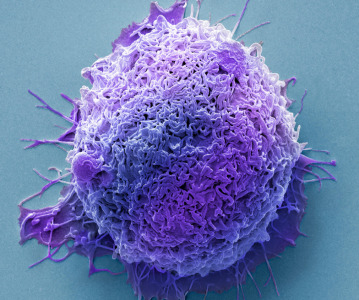
News AI-powered therapy offers hope for rare familial polyposis
Recursion Pharmaceuticals has announced promising results from its ongoing early- to mid-stage trial evaluating its AI-powered treatment, REC-4881, for familial adenomatous polyposis (FAP).
-
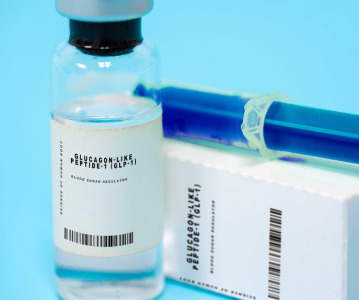
News CPHI Podcast Series: From Patents to Public Health: The GLP-1 Journey
The latest episode of the CPHI Podcast Series delves into the future of obesity management globally, offering opinins on might happen after patent expirys and new globals players entering the fray.
-
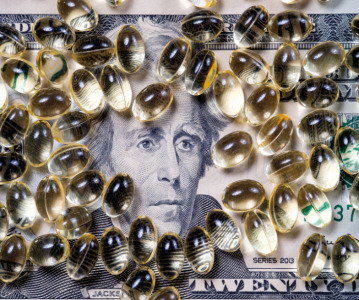
News From Pharma to Table? Direct-to-consumer pharma sales and price cuts ramp up in US
The pharmaceutical industry is witnessing a seismic shift as major companies embrace direct-to-consumer sales models and announce significant price reductions across the United States, responding to mounting pressure from the Trump administration to ta...