
Women in Pharma: Revolutionising menstrual care with medical devices
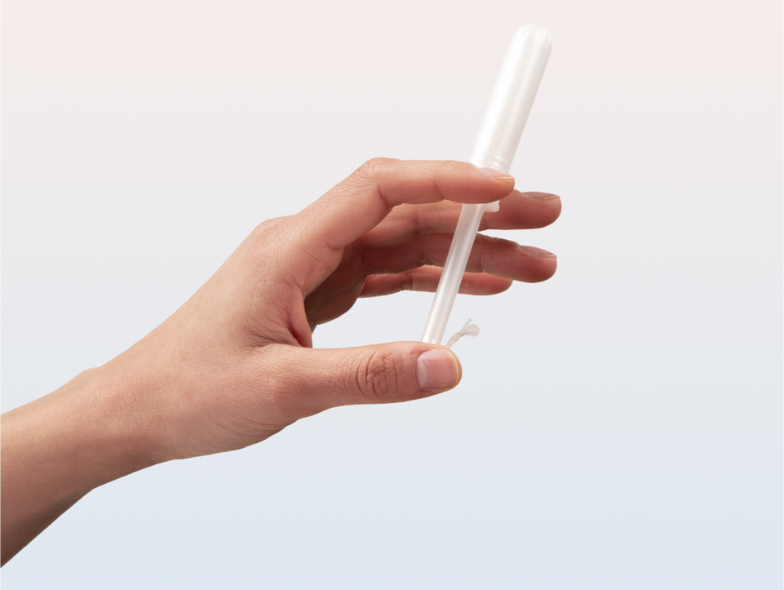
Daye diagnostic tampon - image provided by Daye
Our monthly Women in Pharma series highlights the influential lives and work of impactful women working across the pharmaceutical industry, and how the industry can work towards making the healthcare industry and workplace more equitable and inclusive.
This month we sat down with Valentina Milanova, Founder & CEO/CPO of Daye, a female-founded gynae health start-up focused on solutions for under-served gynae health conditions like endometriosis, PCOS, and menopause. Their revolutionary pain-relieving tampon, designed to support the 90% of women who experience menstrual cramps, is just one such example of their work in closing the gender health gap.
1. What specific gaps in women’s healthcare motivated you to start the journey in founding Daye?
The gender health gap is staggering when you look at the data. Endometriosis affects 1 in 10 women, yet it takes an average of 7–10 years to receive a diagnosis, during which patients often face debilitating pain, lost workdays, and emotional toll. PCOS impacts up to 15% of women, yet it is still under-diagnosed and poorly managed. Meanwhile, recurrent vaginal infections are one of the top reasons women seek healthcare globally, but treatments are outdated and often ineffective.
What motivated me was the realisation that these conditions are both common and devastating, yet invisible in research and innovation pipelines. Tampons, for example, haven’t meaningfully evolved since the 1930s, despite being used monthly by half the population. At the same time, 90% of women report menstrual cramps, but the ‘standard of care’ is still ibuprofen and dismissal.
Daye was born to challenge that status quo. Our work now spans a proprietary biobank of over 11,000 patient profiles, patented diagnostic technologies, and partnerships with NHS ICBs, cancer alliances, and telehealth providers. My motivation has always been to close the gap between women’s lived experience and the healthcare system’s neglect.
2. With the lack of clinical trials for vaginal health products, how has Daye approached clinical validation differently from traditional pharmaceutical companies?
Vaginal health has been deprioritised in clinical research. Only about 2% of global medical research funding goes into female-prevalent conditions, and vaginal diagnostics are especially under-studied. Traditional pharma has avoided the field because the vaginal microbiome is complex, trial protocols aren’t standardised, and regulators have historically offered little guidance.
At Daye, we’ve chosen to do the opposite: to embrace complexity and build the evidence base ourselves. We’ve published clinical data in peer-reviewed journals like the Journal of Clinical Microbiology and BMC Women’s Health. We validated our Diagnostic Tampon in partnership with the Scottish HPV Reference Lab and Liverpool Women's Hospital, showing that it can screen for HPV, STIs, and vaginal infections simultaneously – with improved performance and patient acceptability when compared to traditional methods.
We also generate large-scale real-world evidence. For example, in our usability studies, 90% of patients preferred the Diagnostic Tampon over existing collection methods, including first-time tampon users, Muslim women, and peri- and post-menopausal women. That breadth of inclusivity is almost unheard of in women’s health studies, and we believe it should become the standard.
3. What leadership challenges have you faced and overcome in your experience as the founder of a female-led company in a traditionally male-dominated industry?
One of the biggest challenges has been credibility. Explaining menstrual pain or recurrent thrush in a room full of investors, most of whom have never experienced these conditions, means you’re starting from zero. When we launched our Period & Pelvic Pain Clinic, I had to convince investors that cramps aren’t ‘just a discomfort’ – they’re a leading cause of absenteeism, costing economies billions each year. The solution was data: showing that 90% of women report cramps, that over 60% use over-the-counter painkillers every cycle, and that our approach offers not just faster diagnosis, but improved treatment pathways.
Another challenge has been fundraising. Less than 2% of VC capital goes to female-led companies, and when you add that we’re in ‘taboo’ categories like vaginal health, the bar for proof is significantly higher. We overcame this by building traction early: securing CE marking, ISO 13485 certification, FDA 510(k) clearance for our tampon base, and pilot contracts with the NHS and US insurance companies. These milestones made it clear that Daye wasn’t a ‘niche femtech,’ but a serious healthcare company capable of scaling globally.
Culturally, I’ve also had to push against the stereotype that women-led companies are ‘mission-driven’ but not financially rigorous. Today, Daye is delivering strong commercial performance – from D2C where our CAC payback is 4 months, to a multi-million B2B pipeline across the NHS, US telehealth, and retail. The data silences the bias.
4. In a market that has seen little innovation for the past few decades, what challenges did you face and what solutions did you come up with when developing Daye’s CBD-infused tampons?
The challenges were multi-layered: scientific, regulatory, and manufacturing.
Scientifically, we had to prove that CBD could be safely and effectively delivered vaginally without disrupting tampon function or microbiome health. We conducted independent biocompatibility studies, shelf-life testing, and microbiological assays to validate safety.
Regulatory-wise, we were in uncharted territory. There was no category for ‘therapeutic tampon.’ We had to educate regulators, present our data, and help shape frameworks that simply didn’t exist before.
On the manufacturing side, existing tampon production machinery wasn’t built to integrate cannabinoid coatings. Thus, we engineered our own tampon-coating machinery from scratch, giving us end-to-end control. That vertical integration is rare in consumer health but essential for ensuring safety, efficacy, and scalability.
The result was a world-first product. More importantly, it set the tone for how Daye approaches innovation: if the infrastructure doesn’t exist, we’ll build it.
5. How do you balance your role as CEO, researcher, and advocate for women’s health?
For me, these aren’t separate roles but facets of the same mission. As CEO, I’m responsible for securing capital and partnerships; as a researcher, I ensure our products are rooted in rigorous science; as an advocate, I push for systemic change in how women’s health is regulated and prioritised.
In practice, balance comes from a strong leadership team. For example, our Head of Clinical & Regulatory leads day-to-day quality and compliance, while I stay closely involved in strategy. We’ve published multiple peer-reviewed studies, registered our devices with the MHRA, and passed audits with CQC and UKAS-accredited labs, all while scaling into NHS pilots and US telehealth contracts.
Advocacy is not a side activity. Our support for the recent UK petition to regulate tampons as medical devices is part of our commercial strategy: the more stringent the regulation, the safer the market becomes for patients, and the more differentiated companies like Daye are. Speaking up also attracts patients and partners who share our vision, which directly drives growth.
6. If you have one piece of advice to Future Women Leaders of Pharma, what would you say?
Don’t wait for the system to give you permission. The pharmaceutical industry is conservative by design – hierarchical, slow-moving, and dominated by people who often don’t understand women’s health from lived experience. If you wait until you feel ‘perfectly qualified,’ you’ll never move fast enough to close the gender health gap.
Anchor your vision in data – clinical evidence, regulatory approvals, and/or commercial traction – but also trust your lived experience as expertise. At Daye, our patient preference studies, biobank of 11,000+ profiles, and NHS pilots give us the data to stand toe-to-toe with traditional pharma. But it was my personal frustration with inadequate menstrual care that started the journey, and that perspective continues to guide us.
My advice is to build boldly, surround yourself with allies, and don’t dilute your vision to fit outdated frameworks. Pharma doesn’t need more incremental change; it needs a complete reset in how we think about women’s health. Women leaders are best positioned to deliver that, and the time to act is now.
Have a story to share about diversity, equity, and inclusion in pharma? Contact [email protected] to learn how you can contribute to our Women in Pharma series.
Related News
-

News Swiss pharma industry warns US tariffs could harm global patient care
The Swiss pharmaceutical sector has raised alarms over new US tariffs on medicines, warning of disrupted supply chains, increased costs, and delayed innovation, all of which could jeopardise patient access to essential treatments worldwide.
-

News Women in Pharma: CPHI India – India’s Pharmaceutical Industry and Gender Inclusion Challenges
India’s pharmaceutical industry has emerged as a significant player in the global market, valued at USD 50 billion in FY 2023-2024, according to Frost & Sullivan’s analysis. This sector encompasses a diverse portfolio, including drugs, vacc... -
News Biogen acquires Apellis Pharmaceuticals to boost immunology and rare disease profile
Biogen Inc. has announced its acquisition of Apellis Pharmaceuticals, Inc., a move that is set to significantly enhance its growth portfolio in immunology and rare diseases. The agreement, valued at approximately US$5.6 billion, will see Biogen purchas... -

News Gilead Sciences acquires Ouro Medicines for over US$2 billion
Gilead Sciences confirms a deal to take over Ouro Medicines, adding to a portfolio of therapies for autoimmune diseases.
-
News Women in Pharma: Advancing Women's Health
Discover the latest innovations in technologies and therapeutics that are revolutionising women's health in our latest CPHI Online Women in Pharma infographic.
-

News CPHI Pharma Awards 2026: Recognising Excellence in an Evolving Industry
Submissions now open — deadline May 16
-
News Dr Reddy's to launch generic semaglutide in India
Dr Reddy’s Laboratories, one of India’s leading pharmaceutical companies, is preparing to launch a generic version of semaglutide, branded as Obeda, in March. Obeda is expected to provide a more affordable alternative to Ozempic a... -
News Frontier Biotech and GSK Forge RNA Therapy Partnership
Frontier Biotechnologies and GSK have entered a global licensing agreement to advance small interfering RNA (siRNA) therapeutics. This collaboration grants GSK exclusive rights to develop and commercialise two promising siRNA candidates, marking a mile...