
Adaptimmun?e Announces Interim Results from a Phase I/II Trial of Engineered T Cells Targeting Cancer Testis Antigens in Multiple Myeloma
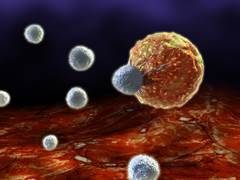
Adaptimmune has released interim results from a Phase I/II clinical trial using patients’ own T cells that have been genetically altered to attack multiple myeloma (MM) cells. The study Chair presented these updated results at the annual meeting of the American Society of Hematology (ASH).
The clinical trial was designed as a single arm open label study where patients are given standard of care (autologous stem cell transplant). This is followed by infusion of a patient’s own T cells that have been genetically engineered to carry receptors that help the T cells recognise and attack tumours, while sparing healthy tissue.
The objectives for the study are to evaluate the safety, bioactivity and anti-tumour effect of infusion of patients’ own T cells that have been genetically modified to express a high affinity T cell receptor (TCR) specific for a type of tumour antigen (protein) known as a cancer testis antigen (CT antigen). The target CT antigens in the study are NY-ESO-1 and LAGE-1. Anti-tumour responses are reported as best response by day 100 following the transplant and T cell infusion.
The initial six patient phase was completed in 2012 and based on encouraging preliminary results announced at ASH last December, the study was extended to a target enrollment of 26 patients. To date, 21 patients have been enrolled. 20 patients have received engineered T cells and have been assessed at day 100 for tumour responses to the treatment. Nineteen patients have reached a minimum of 6-month follow-up and 15 patients have reached 1-year follow-up.
After 1 year, patients are followed for disease status quarterly, and progression free and overall survival will be collected as the study follow-up matures. Patients are also monitored no less than bi-annually for safety and correlatives specific to the engineered T cells.
Multiple myeloma is a hematologic cancer localised to the bone marrow and is currently incurable in most patients. With standard therapy, long-term response rates are low and the median survival for patients with this disease is 3–5 years.
The clinical study focuses on this unmet medical need and includes patients who have received prior treatment for their myeloma or who have disease considered to be high risk, who are eligible for an autologous stem cell transplant (auto-SCT), and whose tumour expresses NY-ESO and/or LAGE-1. Auto-SCT is the transplant of a patient’s own stem cells, which is a standard of care for treatment of multiple myeloma in the US. Infusion of the gene modified T cells occurs 2 days following auto SCT.
Dr Aaron Rapoport, the Chair of the clinical study, presented abstract 766 entitled “Engineered T-Cells Expressing An HLA-Restricted Affinity-Enhanced TCR in Advanced Multiple Myeloma Patients Post Auto-SCT Engraft and Are Associated with Encouraging Post Auto-SCT Responses”.
He reports that infusions of engineered T cells have been well tolerated. The overall best response rate at 100 days is 77%. This rate is encouraging in these patients, of whom approximately 50% have high risk disease, 25% have received prior transplant, and NY-ESO expression is associated with poor prognosis.
Of the 20 patients treated to date, 13 have ongoing responses, and seven have progressed. In cases of disease progression, a concomitant loss or reduction of engineered T cells, or a loss of antigen positivity on recurring tumour has been observed. Consequently, the protocol has been modified to allow for additional infusions without concomitant transplant, provided the patient’s tumor continues to express target antigen.
“The clinical responses seen in our patients are encouraging and are generally better than I expected from transplant alone,” says Dr Rapoport, the Gary Jobson Professor in Medical Oncology at the University of Maryland School of Medicine and Associate Director of the Blood and Marrow Transplant Program at the University of Maryland Marlene and Stewart Greenebaum Cancer Center. “I look forward to making this technology available to patients outside of the transplant setting.
Enrollment is nearly completed and a final study analysis in planned to start in late 2014. Interim safety and response data presented at the ASH conference is under preparation for publication in the first half of next year.
“This study has provided us with important insights into the activity of NY-ESO T cells,” said James Noble, Chief Executive Officer of Adaptimmune. “It has been a privilege to work with this translational team and we are encouraged by progress to date on this study and our studies in solid tumor indications.”
Related News
-

News GSK announces £400 million investment in new Cambridge R&D centre
Pharmaceutical giant to establish flagship research facility on Cambridge Biomedical Campus as part of strategic pipeline acceleration
-
News Understanding the Benefits and Advances of Cleanroom Technology
In an industry where precision and sterility are crucial concerns, cleanrooms play a vital role in maintaining the integrity of pharmaceutical products like drugs, vaccines, and other medical products. So, what is a cleanroom?
-

News AbbVie secures GBP£1.2 billion deal for Gilgamesh’s psychedelic programme
AbbVie has penned a significant agreement to acquire the bretisilocin programme from Gilgamesh Pharmaceuticals for up to £1.2 billion, marking a bold step in the pharmaceutical giant's quest to develop treatments for psychiatric disorders. -

News Gates Foundation commits US$2.5 billion to women’s health research
The Bill & Melinda Gates Foundation has announced a substantial US$2.5 billion commitment to accelerate research and development focused exclusively on women's health through 2030.
-

News Mid-year review: notable FDA drug approvals of 2025
As we fly past the halfway point of 2025, the pharmaceutical landscape reliably continues to evolve with innovative therapies addressing critical medical needs. The FDA has already approved 17 groundbreaking medications this year, each representin... -

News US FDA announces new priority vouchers for accelerated review times
The US FDA announced a new priority program for drug developers – the Commissioner’s National Priority Voucher (CNPV) program aims to enhance the health interests of the US by allowing drug developers to redeem a voucher, shortening th... -
News Google-backed start-up raises US$600 million to support AI drug discovery and design
London-based Isomorphic Labs, an AI-driven drug design and development start-up backed by Google’s AI research lab DeepMind, has raised US$600 million in its first external funding round by Thrive Capital. The funding will provide further power t... -
News AstraZeneca to invest US$2.5 billion in Beijing R&D centre
Amid investigations of former AstraZeneca China head Leon Wang in 2024, AstraZeneca have outlined plans to establish its sixth global strategic R&D centre in China. Their aim is to further advance life sciences in China with major research and manufact...