
Amgen and MD Anderson Announce Agreement to Develop BiTE Therapies for Myelodysplastic Syndrome

Amgen and The University of Texas MD Anderson Cancer Center have announced a research collaborative agreement focusing on Amgen's bispecific T cell engager (BiTE) antibody constructs, an immunotherapy that serves as a "bridge" between T cells and cancer cells.
The research agreement will identify targets for this therapy in myelodysplastic syndrome (MDS), a bone marrow disorder in which the body does not produce sufficient healthy blood cells. MDS affects primarily older adults over age 60 and can cause severe anemia, potentially leading to development of acute myelogenous leukemia (AML), a blood cell cancer.
"This is a unique collaboration that explores BiTE therapy for its potential in treating a disorder that affects thousands of people each year," said Guillermo Garcia-Manero, professor of leukemia at MD Anderson. "At MD Anderson, we have unrivaled proteomics capabilities to explore new targets for this disease, and this novel approach may very well open up new potential treatments for our patients."
The collaboration's innovative approach will draw on the expertise of MD Anderson's Moon Shots Program, which aims to accelerate the conversion of scientific discoveries into clinical advances and significantly reduce cancer deaths. Garcia-Manero leads the MDS/AML Moon Shots Program.
The collaborative agreement will allow Amgen and MD Anderson to join forces in a research partnership that aims to take new drug development from "A to Z." The agreement provides for joint development of new agents under pre-determined terms. Amgen retains all commercial rights, while MD Anderson is eligible to receive milestones and royalties upon successful achievement of key objectives.
"We are excited about the new research opportunities this collaboration will open up in further exploring the potential of BiTE technology," said Sean E. Harper, executive vice president of R&D at Amgen. "BiTE antibody constructs represent an innovative immunotherapy approach that helps the body's immune system target cancer cells. MD Anderson is a great partner in our quest to find potential new treatments for patients with serious illnesses."
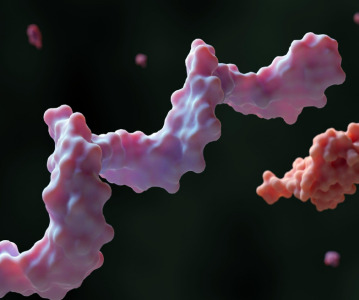
BiTE antibody constructs are recombinant proteins consisting of two separate antibodies held together by a flexible peptide linker or bands of amino acids. The antibodies are designed to function as a link between T cells and cancer cells. One antibody or protein domain binds to the cancer cell's surface, while the other binds to the CD3 on the T cell, resulting in the malignant cell's death. It is thought that BiTE antibody constructs may be engineered to target a range of tumours.
"This long-term collaboration between leading scientists at MD Anderson and Amgen takes advantage of significant advances in technologies available for target discovery through the MD Anderson Moon Shots Program," said Samir Hanash, professor of clinical cancer prevention and director, the Red and Charline McCombs Institute for the Early Detection and Treatment of Cancer at MD Anderson. "The agreement covers the full scope of clinical development from identifying targets for this therapy in MDS to developing fully tested and approved new therapies."
Related News
-

News GSK announces £400 million investment in new Cambridge R&D centre
Pharmaceutical giant to establish flagship research facility on Cambridge Biomedical Campus as part of strategic pipeline acceleration
-

News Understanding the Benefits and Advances of Cleanroom Technology
In an industry where precision and sterility are crucial concerns, cleanrooms play a vital role in maintaining the integrity of pharmaceutical products like drugs, vaccines, and other medical products. So, what is a cleanroom?
-

News AbbVie secures GBP£1.2 billion deal for Gilgamesh’s psychedelic programme
AbbVie has penned a significant agreement to acquire the bretisilocin programme from Gilgamesh Pharmaceuticals for up to £1.2 billion, marking a bold step in the pharmaceutical giant's quest to develop treatments for psychiatric disorders. -

News Gates Foundation commits US$2.5 billion to women’s health research
The Bill & Melinda Gates Foundation has announced a substantial US$2.5 billion commitment to accelerate research and development focused exclusively on women's health through 2030.
-

News Mid-year review: notable FDA drug approvals of 2025
As we fly past the halfway point of 2025, the pharmaceutical landscape reliably continues to evolve with innovative therapies addressing critical medical needs. The FDA has already approved 17 groundbreaking medications this year, each representin... -

News US FDA announces new priority vouchers for accelerated review times
The US FDA announced a new priority program for drug developers – the Commissioner’s National Priority Voucher (CNPV) program aims to enhance the health interests of the US by allowing drug developers to redeem a voucher, shortening th... -
News Google-backed start-up raises US$600 million to support AI drug discovery and design
London-based Isomorphic Labs, an AI-driven drug design and development start-up backed by Google’s AI research lab DeepMind, has raised US$600 million in its first external funding round by Thrive Capital. The funding will provide further power t... -

News AstraZeneca to invest US$2.5 billion in Beijing R&D centre
Amid investigations of former AstraZeneca China head Leon Wang in 2024, AstraZeneca have outlined plans to establish its sixth global strategic R&D centre in China. Their aim is to further advance life sciences in China with major research and manufact...