
AZ and Roche Announce Partnership to Develop Companion Diagnostic Test for AZD9291

AstraZeneca has entered into collaboration with Roche to develop a plasma-based companion diagnostic test to support AZD9291, AstraZeneca’s investigational compound in clinical development for non-small-cell lung cancer (NSCLC).
The companion diagnostic test is designed to identify epidermal growth factor receptor (EGFR) mutations in both tumour tissue and plasma derived from patients with NSCLC, and to optimise the clinical development of AZD9291 for patients who are resistant to first-generation EGFR tyrosine kinase inhibitors (TKI).
Currently, patients who have been treated with EGFR-TKIs in whom the disease has progressed have to undergo a repeat biopsy to assess whether they have a specific mutation, T790M. Diagnostic tests based on circulating DNA (ctDNA) in plasma samples provide an alternative method of identifying the T790M mutation.
Mondher Mahjoubi, SVP, Global Product Strategy for Oncology at AstraZeneca said: “We are committed to developing targeted medicines that improve health outcomes for patients. Understanding the nature of each individual’s tumour and therefore which medicine is most likely to benefit them is vital if we are to transform the way cancer patients are diagnosed and treated.”
“Currently, late-stage lung cancer patients have to undergo surgery to collect tissue from a tumor so it can be sent for molecular testing,” said Paul Brown, Head of Roche Molecular Diagnostics. “In some cases, collecting enough tissue for testing is not possible. This collaboration will enable molecular testing through plasma specimens and provide the information needed to inform treatment decisions without the complications of surgery, consequently increasing the level of care clinicians can give to the patient.”
NSCLC represents approximately 80–85% of all lung cancers. Unfortunately, at the time of diagnosis approximately 70 per cent of NSCLC patients have developed advanced or metastatic disease not amenable to surgical resection.
Related News
-
News GSK announces £400 million investment in new Cambridge R&D centre
Pharmaceutical giant to establish flagship research facility on Cambridge Biomedical Campus as part of strategic pipeline acceleration
-
News Understanding the Benefits and Advances of Cleanroom Technology
In an industry where precision and sterility are crucial concerns, cleanrooms play a vital role in maintaining the integrity of pharmaceutical products like drugs, vaccines, and other medical products. So, what is a cleanroom?
-

News AbbVie secures GBP£1.2 billion deal for Gilgamesh’s psychedelic programme
AbbVie has penned a significant agreement to acquire the bretisilocin programme from Gilgamesh Pharmaceuticals for up to £1.2 billion, marking a bold step in the pharmaceutical giant's quest to develop treatments for psychiatric disorders. -

News Gates Foundation commits US$2.5 billion to women’s health research
The Bill & Melinda Gates Foundation has announced a substantial US$2.5 billion commitment to accelerate research and development focused exclusively on women's health through 2030.
-

News Mid-year review: notable FDA drug approvals of 2025
As we fly past the halfway point of 2025, the pharmaceutical landscape reliably continues to evolve with innovative therapies addressing critical medical needs. The FDA has already approved 17 groundbreaking medications this year, each representin... -
News US FDA announces new priority vouchers for accelerated review times
The US FDA announced a new priority program for drug developers – the Commissioner’s National Priority Voucher (CNPV) program aims to enhance the health interests of the US by allowing drug developers to redeem a voucher, shortening th... -
News Google-backed start-up raises US$600 million to support AI drug discovery and design
London-based Isomorphic Labs, an AI-driven drug design and development start-up backed by Google’s AI research lab DeepMind, has raised US$600 million in its first external funding round by Thrive Capital. The funding will provide further power t... -
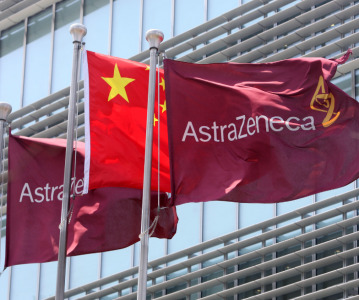
News AstraZeneca to invest US$2.5 billion in Beijing R&D centre
Amid investigations of former AstraZeneca China head Leon Wang in 2024, AstraZeneca have outlined plans to establish its sixth global strategic R&D centre in China. Their aim is to further advance life sciences in China with major research and manufact...