
BioSilta Introduces EnPresso B Growth Systems for Bacterial Cultures
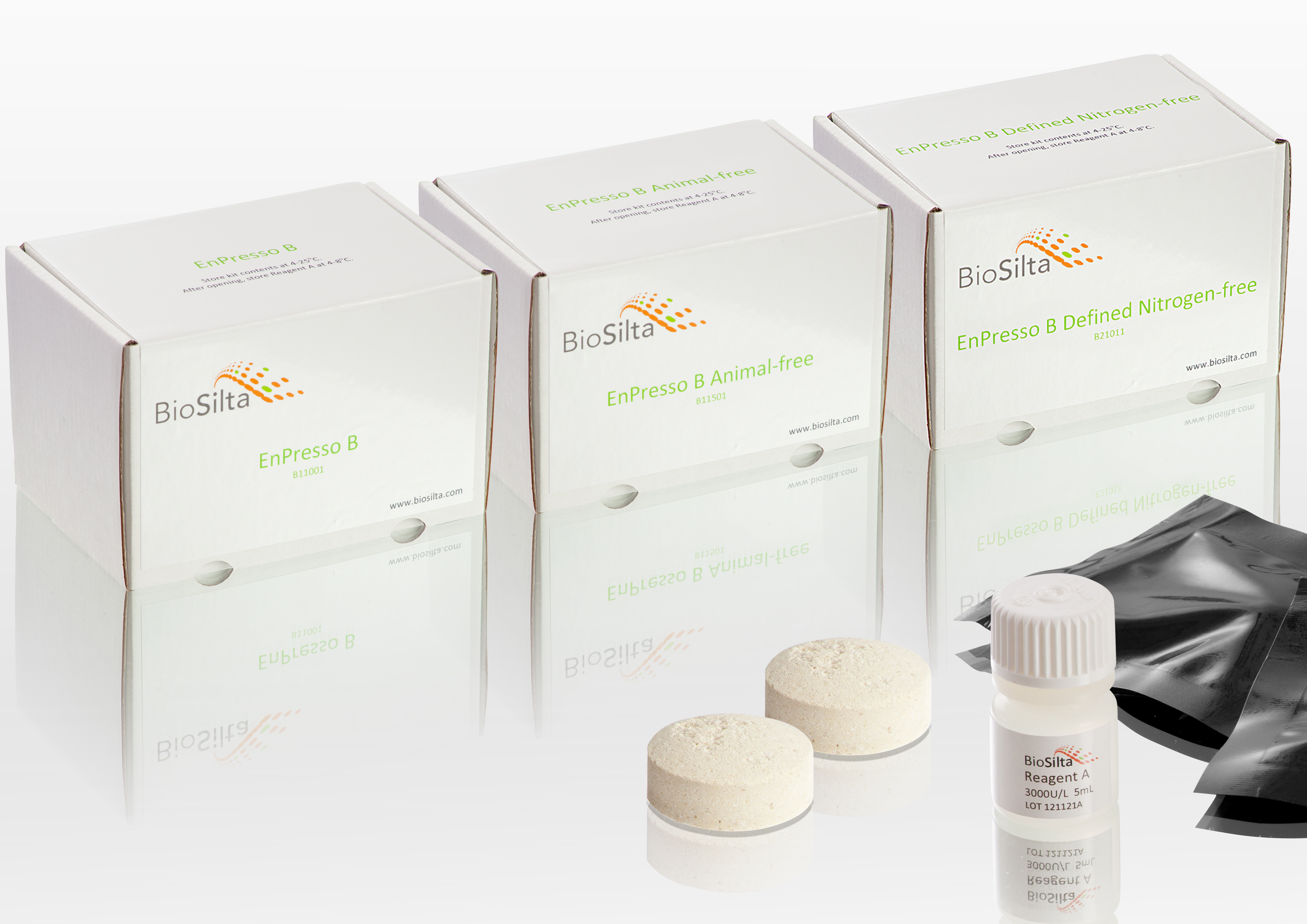
BioSilta Oy, a developer of advanced microbial growth systems, has announced the commercial launch of the first products in its proprietary EnPresso B range of reagent-based growth systems for bacterial cultures. Extensive results from independent labs around the world (available at www.biosilta.com) have confirmed that these new products typically increase protein yields by five to 100-fold and improve protein functionality when compared with results using conventional growth media.
The EnPresso B range has been developed in response to findings from market research involving more than 1200 scientists routinely growing bacterial cultures for the expression of recombinant proteins at laboratory scale. The majority of respondees highlighted insufficient yield, followed by quality problems such as poor protein solubility or low activity, as their main challenges.
The products are EnPresso B, EnPresso B Animal-free (supplied with documentation to certify that the product is free from animal-derived components), and EnPresso B Defined Nitrogen-free, used to significantly increase the yield of 15N-labeled proteins for NMR analysis.
For ease of use the products are supplied as presterilized tablets, which are simply added to sterile, filtered water. Optimized protocols enable researchers to go from pre-culture to harvest within 2 days, using standard lab equipment such as shake flasks or 24 deep well plates.
The EnPresso B range incorporates the Company’s patented EnBase technology that offers a novel approach to control the feeding, and thereby growth rate, of microbial cultures. A glucose-releasing agent breaks down long chains of polysaccharides, releasing glucose units to feed the microbes. As well as glucose, EnPresso tablets provide other key elements to support growth and control pH. Cells grow steadily to reach higher densities before induction of protein expression and continue in linear growth for many hours after induction. Proteins are expressed under optimal metabolic conditions thereby reducing the risk of incorrect folding and increasing the percentage of soluble protein. In contrast, microbes cultivated in conventional media grow in an uncontrolled manner, consuming nutrients, changing pH and depleting oxygen. Growth stops within hours, limiting protein yields and ‘too fast’ metabolism produces poor quality proteins.
Bob Penney, CEO, BioSilta Oy, said: “In our market research more than 70% of scientists confirmed that their main challenge when producing recombinant proteins in bacterial systems was insufficient yield, followed by problems with poor solubility and functionality. We firmly believe that EnPresso B growth systems very significantly address these issues and will revolutionize the role of bacterial cell culture in protein expression. Scientists will spend less time optimizing expression systems and more time focused on their true research objectives.”
Related News
-
News Novartis signs US$3.2 bn subcutaneous delivery deal with Alteogen
Swiss pharma giant secures access to Korean biotech's ALT-B4 hyaluronidase platform in milestone-heavy agreement, marking Alteogen's fourth major licensing deal of 2026 as competition intensifies in the subcutaneous drug delivery space.
-

News Women in Pharma: The philosophy of pharmaceutical leadership
In this latest instalment of our Women in Pharma series, we sit down with Clarissa Sowemimo-Coker, Chief Strategy Officer at Ambrose Healthcare and CPHI Middle East Advisory Board Member.
-
News The PSCI Supplier Partnership - Collaboration for Responsible Supply Chains
About the Pharmaceutical Supply Chain Initiative The Pharmaceutical Supply Chain Initiative (PSCI) is the leading, member-led association for pharmaceutical companies working collaboratively to build responsible supply chains. Founded in 2006 and es... -
News AstraZeneca shares plunge 8.9% after reports of BMS talks
Britain's largest drugmaker lost more than GBP£17 billion in market value following reports of preliminary merger discussions with Bristol Myers Squibb that could create a pharmaceutical giant worth nearly US$400 billion, though investors rem... -
News GSK announces £400 million investment in new Cambridge R&D centre
Pharmaceutical giant to establish flagship research facility on Cambridge Biomedical Campus as part of strategic pipeline acceleration
-

News The CPHI Sustainability Summit - Where Conversation Becomes Collaboration
The Report Was Never the Destination - “The future of pharmaceutical sustainability won’t be shaped by individual organisations working in isolation. It will be shaped by partnerships, shared expertise and the willingness to work diffe... -

News Trump's generic drug tariffs set to reshape global pharmaceutical supply chains
The US president has announced plans to impose tariffs of up to 200% on imported generic medicines from August 2028, giving manufacturers a two-year window to establish domestic production facilities. The move threatens to upend a global supply chain t... -
News Building Safer, More Responsible Pharmaceutical Supply Chains: PSCI Global Audit Insights
The Pharmaceutical Supply Chain Initiative (PSCI) has released its seventh annual Audit Findings Analysis Report, offering unprecedented insights into supplier practices across the global pharmaceutical and healthcare industry.With a record-breaking 24...