
Biosimilars for the better: an expert view from Ecolab
.png)
Ecolab expert Renato Azevedo shares his insights on the current state of the biosimilars market in pharmaceuticals, after a high number of biosimilar drug approvals throughout the year confirming the shift of focus in this field.
Renato Azevedo, Sr Director, Global Product Management – Bioprocessing at Ecolab Life Sciences discusses key changes in the biosimilars industry, due to regulatory changes, and where he sees the biggest opportunities for growth, in the following interview.
Renato Azevedo is senior director of Global Product Management for Ecolab’s Bioprocessing business. Renato is responsible for managing Ecolab’s global affinity and ion exchange chromatography resin portfolios, delivering innovative purification technologies that support pharmaceutical and biotechnology customers worldwide.
Renato brings deep expertise in technical strategy, cross- functional collaboration, and global marketing execution. His leadership is defined by a strong customer focus, operational rigor, and a commitment to advancing technologies that improve process efficiency and product quality.
Previously, Renato spent over 16 years at MilliporeSigma, where he held leadership roles in product management and technology integration. His experience spans the full product lifecycle, from development and commercialisation to strategic portfolio expansion, with a focus on delivering high-impact solutions to the life sciences industry.
Throughout his career, Renato has built and led high-performing teams across geographies, driving growth through innovation and strategic partnerships. His approach blends scientific insight with business acumen, positioning him as a trusted leader in the bioprocessing space.
Renato holds a Bachelor of Science in Chemical Engineering and an MBA in Marketing and New Product Development, both from Northeastern University in Boston, Massachusetts.
The US biosimilars market hit record approvals in 2024. What factors do you see driving this acceleration? How is Ecolab positioning itself in this landscape?
I see a couple of primary factors driving this acceleration. The first one is patent expirations. Large blockbuster biologics are coming off patent, – we call it the patent cliff – which is creating significant opportunities for biosimilar development. The originator drugs are no longer protected, so there's an opportunity for others to compete in that space.
The biosimilars market stands at a pivotal crossroads driven by two primary catalysts: the imminent 'patent cliff' with over 100 biologics losing protection in the next decade, and the growing demand for cost-effective treatments in healthcare systems under budgetary constraints. While not every biologic will see biosimilar development – what we call the 'biosimilar void' – due to market size limitations or manufacturing complexity, these alternatives represent a critical opportunity to improve patient access to life-saving therapies for cancer, diabetes, and autoimmune diseases.
As for where Ecolab plays in this space, we can contribute significantly to the manufacturing process, particularly in purification, which is one of the most important parts of drug manufacturing. After a drug is expressed in a cell, it needs to be purified to ensure your body can accept it without any adverse reactions. Purification is the workhorse of the process, and we're proud to consider ourselves experts in this field.
We're committed to developing the next generation of purification solutions to help accelerate the adoption and manufacture of biosimilars. This means launching our next generation of chromatography resins –again, the workhorse of purification – that can provide our customers with high-performance purification solutions that also help support cost efficiencies. These solutions can be easily implemented into their existing processes without requiring radical innovation, facility redesign, or redevelopment.
How do you see these regulatory changes impacting development stages and aspects such as market entry time?
There are two key points that come to mind. The first one is interchangeability. Biosimilar developers are looking for opportunities where the drugs they develop are classified as interchangeable with the originator drug. Interchangeability means having a drug that's therapeutically identical to the original drug to the point where pharmacies can seamlessly substitute a biosimilar for the originated drug without having to go back to the prescribing physician. It's similar to how generic small molecule drugs work. For example, if someone gets a prescription for Lipitor, when they pick it up from the pharmacy, they're likely getting a generic version at a much lower cost.
This is essentially what biosimilar developers are aiming for, regulatory pathways that support interchangeability potential, allowing for easy substitution at the pharmacy level. This is important because it can be very challenging if you have to go back to busy prescribing physicians. Currently, some biosimilars are different enough that pharmacies aren't allowed to simply swap them out.
To achieve interchangeability, biosimilar development companies need to prove to regulatory agencies that their biosimilar can deliver the same clinical results with no adverse effects compared to the original drug. If a biosimilar developer gets this designation of interchangeability, it significantly opens up market access since they're not relying on physicians to prescribe the specific biosimilar but can benefit from pharmacy-level substitution driven by cost.
The other major regulatory development involves incentives for biosimilars. The Inflation Reduction Act has introduced certain incentives; for example, Medicare Part B has increased payments for qualifying biosimilars. These incentives make biosimilars more attractive as developers look for payment structures that support the adoption of these drugs in the marketplace, ultimately increasing market access.
Which aspects of the biosimilars market do you think will provide the most opportunities for development?
There are several trends happening in the market where we can contribute. I'll mention two key areas. The first is cost-effective solutions. If we take a step back, biosimilars are essentially a generic version of the originator drug. Before a generic version enters the market, there's one originator drug protected by patent with access to the full market. Once that patent expires, many players try to address the same market; the market size hasn't changed significantly, but you have multiple competitors vying for the same number of patients, so then you have to compete on price
The challenge is how to compete on price while keeping your business viable with acceptable margins for investors. The answer is cost-effective manufacturing solutions. Streamlining development through standardised specifications and having appropriate products and processes can reduce costs and accelerate market entry, particularly in the downstream process.
The second aspect is quality and consistency, which is a table stake in the world of drug therapeutics. There's an expectation from the broader patient community, physicians, and insurance organisations that no one will cut corners on quality and consistency. Patients expect that from batch to batch and from year to year, the efficacy of the drug remains constant. This requires rigorous control of the manufacturing process to ensure batch-to-batch consistency, which is necessary to maintain similarity to the reference product over time. When you launch a biosimilar and put a patient on that drug, you expect that throughout the therapy timeline – maybe two years – the drug's efficacy won't change. Regulatory authorities focus on whether you have the process controls in place to ensure this level of quality and consistency.
How do you think collaboration and strategic partnerships will help shape the future of biosimilar development? How is Ecolab approaching partnerships?
I think partnerships are vital and critical, no good comes from working in silos. We need to solve complex problems together with our customers, patients, regulatory authorities, and even the broader community. In the evolving landscape of biosimilar development, strategic partnerships are the cornerstone of improving global access. The Asia Pacific region – particularly China and India – is emerging as a powerhouse with their manufacturing capabilities and government incentives.
Success in this space demands three critical elements: in-region expertise to solve complex problems, robust supply chains ensuring consistent product availability, and external collaboration to overcome unexpected challenges. No single organisation possesses complete expertise across all processes; we must solve complex problems together with our customers, patients, regulatory authorities, and the broader community to successfully navigate the path to market.
From a technology perspective, innovation is moving at a rapid pace, and often technology developments come from outside your organisation. You want to leverage external expertise, bring them in, and work together to solve problems and deliver solutions. We strongly believe in and are proud of working with our customers and external parties to advance technologies, provide specialised expertise, and offer regulatory support.
We operate in a heavily regulated market where we can't just develop a product and launch it, we must ensure it meets criteria from all local regulatory authorities. We also focus on cost efficiency and ensuring scalability.
Chemistry usually doesn't scale one-to-one; many variables come into play that require modification to ensure the same consistency and quality at larger scales.
These partnerships are vital to overcome technical and financial challenges and ensure timely delivery of affordable products.
What innovations do you think the industry needs for the development of next-generation biosimilars to push advances further forward?
I'll start by saying that process optimisation is a key area where Ecolab can provide solutions. For me, this means advancements in production by doing more with less –improving cost efficiency. The phrase that's been popular even with originator drugs is "process intensification," where you intensify your existing process to ensure batch-to-batch consistency, drive speed, and reduce costs.
For us, this means innovations in chromatography resins and other manufacturing technologies that can drive process and economic efficiencies while ensuring compatibility with existing facilities. This minimises disruption by allowing manufacturers to easily incorporate improvements without massive capital expenditures or drastic process changes.
For next-generation biosimilars specifically, I see innovation in formulation as crucial. For example, developing higher concentration versions of legacy drugs like Humira (adalimumab), which is used for autoimmune diseases like rheumatoid arthritis, Crohn's disease, and ulcerative colitis.
This approach might even lead to what could be called "bio-betters," where the biosimilar drug actually performs better than the originator drug. As a developer, this gives you a competitive advantage, you have a drug that outperforms the original and can offer it to the market at better value for patients.
Is there anything else you'd like to add?
It's an exciting space. For human health worldwide, I think it's critical. We've seen with traditional pharmaceuticals, like the Lipitor example I gave, that generics help reduce costs for patients and increase market access. I'm excited that we're now seeing this come into play with the typically more effective biologic drugs that are becoming available to a broader patient population.

Related News
-
News Swiss pharma industry warns US tariffs could harm global patient care
The Swiss pharmaceutical sector has raised alarms over new US tariffs on medicines, warning of disrupted supply chains, increased costs, and delayed innovation, all of which could jeopardise patient access to essential treatments worldwide.
-
News Women in Pharma: CPHI India – India’s Pharmaceutical Industry and Gender Inclusion Challenges
India’s pharmaceutical industry has emerged as a significant player in the global market, valued at USD 50 billion in FY 2023-2024, according to Frost & Sullivan’s analysis. This sector encompasses a diverse portfolio, including drugs, vacc... -
News Biogen acquires Apellis Pharmaceuticals to boost immunology and rare disease profile
Biogen Inc. has announced its acquisition of Apellis Pharmaceuticals, Inc., a move that is set to significantly enhance its growth portfolio in immunology and rare diseases. The agreement, valued at approximately US$5.6 billion, will see Biogen purchas... -

News Gilead Sciences acquires Ouro Medicines for over US$2 billion
Gilead Sciences confirms a deal to take over Ouro Medicines, adding to a portfolio of therapies for autoimmune diseases.
-
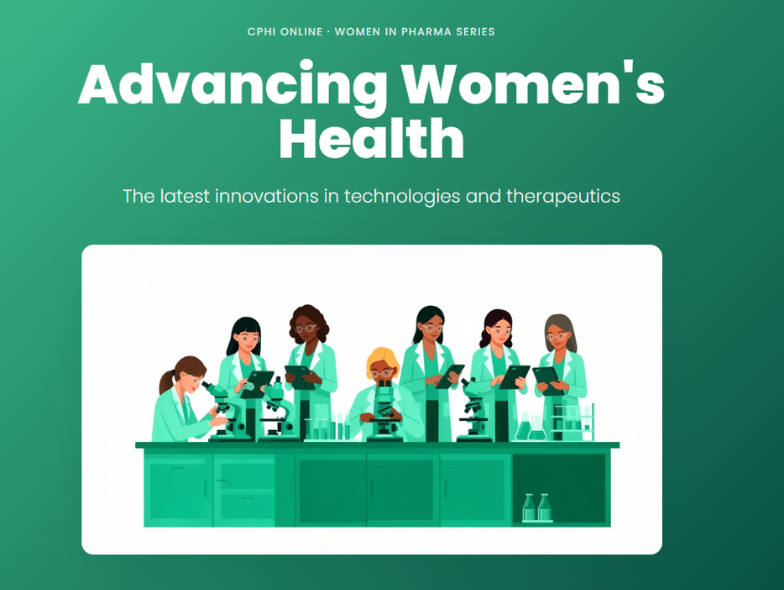
News Women in Pharma: Advancing Women's Health
Discover the latest innovations in technologies and therapeutics that are revolutionising women's health in our latest CPHI Online Women in Pharma infographic.
-

News CPHI Pharma Awards 2026: Recognising Excellence in an Evolving Industry
Submissions now open — deadline May 16
-
News Dr Reddy's to launch generic semaglutide in India
Dr Reddy’s Laboratories, one of India’s leading pharmaceutical companies, is preparing to launch a generic version of semaglutide, branded as Obeda, in March. Obeda is expected to provide a more affordable alternative to Ozempic a... -
News Frontier Biotech and GSK Forge RNA Therapy Partnership
Frontier Biotechnologies and GSK have entered a global licensing agreement to advance small interfering RNA (siRNA) therapeutics. This collaboration grants GSK exclusive rights to develop and commercialise two promising siRNA candidates, marking a mile...