
CPHI Discover: Two-Tier Contract Market in China as Top CDMOs Grab all the Growth

Ahead of CPHI Discover (17-28 May, 2021) - global pharma's largest ever virtual gathering - we spoke to CPHI Annual Report expert Vicky Xia, China Head at BioPlan Associates on the biologics trends she is seeing emerging in the contract services space in China.
In the CPHI Discover webinar, China: Evolving Dynamics of the CDMO Landscape on Tuesday 18th May, Ms Xia will present extensive analysis on bio-opportunities in China alongside Dr Eric Sun, Vice President, Zhejiang Langhua Pharmaceutical, who will explore the small molecules market in the country.
The session “China: Evolving Dynamics of the CDMO Landscape” will chart the journey of the bio space in the region from returning scientists, to new regulations and the transformation of early CROs into global CDMO players.
Most importantly, Ms Xia (below) will address which companies and partnerships are best placed to harness the massive increase in domestic innovation seen in the last few years and how much growth we could see in the next five years.
CPHI: There’s been a lot of coverage of biologics growth in China over the next five years or so – do you perceive CDMOs in China primarily for domestic pharma or international supply?
VX: Primarily this growth has been driven by the domestic market opportunities. We have interviewed quite a few domestic biologics CDMOs and they are very interested in exploring global markets, but they are having difficulty gaining business, and it's quite challenging for them. WuXi Biologics have been an exception to this rule – they have overseas facilities in Ireland and have been quite successful in attracting global clients. Similarly, Pharmaron bought a facility in Europe recently with the goal of growing their international business. So overall, the perception among China-based CDMOs is that if they want to grow with big pharma clients in the USA and Europe, they need some local manufacturing in these markets.
CPHI: Similarly, international CDMOs that have built facilities in China such as Lonza and BI; are they building there to support the expanding biologics hub in China or is it to offer a lower cost base for big pharma projects?
VX: At the current stage they are expanding the CDMO market to support the ever-growing biologics market in China. For example, BI’s first client was BeiGene and they now have several other domestic biotech clients. WuXi Biologics has been the only one so far that has been very successful in attracting global clients, and many of the other CDMOs want to try and emulate WuXi’s success. A part of this success has been the available capacity, but also the fact they have a large global client base coming through from their discovery service business into clinical development. The IPO where they raised a large amount of capital has also helped further establish their status as China’s leading CDMO business.
CPHI: Do you perceive cell and gene therapy manufacturing as the natural next step? If so, when do you expect this to happen?
VX: Actually, it’s already happening in China! For example, Genscript is a CDMO, set-up by returnee scientists, that is specialised in cell and gene therapies. I would say that this is still a relatively small space compared to the size of the mAb market, but it is growing quickly, and at a faster overall rate. Genescript has actually been in existence for over a decade, starting out as a CRO, but seeing the growth, it opened up cell and gene therapy services around two-years ago. In China, there are now literally dozens of developers across the country, the majority of which are still in the very early stages of development and it makes sense that these innovators will use a CDMO to speed up the development process. But in maybe in two or three years’ time we might see the first new cell and gene therapies come to market in China.
CPHI: How big an impact has the Marketing Authorisation Holder (MAH) system had in China for both CDMOs and Innovators?
VX: It’s had a very large impact, allowing CDMOs to run commercial stage production for clients, but at present, I would say the majority of innovators have the preference for running their own in-house facilities once commercial – with CDMOs maybe operating as back up facility sites. But undoubtedly, without the MAH, the CDMO industry would be unable to grow the way it presently is. One thing we are seeing is the innovators increasingly using CDMO capacity to expedite development timelines before clinical production, often while they are building new in-house facilities.
At present we very much have a two-tier system for CDMOs. For the bigger CDMOs such as BI, Mabplex and WuXi Biologics, those with significantly global reputations, they are experiencing very good levels of business – and in fact the problem with these companies is often that clients have to wait for the facilities to become available, such is demand. Yet for the younger and small CDMOs the opposite is true, and they are having difficulty attracting and keeping clients.
CPHI: How do you foresee the CDMO business growing in the next 2-5 years both from a small molecule and large molecule perspective?
Prospects for the industry look very good. The next two to five years we will see CAGR of over 15% and there are more projects than ever before, with more products making it to clinical production. There have been around a dozen new mAb therapeutics from domestic innovators in the last two years, and we can expect these approval levels to double over the next five years with the wave of BLAs coming through. Over this time frame, I would still expect the biggest CDMOs to pick up the majority of the growth in contract services and ultimately China probably has scope for maybe six or seven large biologics CDMOs – but already there are dozens of contract operators and probably this means consolidation and the majority of growth in the top ten.
My view is that if these bigger CDMOs can continue to expand capacity the opportunities look very good, as they have the track record, reputation and experience.
CPHI: From a technological standpoint, do you have any perspective on how China-based CDMOs are building their manufacturing capabilities i.e. are they building new sites with modern equipment and does this mean they’re better prepared for future growth due to the demands of the industry?
VX: This is one of the strengths of China, that all new sites are built with new equipment rather than repurposing legacy sites, and as far as I know, all mAb CDMOs have been built new. In fact, there is also a high preference for single-use technology at CDMOs in China, and we also see several CDMOs exploring continuous bioprocessing to increase manufacturing efficiency. For example, WuXi and Transcenta are trying continuous bioprocessing platforms.
Global production for big pharma is still the aim of all CDMOs. But at the current stage, in my view, it is still going to be a little bit challenging for the CDMOs to offer truly global production for international pharma. More likely is that we will see China-based CDMOs used for regional production in China and in Asia.
Registration for CPHI Discover is now open and to get more information on the content sessions and exhibitors and speaker opportunities, please visit: https://www.cphi.com/discover/en/home.html

Related News
-

News Swiss pharma industry warns US tariffs could harm global patient care
The Swiss pharmaceutical sector has raised alarms over new US tariffs on medicines, warning of disrupted supply chains, increased costs, and delayed innovation, all of which could jeopardise patient access to essential treatments worldwide.
-

News Women in Pharma: CPHI India – India’s Pharmaceutical Industry and Gender Inclusion Challenges
India’s pharmaceutical industry has emerged as a significant player in the global market, valued at USD 50 billion in FY 2023-2024, according to Frost & Sullivan’s analysis. This sector encompasses a diverse portfolio, including drugs, vacc... -
News Biogen acquires Apellis Pharmaceuticals to boost immunology and rare disease profile
Biogen Inc. has announced its acquisition of Apellis Pharmaceuticals, Inc., a move that is set to significantly enhance its growth portfolio in immunology and rare diseases. The agreement, valued at approximately US$5.6 billion, will see Biogen purchas... -

News Gilead Sciences acquires Ouro Medicines for over US$2 billion
Gilead Sciences confirms a deal to take over Ouro Medicines, adding to a portfolio of therapies for autoimmune diseases.
-
News Women in Pharma: Advancing Women's Health
Discover the latest innovations in technologies and therapeutics that are revolutionising women's health in our latest CPHI Online Women in Pharma infographic.
-

News CPHI Pharma Awards 2026: Recognising Excellence in an Evolving Industry
Submissions now open — deadline May 16
-
News Dr Reddy's to launch generic semaglutide in India
Dr Reddy’s Laboratories, one of India’s leading pharmaceutical companies, is preparing to launch a generic version of semaglutide, branded as Obeda, in March. Obeda is expected to provide a more affordable alternative to Ozempic a... -
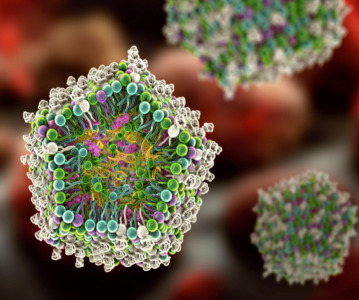
News Frontier Biotech and GSK Forge RNA Therapy Partnership
Frontier Biotechnologies and GSK have entered a global licensing agreement to advance small interfering RNA (siRNA) therapeutics. This collaboration grants GSK exclusive rights to develop and commercialise two promising siRNA candidates, marking a mile...