
Drug delivery start-ups recognize benefits of contract manufacturing: CPHI panel

Strong and effective partnerships with CDMOs are essential to success due to the complexity of manufacturing processes
Start-up biopharma companies in the drug delivery space will continue to heavily rely on contract manufacturing despite the growing complexity of their processes, according to experts on a live CPHI Discover panel on Wednesday.
Speaking at the session, Drug Delivery Start-Ups to Watch in 2021 and Beyond, Wayne Weiner, Principal Consultant at PharmaTech Solutions said that given the type of complexity of some drug delivery products, any partnerships with CDMOs had to be strategic in scope.
Jose Ochoa, Chief Business Officer, of biotech Altimmune -- which develops intranasal vaccines and therapeutics and liver disease treatments -- said his company does not have its own manufacturing and worked with a number of contract manufacturing organisations (CMOs) both for clinical stage and commercial stage.
“We are heavily invested with working with CMOs,” he told the CPHI audience. “It doesn’t mean that down the road at some point we wouldn’t want to have our own facility depending on demand and on the need. For example, if a certain customer wanted to have access to the manufacturing, we would definitely work with them either through the CMO or direct build of a facility.”
Ochoa said that an effective partnership with a CMO required having ‘skin in the game’: “I’m not talking about a typical, strictly bilateral partnership with a vendor where you pay for a product or service, I’m talking about where they are really going the extra mile to provide tremendous customer service to the point where you would call them a partner and not just a vendor.
“If you can develop that kind of relationship with your CMO, you’ve got a fighting chance to be successful; if you don’t and it’s just a binary transaction where the minute you find a better CMO, you’re going to leave, that’s probably not a long-term sustainable relationship.”
Mahmoud Ameri, VP R&D and co-founder at California-based Zosano Pharma said that before the company decided to use contract manufacturing for its intracutaneous microneedle system,” we got the spreadsheets out and looked at how much it would cost if we manufactured this commercially at Zosano’s facility in Freemont, California, versus contracting it out to [CDMO] Patheon, located in North Carolina.”
He said that the decision to outsource was simply a matter of it being cheaper: “The Bay area is super-expensive when it comes to manufacturing anything so we left the Freemont facility for R&D and making clinical trial materials out to Phase II.”
Don Zinn, VP US Business at Crossject, which has developed Zeneo, a needleless auto-injector, said he understood the rationale for wanting to do inhouse manufacturing: “When you take it into your own hands to make sure that you can manufacture your product then you don’t have to worry about anyone else.”
He said that while Crossject manufactured the unit itself, it was then sent on to its partner, Cenexi, for fill and finish.
“We’ve had that relationship for quite some time and now that we’re ramping up our manufacturing to 6 million unit per year, we are likely going to press on that partnership even harder,” he said.
Related News
-

News Swiss pharma industry warns US tariffs could harm global patient care
The Swiss pharmaceutical sector has raised alarms over new US tariffs on medicines, warning of disrupted supply chains, increased costs, and delayed innovation, all of which could jeopardise patient access to essential treatments worldwide.
-

News Women in Pharma: CPHI India – India’s Pharmaceutical Industry and Gender Inclusion Challenges
India’s pharmaceutical industry has emerged as a significant player in the global market, valued at USD 50 billion in FY 2023-2024, according to Frost & Sullivan’s analysis. This sector encompasses a diverse portfolio, including drugs, vacc... -
News Biogen acquires Apellis Pharmaceuticals to boost immunology and rare disease profile
Biogen Inc. has announced its acquisition of Apellis Pharmaceuticals, Inc., a move that is set to significantly enhance its growth portfolio in immunology and rare diseases. The agreement, valued at approximately US$5.6 billion, will see Biogen purchas... -

News Gilead Sciences acquires Ouro Medicines for over US$2 billion
Gilead Sciences confirms a deal to take over Ouro Medicines, adding to a portfolio of therapies for autoimmune diseases.
-
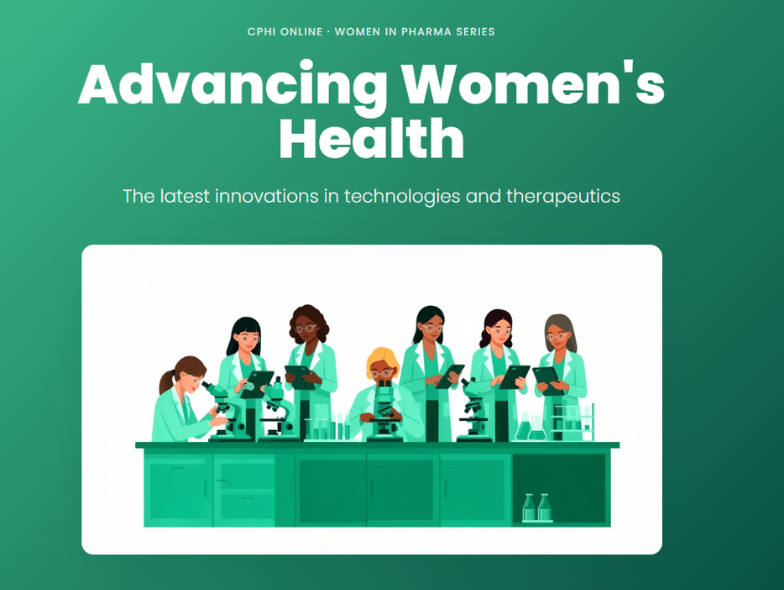
News Women in Pharma: Advancing Women's Health
Discover the latest innovations in technologies and therapeutics that are revolutionising women's health in our latest CPHI Online Women in Pharma infographic.
-

News CPHI Pharma Awards 2026: Recognising Excellence in an Evolving Industry
Submissions now open — deadline May 16
-
News Dr Reddy's to launch generic semaglutide in India
Dr Reddy’s Laboratories, one of India’s leading pharmaceutical companies, is preparing to launch a generic version of semaglutide, branded as Obeda, in March. Obeda is expected to provide a more affordable alternative to Ozempic a... -
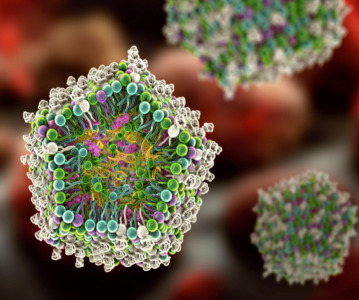
News Frontier Biotech and GSK Forge RNA Therapy Partnership
Frontier Biotechnologies and GSK have entered a global licensing agreement to advance small interfering RNA (siRNA) therapeutics. This collaboration grants GSK exclusive rights to develop and commercialise two promising siRNA candidates, marking a mile...