
Exciting new vaccine targets killer disease TB
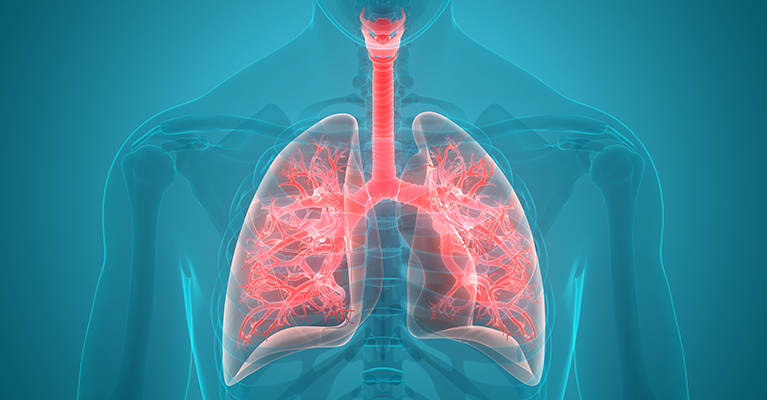
TB is caused by a bacteria that infects the lungs.
Australian researchers produce early-stage vaccine which is inhaled into the lungs.
Australian medical researchers from the Centenary Institute and the University of Sydney have successfully developed and tested a new type of vaccine targeting tuberculosis (TB), the world’s top infectious disease killer.
Reported in the Journal of Medicinal Chemistry, the early-stage vaccine was shown to provide substantial protection against TB in a pre-clinical laboratory setting.
“Tuberculosis is a huge world-wide health problem. It’s caused by a bacteria that infects the lungs after it’s inhaled, is contagious and results in approximately 1.6 million deaths per year globally,” said Dr Anneliese Ashhurst, co-lead author of the reported study and affiliated with both the Centenary Institute and the University of Sydney.
The research program targeting the deadly disease has currently taken over 5 years of effort to implement. During that time Dr Ashhurst and a team of scientists have created the advanced synthetic TB vaccine and have now demonstrated its effectiveness using mouse models.
“Two peptides (small proteins) which are normally found in tuberculosis bacteria were synthesized and then bound extremely tightly to an adjuvant (a stimulant) that was able to kick-start the immune response in the lungs,” said Dr Ashhurst.
“We were then able to show that when this vaccine was inhaled into the lungs, it stimulated the type of T cells known to protect against TB. Importantly, we then demonstrated that this type of vaccine could successfully protect against experimental airborne TB infection,” she said.
Professor Warwick Britton, Head of the Centenary Institute Tuberculosis Research Program and co-senior researcher on the project with Professor Richard Payne, School of Chemistry, University of Sydney, emphasized the importance of the work being done.
“There currently exists only one lone vaccine for TB (known as BCG) and this is only effective in reducing the risk of disease for infants,” said Professor Britton.
“It fails to prevent infection or provide long-term protection in older individuals and it isn’t considered suitable for use in individuals with an impaired immune system. More effective vaccines are urgently required to save lives,” he said.
Professor Britton is excited that the team’s vaccine strategy – directly generating immunity in the lungs – has proven to be the right research approach to take.
“The important thing is that the vaccine actually gets to the lungs because that’s where you first see TB. Ultimately, we would love to see a form of this vaccine available for use in an easily inhaled nasal spray which would provide life-long TB protection. Although this outcome is still many years away, we are certainly heading in the right direction. Our next steps will be to determine if our synthetic vaccine can be developed into a form suitable for use in humans,” said Professor Britton.
Related News
-

News GSK announces £400 million investment in new Cambridge R&D centre
Pharmaceutical giant to establish flagship research facility on Cambridge Biomedical Campus as part of strategic pipeline acceleration
-

News Understanding the Benefits and Advances of Cleanroom Technology
In an industry where precision and sterility are crucial concerns, cleanrooms play a vital role in maintaining the integrity of pharmaceutical products like drugs, vaccines, and other medical products. So, what is a cleanroom?
-

News AbbVie secures GBP£1.2 billion deal for Gilgamesh’s psychedelic programme
AbbVie has penned a significant agreement to acquire the bretisilocin programme from Gilgamesh Pharmaceuticals for up to £1.2 billion, marking a bold step in the pharmaceutical giant's quest to develop treatments for psychiatric disorders. -

News Gates Foundation commits US$2.5 billion to women’s health research
The Bill & Melinda Gates Foundation has announced a substantial US$2.5 billion commitment to accelerate research and development focused exclusively on women's health through 2030.
-

News Mid-year review: notable FDA drug approvals of 2025
As we fly past the halfway point of 2025, the pharmaceutical landscape reliably continues to evolve with innovative therapies addressing critical medical needs. The FDA has already approved 17 groundbreaking medications this year, each representin... -

News US FDA announces new priority vouchers for accelerated review times
The US FDA announced a new priority program for drug developers – the Commissioner’s National Priority Voucher (CNPV) program aims to enhance the health interests of the US by allowing drug developers to redeem a voucher, shortening th... -

News Google-backed start-up raises US$600 million to support AI drug discovery and design
London-based Isomorphic Labs, an AI-driven drug design and development start-up backed by Google’s AI research lab DeepMind, has raised US$600 million in its first external funding round by Thrive Capital. The funding will provide further power t... -

News AstraZeneca to invest US$2.5 billion in Beijing R&D centre
Amid investigations of former AstraZeneca China head Leon Wang in 2024, AstraZeneca have outlined plans to establish its sixth global strategic R&D centre in China. Their aim is to further advance life sciences in China with major research and manufact...